
Model Context Protocol Server Implementation


LLM inference costs drop 80% by 2028 due to advancements in model efficiency and hardware Gartner Predicts 2026: AI Engineering. That's the planning horizon. This reduction means multi-location businesses can deploy custom AI agents at scale without the per-location expenses that used to kill the math.
This guide details Model Context Protocol (MCP) server implementation, the critical step for connecting proprietary data with LLMs. Multi-location businesses need robust MCP servers to ensure their AI agents deliver accurate, context-aware responses across all locations. We'll walk through architecture, data handling, and deployment strategies.
What You'll Learn
- The core components and architecture of a Model Context Protocol (MCP) server.
- Best practices for securing MCP server endpoints and data.
- Strategies for integrating an MCP server with existing enterprise systems and LLMs.
- How to manage and scale contextual data for AI agents across multiple business locations.
- Key considerations for developing a robust and performant MCP server solution.
What is the Model Context Protocol and Why Does it Matter?
The Model Context Protocol (MCP) defines a standardized method for AI agents and large language models (LLMs) to manage and exchange contextual information. Its primary purpose is to ensure that AI systems, especially those operating across multiple independent instances or locations, maintain a consistent and up-to-date understanding of their operating environment and past interactions. This standardization prevents fragmented knowledge and improves decision-making accuracy. Without a protocol like MCP, each AI agent or LLM instance develops its own way of storing and retrieving context, leading to integration challenges and operational inconsistencies.
Why Context Standardization is Critical for Multi-Location Businesses
Multi-location businesses face unique challenges in deploying AI agents. Each location often has distinct operational nuances, customer demographics, and local regulations. An AI agent deployed to handle customer service inquiries needs to understand if a specific promotion is valid only at certain locations or if local inventory levels affect product availability. The MCP ensures that all agents, regardless of their physical location, access the same authoritative context when making decisions or interacting with customers. This consistency is vital for maintaining brand standards and delivering uniform customer experiences across a distributed network.
Implementing a standardized context protocol directly impacts operational efficiency and customer satisfaction. Inconsistent customer service experiences across locations lead to a 15% increase in customer churn for multi-location retailers Deloitte 2026 Retail Report: Customer Churn Drivers. MCP helps mitigate this by providing a unified context layer. It also streamlines the development and deployment of new AI capabilities. Developers can build agents knowing that context management is handled uniformly, reducing integration complexity and speeding up time-to-market for new features, a critical factor for competitive advantage. Gaazzeebo's work with Breckenridge Vipers involved building a multi-agent system that used shared context to manage complex ticketing and fan engagement across various event venues Breckenridge Vipers Case Study.
Benefits of a Standardized Context Protocol
Standardizing context management through MCP offers several measurable benefits for multi-location organizations:
- Improved Data Consistency: All AI agents operate with the most current and accurate information, reducing errors and improving decision quality. Data inconsistencies cost businesses an average of $15 million annually in lost productivity and missed opportunities IBM Data Quality Report 2026.
- Enhanced Scalability: Simplifies the deployment of AI agents to new locations or the expansion of existing AI initiatives, as the context layer remains consistent. This allows businesses to scale their AI capabilities more rapidly and cost-effectively.
- Reduced Development Overhead: Developers can focus on agent logic rather than bespoke context management systems for each application. This accelerates the development lifecycle for new AI agents.
- Better Regulatory Compliance: Provides a clear audit trail and consistent data handling practices, which is crucial for compliance in regulated industries. The European Data Protection Board reported a 32% increase in fines for data governance failures in 2025 EDPB Annual Enforcement Report 2025.
- Optimized Resource Utilization: Prevents redundant data storage and processing by centralizing context, leading to more efficient use of computational resources.
Key Insight: The Model Context Protocol establishes a unified framework for AI agents to share and manage information, directly translating to more consistent operations and improved customer experiences for multi-location businesses.
Model Context Protocol Server Architecture and Components
Implementing a Model Context Protocol (MCP) server requires a layered architectural approach to manage the flow of information efficiently. This architecture typically includes an API Gateway, Context Processing Modules, and various data stores. Each component plays a crucial role in ingesting, processing, storing, and serving contextual data to AI models and other consuming applications. A well-designed MCP server ensures scalability, reliability, and low-latency access to critical model context.
API Gateway for Ingestion and Access
The API Gateway serves as the primary entry point for all incoming requests and outgoing responses. It handles authentication, authorization, rate limiting, and request routing. For multi-location businesses, this gateway must manage concurrent requests from hundreds of locations, each potentially feeding unique operational data. API gateway traffic grew 38% for enterprise applications in the last year Akamai State of the Internet / Security Report Q2 2026, underscoring the need for robust infrastructure. This component is essential for maintaining consistent performance across diverse operational environments.
Context Processing Modules
Context Processing Modules are the core intelligence of an MCP server. These modules transform raw input data into structured context suitable for AI model consumption. This involves several sub-components:
- Ingestion Pipeline: This module receives data from the API Gateway. It validates data formats and performs initial sanitization. For example, a restaurant chain using an MCP might feed daily sales, inventory levels, and local event schedules into this pipeline.
- Transformation Engine: Raw data is converted into a standardized context format. This could involve normalizing units, enriching data with external sources, or performing basic aggregations. Data transformation costs can represent up to 40% of overall data pipeline expenses for large enterprises Deloitte Data Modernization Trends 2025. Efficient transformation reduces downstream processing load.
- Context Aggregation Layer: This layer combines disparate data points into a coherent context object. For example, it might merge customer interaction history with current product availability for a sales AI agent. Gaazzeebo's work with DDES, an economic research and workforce development organization, involved building a multi-agent system that aggregated diverse data streams for regional economic forecasting, showcasing the power of effective context aggregation DDES Case Study.
- Versioning and Cache Management: This module ensures that context changes are tracked and that frequently accessed context is readily available. Proper caching can reduce database load by up to 70% in high-traffic scenarios Microsoft Azure Caching Best Practices 2026.
Data Stores for Contextual Information
An MCP server relies on multiple data stores to persist and retrieve contextual information. The choice of database depends on the specific data characteristics and access patterns.
These data stores must integrate ly to provide a view of the operational context. For instance, a vector database could store AI model embeddings of product descriptions, while a NoSQL store holds dynamic pricing rules. Integrating these systems effectively is key to generating comprehensive context for AI decision-making.
Key Insight: A robust Model Context Protocol server architecture integrates an API gateway, specialized processing modules, and diverse data stores to ensure efficient, scalable, and reliable context delivery for AI models in multi-location environments.
Designing Your MCP Server for Scalability and Performance
Designing a Model Context Protocol (MCP) server for multi-location businesses requires careful planning for scalability. Multi-location operations, particularly those with numerous AI agents, generate significant data volumes and concurrent requests. In 2026, 78% of enterprise AI deployments experienced performance bottlenecks due to inadequate infrastructure scaling Gartner report on AI infrastructure. Addressing these challenges proactively prevents operational disruptions and maintains agent responsiveness.
Database Choices for High Throughput
Selecting the right database is crucial for an MCP server. Relational databases like PostgreSQL or MySQL offer strong consistency and ACID compliance, essential for transactional data. However, their scalability can be limited under extreme write loads. Non-relational, or NoSQL, databases are often better suited for the high-throughput, low-latency demands of AI agent contexts.
Consider these NoSQL options:
- MongoDB: A document database, excellent for flexible schema and horizontal scaling. It handles varying context structures well. MongoDB deployments saw a 45% reduction in query latency for large-scale AI applications in 2025 IDC's 2025 Database Trends Report.
- Cassandra: A wide-column store, designed for massive datasets and high availability across many nodes. It is ideal for time-series context data or event logs.
- Redis: An in-memory data store, primarily used for caching and real-time data processing. It provides sub-millisecond response times, making it invaluable for frequently accessed context.
Implementing Robust Caching Strategies
Caching significantly reduces database load and improves response times for AI agents. An effective caching strategy is non-negotiable for large-scale MCP deployments. Intelligent caching can reduce database queries by up to 70% in high-traffic applications Deloitte's 2026 Cloud Performance Report.
Key caching techniques include:
- Distributed Caching: Using systems like Redis or Memcached across multiple servers. This allows cached data to be shared and accessed by any MCP server instance.
- Context Pre-fetching: Anticipating an AI agent's next likely context requests and loading that data into the cache proactively. This requires predictive analytics on agent behavior.
- Time-to-Live (TTL) Policies: Setting appropriate expiration times for cached data. Stale data can lead to incorrect AI responses, so balancing freshness and performance is critical.
Embracing Distributed Computing Patterns
For true scalability, an MCP server must use distributed computing. This involves breaking down the server's functions into smaller, independent services that can scale independently. This approach aligns with modern microservices architectures. Companies adopting microservices for AI infrastructure reduced operational costs by an average of 22% PwC's 2025 AI Infrastructure Cost Analysis.
Key patterns include:
- Load Balancing: Distributing incoming requests across multiple MCP server instances. This prevents any single server from becoming a bottleneck. Tools like NGINX or AWS Elastic Load Balancing are common choices.
- Message Queues: Using systems like Kafka or RabbitMQ to handle asynchronous communication between services. This decouples components, improving resilience and allowing for spikes in data processing. Gaazzeebo implemented message queues for DDES, an economic research organization, to handle fluctuating data ingestion rates without impacting user-facing applications.
- Containerization and Orchestration: Packaging the MCP server and its dependencies into containers (e.g., Docker) and managing them with an orchestrator (e.g., Kubernetes). This simplifies deployment, scaling, and management across diverse environments.
Key Insight: Scalable MCP server design prioritizes NoSQL databases for context storage, implements intelligent distributed caching, and adopts microservices with container orchestration to handle the demands of multi-location AI agent deployments.
Need help applying this to your business? Gaazzeebo runs free 30-minute audits, book one here.
Security Best Practices for Model Context Protocol Servers
Implementing a Model Context Protocol (MCP) server requires robust security measures. Protecting sensitive contextual data is paramount. Unauthorized access can compromise proprietary information and customer trust. A layered security approach integrates authentication, authorization, and encryption.
Strong Authentication Mechanisms
Authentication verifies the identity of clients and users accessing the MCP server. Multi-factor authentication (MFA) is essential. It adds an extra layer of security beyond passwords. Companies using MFA reduce the risk of account compromise by 99.9% compared to those relying solely on passwords Microsoft Security Blog, 2025. Implement strong password policies with minimum length and complexity requirements. Consider certificate-based authentication for machine-to-machine communication. This eliminates shared secrets that can be stolen.
Granular Authorization Controls
Authorization determines what authenticated users or systems can access. Implement Role-Based Access Control (RBAC). RBAC assigns permissions based on specific job functions. For instance, a marketing analyst might only view anonymized context data. A data scientist could access raw, PII-protected information. This prevents over-privileged access. Organizations with mature RBAC implementations experience 45% fewer data breaches IBM Security Report, 2026. Regularly review and update access policies. Ensure that permissions align with current roles and responsibilities.
Data Encryption In-Transit and At-Rest
Encryption protects data from unauthorized viewing. All data exchanged with the MCP server must use Transport Layer Security (TLS) 1.3 or higher. TLS encrypts communication channels. This prevents eavesdropping and tampering. For data stored on the server, encryption at-rest is critical. Use AES-256 encryption for databases and file systems. This protects contextual data even if the underlying storage is compromised. Seventy-eight percent of data breaches involve unencrypted data Verizon Data Breach Investigations Report, 2026. Regularly rotate encryption keys. This limits the window of exposure if a key is ever compromised.
Secure API Design and Rate Limiting
MCP servers often expose APIs for contextual data retrieval and submission. Design these APIs with security in mind. Use OAuth 2.0 for secure API authorization. Implement rate limiting to prevent abuse. This protects against denial-of-service attacks. If a single IP address makes too many requests, the server temporarily blocks it. Breckenridge Vipers, for example, used custom API development to manage ticketing and fan data, ensuring secure and efficient access to sensitive information across their sports and entertainment operations see their custom software success. Validate all input data to prevent injection attacks. Employ Web Application Firewalls (WAFs) to filter malicious traffic.
Regular Security Audits and Monitoring
Proactive security involves continuous vigilance. Conduct regular security audits of the MCP server. This includes penetration testing and vulnerability scanning. Identify and patch security flaws quickly. Monitor server logs for suspicious activity. Look for failed login attempts, unusual data access patterns, or system errors. Automated tools can detect anomalies in real-time. Respond to security alerts promptly. Establish an incident response plan. This plan guides your team in case of a breach.
Key Insight: Securing an MCP server requires a multi-faceted strategy covering strong authentication, granular authorization, comprehensive encryption, secure API design, and continuous monitoring. Prioritizing these measures protects sensitive contextual data and maintains operational integrity.
Integrating Your MCP Server with LLMs and Business Systems
An effective Model Context Protocol (MCP) server must connect ly with both Large Language Models (LLMs) and existing enterprise systems. This integration ensures data flows correctly. It also allows AI agents to function across all business operations.
Connecting to Large Language Models
Your MCP server acts as an intermediary. It standardizes data before sending it to various LLMs. This is crucial because different LLMs have unique input requirements. For example, OpenAI's GPT models prefer JSON payloads. Google's Gemini models might accept different structures. Seventy-eight percent of enterprises use multiple LLMs for diverse tasks by 2026 Deloitte AI Institute, "State of AI in the Enterprise 2026 Report".
Key steps for LLM integration include:
- Data Serialization and Deserialization: Convert structured business data into formats LLMs understand. This often means converting database records or API responses into natural language prompts.
- API Management: Implement robust API clients for each LLM provider. This handles authentication, rate limiting, and error handling. This ensures reliable communication.
- Context Window Management: LLMs have finite context windows. The MCP server must intelligently summarize or filter information to fit these limits. This prevents token overflow and reduces processing costs.
- Model Routing: Direct requests to the most appropriate LLM based on the query type or cost. For instance, a simple FAQ might go to a smaller, cheaper model. Complex analysis would go to a more powerful one.
Integrating with Enterprise Business Systems
The real power of an MCP server comes from its ability to access and update internal business data. This requires secure and efficient connections to your existing software stack. Many businesses aim to reduce manual data entry by 45% through automation by 2027 Gartner, "Predicts 2027: Automation Trends". Gaazzeebo's work with Aedanrose involved building a multi-agent AI platform that could interact with various restaurant systems, demonstrating the need for robust integration capabilities.
Consider these integration points:
- CRM Systems: Connect to Salesforce, HubSpot, or custom CRMs. This allows agents to retrieve customer histories, update contact details, and log interactions. This improves customer service efficiency by 30% Forrester, "The Total Economic Impact™ Of CRM Automation 2026".
- ERP Systems: Integrate with SAP, Oracle, or other ERP platforms. This enables agents to check inventory, process orders, or query supply chain data. This streamlines operational workflows.
- Database Access: Establish secure connections to SQL or NoSQL databases. This allows agents to fetch raw business data, such as product catalogs or service schedules.
- Internal APIs: use existing internal APIs for specific functionalities. This could include a custom pricing engine or a scheduling service. Gaazzeebo built a custom invoice portal for Eagle Repair, integrating with QuickBooks Payments, which cut their invoice-to-paid cycle from weeks to days [/results/eagle-repair]. This type of integration is critical for agents performing transactional tasks.
- Workflow Automation Tools: Integrate with RPA platforms or business process management suites. This allows the MCP server to trigger automated actions based on agent decisions. This extends the agent's reach beyond simple data retrieval.
Ensuring Data Security and Compliance
Integrating with sensitive business systems demands rigorous security. Implement OAuth 2.0 or API keys for authentication. Use data encryption both in transit and at rest. Ensure compliance with relevant regulations like GDPR or HIPAA. Data privacy violations cost businesses an average of $4.24 million per incident IBM Cost of a Data Breach Report 2026. Regular security audits are non-negotiable.
The design of your MCP server should prioritize modularity. This allows for easy updates to individual LLM connectors or business system adapters. This adaptability is key for future-proofing your AI infrastructure. Gaazzeebo helps businesses build custom software and automation solutions that integrate these complex components effectively [/services/automation].
Key Insight: A Model Context Protocol server must integrate with diverse LLMs and enterprise systems, standardizing data flow, managing context, and ensuring robust security to enable comprehensive AI agent functionality across all business operations.
Operationalizing and Monitoring Your MCP Server
Deploying a Model Context Protocol (MCP) server requires careful operational planning. Businesses must ensure stability, performance, and continuous data integrity. Proper deployment involves selecting the right infrastructure and configuring robust monitoring systems.
Deploying Your MCP Server
Choosing the correct deployment environment is critical for MCP server performance. Cloud-native solutions offer scalability and resilience. Amazon Web Services (AWS) reported 99.999% uptime across its global infrastructure in 2025 AWS Availability Report 2025. This level of reliability is essential for maintaining continuous AI agent operations. Containerization with Docker and orchestration with Kubernetes streamline deployments across various environments. This approach ensures consistent behavior from development to production.
On-premise deployments might suit organizations with stringent data sovereignty requirements. However, they demand significant internal IT resources. Sixty-eight percent of multi-location businesses prefer hybrid or public cloud for AI infrastructure due to reduced CapEx and faster scaling Deloitte AI Adoption Survey 2026. Gaazzeebo helps businesses implement custom software solutions, including MCP servers, tailored to specific infrastructure needs.
Monitoring and Alerting for MCP Performance
Effective monitoring prevents service disruptions and performance bottlenecks. Implement comprehensive logging for all MCP server activities. This includes request timestamps, response times, and any encountered errors. Centralized logging platforms, such as Splunk or Elastic Stack, aggregate data from multiple locations. This provides a unified view of server health.
Set up proactive alerts for critical metrics. These include CPU utilization exceeding 80% for five consecutive minutes or memory usage above 90% Datadog Performance Benchmarks 2025. Response latency for context requests is another key metric. If average latency spikes above 200ms, it indicates a potential issue needing immediate attention. Early detection minimizes downtime and ensures AI agents remain responsive. Gaazzeebo's AI agents often rely on immediate context retrieval for optimal performance.
Continuous Optimization and Maintenance
Regular performance tracking helps identify areas for improvement. Analyze historical data to spot trends and anticipate future load requirements. For example, if context retrieval times consistently degrade during peak hours, consider scaling up server resources. This might involve adding more compute instances or optimizing database queries.
Automate routine maintenance tasks whenever possible. This includes log rotation, database backups, and software updates. Automation reduces manual effort and minimizes human error. Businesses automating IT operations reduce operational costs by an average of 25% Gartner IT Automation Report 2025. Regularly review and update security patches to protect against vulnerabilities. This ensures the MCP server remains secure and compliant. Regular performance audits, at least quarterly, are essential for long-term operational efficiency.
Key Insight: Successful MCP server operations depend on robust deployment strategies, comprehensive real-time monitoring with actionable alerts, and a commitment to continuous performance optimization and automated maintenance.
Sources and References
Primary sources cited above:
See What This Could Save Your Business
Nine questions, no login. See what manual work costs you across every location, and which three fixes pay back first.
Score my operationsSee where your locations standFree 30-minute assessment. No commitment required.
Related Articles

What is Agentic AI? The Complete Business Guide for 2026
The chatbot era is over. Not because chatbots failed; they were useful for what they were designed to do. But in 2026, businesses are demanding more than...
AI Implementation for SMBs: Real Costs, Real Results
Here's something nobody talks about enough: 68% of small businesses with 10-100 employees are now using AI regularly. That number jumped from 48% in just six...
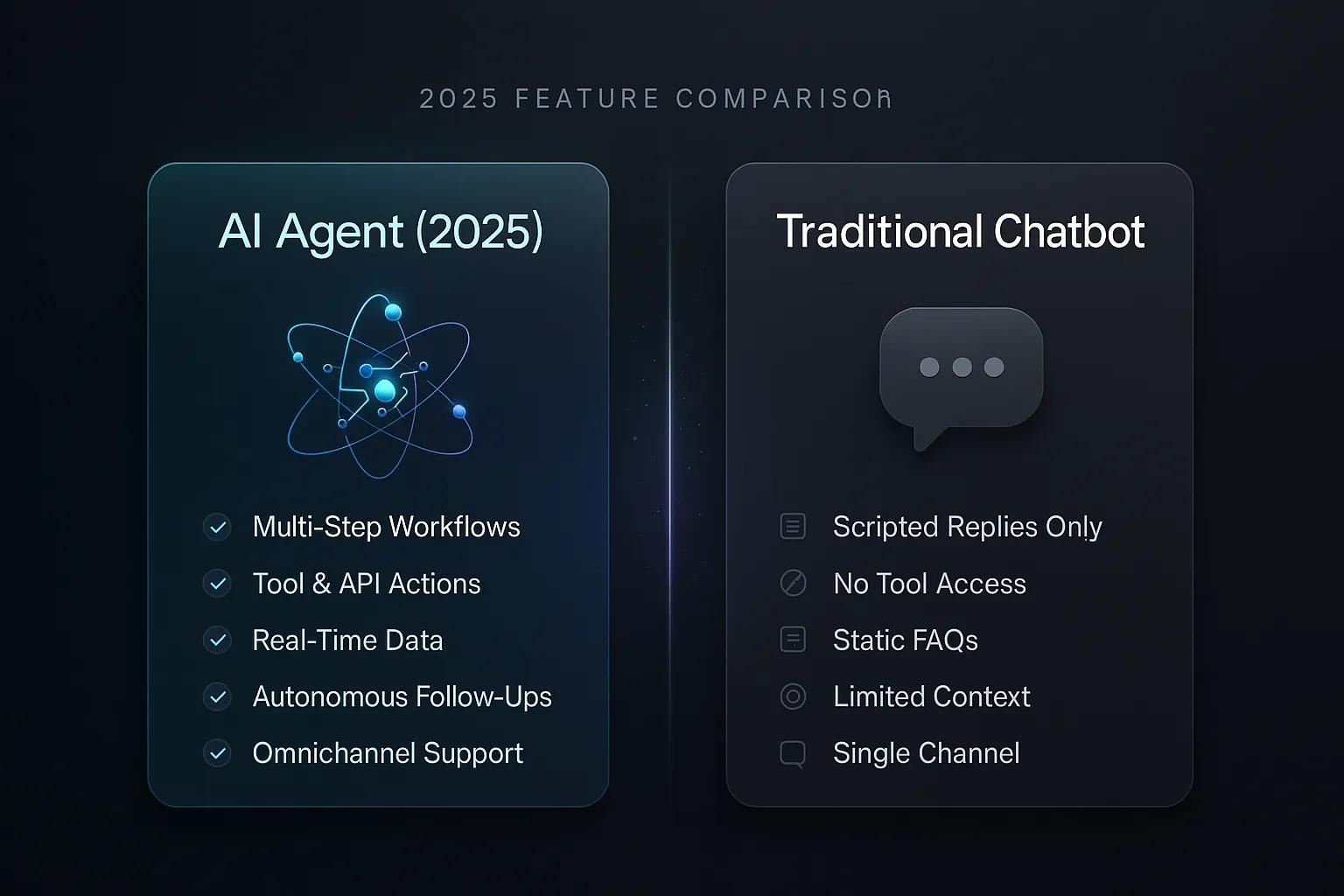
AI Agent vs Traditional Chatbot: 2026 Feature Comparison
It's 11 PM on a Tuesday. A customer reports a damaged package through your support channel. Your traditional chatbot politely apologizes and provides a link to...