
What is Agentic AI? The Complete Business Guide for 2026
How Autonomous AI Agents Are Replacing Chatbots, Automating Workflows, and Delivering 171% ROI


The chatbot era is over. Not because chatbots failed; they were useful for what they were designed to do. But in 2026, businesses are demanding more than scripted responses and FAQ lookups. They need AI that can actually do things: qualify leads at 2 AM, process insurance claims without human review, coordinate a dozen systems to onboard a new customer, and recover from mistakes along the way.
That demand has a name: agentic AI.
The numbers confirm the shift. According to Deloitte's 2025 State of AI in the Enterprise report, 74% of executives who deployed AI agents achieved measurable ROI within the first year, with an average return of 171%. Gartner predicts that by 2028, at least 15% of day-to-day work decisions will be made autonomously by agentic AI, up from less than 1% in 2024.
This guide explains what agentic AI actually is, how it works under the hood, where it delivers the most value, what it costs, and how to implement it without wasting your budget. Whether you run a 10-person company or a 10,000-person enterprise, this is the resource you need to make smart decisions about autonomous AI agents.
What is Agentic AI?
Agentic AI refers to artificial intelligence systems that can autonomously perceive their environment, set goals, create multi-step plans, execute actions using external tools, and adapt their approach based on results, all with minimal or no human intervention. Unlike traditional chatbots that respond to individual prompts in isolation, agentic AI operates with agency: it pursues objectives, makes decisions, and takes real-world actions across multiple systems. These systems combine large language models (LLMs) with memory, tool access, and reasoning capabilities to function as autonomous digital workers rather than conversational interfaces.
Think of the difference this way: a chatbot is like a receptionist reading from a script. An agentic AI is like a skilled employee who understands the goal, knows which tools to use, and can navigate unexpected situations to get the job done.
When a customer calls to reschedule a medical appointment, a chatbot might say "Please call our office during business hours." An agentic AI checks the provider's calendar, finds three available slots that match the patient's insurance and location preferences, offers options via text or voice, confirms the selection, sends appointment reminders, and updates the practice management system, all within a single interaction.
That capability gap is why businesses are moving from chatbots to AI agents at an accelerating pace.
How Agentic AI Differs from Traditional AI
The term "AI" covers an enormous range of technologies, from the spam filter in your email to autonomous agents managing supply chains. Understanding where agentic AI sits on this spectrum is critical for making the right investment.
For a deeper feature-by-feature breakdown, see our AI agent vs chatbot comparison. Here is the high-level view:
The key distinction is autonomy with competence. A traditional chatbot needs a human to handle anything outside its script. A conversational AI agent can handle more complex queries but still relies on humans for multi-step processes. An agentic AI system can pursue a goal from start to finish, booking the appointment, processing the payment, sending the confirmation, and handling the follow-up, without handing off to a human unless its guardrails require it.
Key Insight: Agentic AI does not replace human judgment. It handles the 80% of tasks that are repetitive, rule-based, and time-consuming, freeing your team to focus on the 20% that require creativity, empathy, and strategic thinking.
Key Components of Agentic AI Systems
Understanding the building blocks of agentic AI helps you evaluate solutions, ask the right questions of vendors, and avoid paying for capabilities you don't need.
Large Language Models (LLMs)
The LLM is the brain of the agent. Models like GPT-4o, Claude, Gemini, and Llama 3 provide the natural language understanding and reasoning capabilities that allow agents to interpret requests, generate responses, and make decisions.
However, an LLM alone is not agentic. It is a prediction engine, excellent at generating text, but incapable of taking action without the additional components described below.
What matters for business: Model selection affects cost, speed, accuracy, and data privacy. Smaller models (7B-70B parameters) can run on your own infrastructure for sensitive data. Larger frontier models offer superior reasoning but require API calls to external providers.
Retrieval Augmented Generation (RAG)
RAG is the mechanism that gives your AI agent access to your specific business data, product catalogs, policy documents, customer histories, knowledge bases, and SOPs. Instead of relying solely on its pre-trained knowledge (which can be outdated or generic), the agent retrieves relevant information from your data sources in real time and uses it to generate accurate, context-specific responses.
Without RAG, your agent is a well-spoken generalist. With RAG, it becomes a subject matter expert on your business.
Example: A customer asks about the warranty on a specific product purchased six months ago. The agent uses RAG to pull the warranty terms from your policy database, checks the purchase date against the customer's order history, and provides a precise answer about remaining coverage, no human lookup required.
Tool Use and Function Calling
This is what separates agentic AI from a fancy chatbot. Tool use means the AI can interact with external systems: your CRM, calendar, payment processor, email platform, inventory system, or any application with an API.
Function calling is the technical mechanism that makes this possible. The LLM decides which tool to use and what parameters to pass, the system executes the function, and the result is fed back to the LLM to continue the conversation or take the next step.
Common tools an agentic AI might use:
- CRM systems (Salesforce, HubSpot), to look up and update customer records
- Calendar platforms (Google Calendar, Calendly), to schedule and reschedule appointments
- Payment processors (Stripe, Square), to issue refunds or process transactions
- Email and SMS platforms (SendGrid, Twilio), to send confirmations and follow-ups
- Database queries, to retrieve order status, inventory levels, or account details
- Web search, to find current pricing, competitor information, or regulatory updates
Memory (Short-Term and Long-Term)
Memory is what allows an agentic AI to behave like a knowledgeable team member rather than a stranger who forgets everything between conversations.
Short-term memory (also called working memory or context window) holds the current conversation. The agent remembers what was said three messages ago within the same session.
Long-term memory persists across sessions. The agent remembers that this customer prefers email communication, that they had an issue with delivery last month, and that they are on the premium plan. This context dramatically improves the quality of interactions and enables truly personalized service.
Why this matters: A chatbot treats every interaction as a blank slate. An agentic AI with proper memory management provides continuity that customers notice and appreciate, leading to measurably higher satisfaction scores and retention rates.
Planning and Reasoning
Agentic AI systems use structured reasoning frameworks to break complex goals into manageable steps, execute them in the right order, and adapt when things go wrong.
Common planning patterns include:
- ReAct (Reasoning + Acting): The agent thinks about what to do, takes an action, observes the result, and decides the next step. This loop continues until the goal is achieved.
- Plan-and-Execute: The agent creates a full plan upfront, then executes each step sequentially, revising the plan if a step fails.
- Tree of Thought: The agent considers multiple possible approaches, evaluates their likelihood of success, and selects the best path, similar to how a chess player thinks several moves ahead.
Example in practice: A lead fills out a contact form requesting a demo. The agentic AI: (1) checks if the lead exists in the CRM, (2) if not, creates a new record, (3) qualifies the lead based on company size and industry, (4) checks the sales team's availability, (5) books the demo on the most appropriate rep's calendar, (6) sends a personalized confirmation email, and (7) creates a follow-up task for the rep. If the calendar booking fails, the agent tries alternative time slots before escalating.
Guardrails and Safety
Guardrails are the rules, constraints, and oversight mechanisms that keep agentic AI operating within acceptable boundaries. This is arguably the most important component for business deployment, because an agent without guardrails is a liability.
Types of guardrails:
- Action boundaries: The agent can issue refunds up to $500 but must escalate larger amounts to a human
- Information boundaries: The agent never shares internal pricing, competitor comparisons, or confidential data
- Compliance rules: The agent follows HIPAA, GDPR, PCI-DSS, or industry-specific regulations
- Escalation triggers: Specific scenarios (angry customer, legal threat, technical failure) automatically route to human agents
- Output validation: Responses are checked for accuracy, tone, and policy compliance before being sent
Pro Tip: The best agentic AI implementations start with tight guardrails and gradually expand the agent's autonomy as trust is established through performance data. Never launch with maximum autonomy on day one.
Real-World Business Use Cases
Agentic AI is not theoretical. Businesses across industries are deploying autonomous agents today and measuring concrete results. Here are the use cases delivering the strongest returns.
Customer Service: 24/7 Resolution Without the Wait
Traditional support models force customers to wait in queues, repeat their issue to multiple agents, and follow up across days. Agentic AI eliminates this friction entirely.
What it looks like in practice: An AI phone agent answers inbound calls in under 2 seconds, identifies the caller from their phone number, pulls up their account history, and resolves issues like refund requests, appointment changes, billing questions, and product troubleshooting, all through natural conversation. When the issue requires human judgment (complex disputes, emotional situations), the agent transfers to a live team member with a full context summary so the customer never has to repeat themselves.
Measured results: Companies deploying agentic customer service report 40-60% reduction in ticket volume reaching human agents, 85%+ customer satisfaction scores for AI-handled interactions, and average resolution times under 3 minutes compared to 15-25 minutes for human-only support.
Sales: Lead Qualification and Appointment Booking
Your website generates leads at all hours. Without agentic AI, those leads sit in a queue until a human follows up, often hours or days later. Response time is the single biggest predictor of conversion, and research shows that leads contacted within 5 minutes are 21x more likely to convert.
What it looks like in practice: A prospect fills out a form at 9 PM on a Saturday. Within 30 seconds, an AI agent initiates a conversation via text or email. It asks qualifying questions (budget, timeline, decision authority, specific needs), scores the lead, and, if qualified, offers available appointment slots from the sales team's actual calendar. The meeting is booked, calendar invites sent, and the CRM updated before the prospect closes their browser.
Measured results: Businesses report 3-5x increases in speed-to-lead, 25-40% improvement in lead-to-appointment conversion rates, and significant reduction in the cost per qualified appointment.
Operations: Invoice Processing and Workflow Automation
Back-office operations consume enormous resources. Agentic AI applied to business process automation transforms manual workflows into autonomous processes.
What it looks like in practice: An AI agent monitors incoming invoices (via email, portal upload, or AP system), extracts key data (vendor, amount, line items, payment terms), matches invoices to purchase orders, flags discrepancies, routes approvals based on amount thresholds and department rules, and schedules payments. For ecommerce businesses, agents manage inventory reordering, return processing, and vendor communication automatically.
Measured results: Organizations report 70-80% reduction in manual data entry, 90%+ accuracy in invoice matching (compared to 60-75% with manual processing), and 50% faster payment cycles, improving vendor relationships and often capturing early payment discounts.
IT Support: Ticket Triage and Automated Resolution
Internal IT support teams spend the majority of their time on repetitive, low-complexity issues: password resets, software access requests, VPN troubleshooting, and printer problems. Agentic AI handles these automatically.
What it looks like in practice: An employee submits a ticket saying "I can't access Salesforce." The AI agent checks the employee's account status, verifies their license assignment, tests the connection, identifies that the issue is an expired password, triggers a password reset workflow, sends the employee reset instructions, and closes the ticket, all within 2 minutes. For complex issues, the agent triages the ticket to the correct specialist team with full diagnostic information attached.
Measured results: IT teams report 30-50% reduction in ticket volume requiring human attention, average resolution time dropping from hours to minutes for common issues, and improved employee satisfaction scores.
Real Estate: Property Inquiry Agents
Real estate professionals juggle dozens of leads simultaneously, and slow response times cost deals. Real estate AI agents handle the entire initial engagement process.
What it looks like in practice: A potential buyer fills out an inquiry form on a property listing at midnight. The AI agent responds immediately, answers questions about the property (pulling from MLS data and agent notes), qualifies the buyer (pre-approval status, timeline, budget), schedules a showing on the listing agent's calendar, and sends property comparables and neighborhood data. The agent follows up automatically if the lead goes quiet, using personalized messaging based on the properties they viewed.
Measured results: Real estate teams using agentic AI report 60%+ increase in showing appointments booked, 90% reduction in response time to inquiries, and significant improvements in lead nurturing without adding headcount.
The Agentic AI Tech Stack in 2026
You don't need to be a developer to understand the technology powering agentic AI, but familiarity with the major frameworks helps you evaluate vendors and understand what you are buying.
Agent Frameworks
LangChain / LangGraph, The most widely adopted framework for building AI agents. LangChain provides the building blocks (LLM connections, tool integrations, memory management), while LangGraph adds the ability to create complex multi-step workflows with conditional logic and loops. Think of LangChain as the toolkit and LangGraph as the blueprint language.
CrewAI, A framework specifically designed for multi-agent collaboration. Instead of one agent doing everything, CrewAI lets you create a "crew" of specialized agents (researcher, writer, analyst, coordinator) that work together on complex tasks. Particularly effective for content generation, research, and analytical workflows.
AutoGen / AG2, Microsoft's framework for building multi-agent conversations. Agents can discuss, debate, and collaborate to solve problems. Well-suited for scenarios where multiple perspectives or expertise areas need to be combined.
Custom Frameworks, For businesses with specific requirements around security, compliance, or integration depth, custom software development allows purpose-built agent systems optimized for your exact use case. This approach costs more upfront but often delivers lower total cost of ownership for high-volume, mission-critical deployments.
Model Context Protocol (MCP)
MCP is an emerging standard (pioneered by Anthropic) that defines how AI agents connect to external tools and data sources. Think of it as the USB standard for AI, instead of building custom integrations for every tool, MCP provides a universal connector that any compatible agent can use to interact with any compatible tool.
Why this matters for business: MCP reduces integration costs, prevents vendor lock-in, and makes it easier to swap components of your agentic AI stack without rebuilding from scratch.
Choosing a Stack
For most businesses, the framework choice matters less than the implementation quality. The best agentic AI system is the one that reliably solves your specific problem, integrates cleanly with your existing tools, and can be maintained and improved over time. Avoid over-engineering. Start with the simplest architecture that achieves your goal, and add complexity only when the data demands it.
How to Implement Agentic AI in Your Business
Successful agentic AI implementation follows a structured process. Skipping steps is the primary cause of failed deployments.
Step 1: Identify a High-ROI Use Case
Start with one use case, not five. The best first candidates share these characteristics:
- High volume: The task happens dozens or hundreds of times per day
- Repetitive: The process follows a consistent pattern with known variations
- Time-sensitive: Delays have measurable costs (lost leads, customer churn, late fees)
- Data-accessible: The information needed is already in digital systems
- Measurable: You can track success metrics (resolution time, conversion rate, cost per interaction)
Top first use cases: Appointment booking, lead qualification, customer FAQ handling, ticket triage, and order status inquiries.
Step 2: Define Scope and Guardrails
Before building anything, document exactly what the agent should and should not do.
- Scope: "The agent handles appointment scheduling for new patients, including insurance verification and provider matching."
- Boundaries: "The agent does not provide medical advice, does not access billing information, and escalates to a human if the caller mentions an emergency."
- Authority levels: "The agent can schedule, reschedule, and cancel appointments. It cannot override provider block times or waive cancellation fees."
- Escalation triggers: "Caller is upset, issue involves billing dispute, caller requests a human, agent confidence is below 80%."
Step 3: Choose Build vs. Buy
Three paths exist, each with distinct tradeoffs:
For most small and mid-sized businesses, starting with a SaaS platform or low-code build is the smart move. You can always migrate to a custom-built solution once you have validated the use case and understand exactly what you need.
Step 4: Design Conversation Flows and Agent Logic
Map out the primary paths your agent will handle:
- Happy path: The most common interaction flow, from greeting to resolution
- Edge cases: The 10-15 variations that make up 80% of non-standard interactions
- Failure modes: What happens when a tool call fails, data is missing, or the customer goes off-script
- Escalation paths: How and when the agent hands off to a human, and what context it passes along
Pro Tip: Record and transcribe 50-100 real interactions (calls, chats, emails) from your team. These conversations are the best source of truth for designing agent behavior. They reveal the exact language customers use, the common sticking points, and the resolution patterns that work.
Step 5: Integrate with Existing Systems
The value of agentic AI is proportional to the systems it can access. Common integrations include:
- CRM (Salesforce, HubSpot, Pipedrive), for customer data and lead management
- Calendar (Google Calendar, Outlook, Calendly), for scheduling
- Communication (Twilio, SendGrid, Slack), for SMS, email, and internal notifications
- Payment (Stripe, Square), for transactions and refunds
- Industry-specific (Practice management, MLS, ERP, ticketing), for domain operations
Ensure each integration has proper authentication, error handling, and rate limiting. A single unreliable integration can undermine the entire agent experience.
Step 6: Test, Deploy, and Optimize
Testing phases:
- Internal testing, Your team tests every known scenario and tries to break the agent
- Shadow mode, The agent runs alongside human agents, handling the same requests, but only the human responses are sent to customers. Compare results.
- Limited rollout, Deploy to 10-20% of traffic with real-time monitoring and a human ready to intervene
- Full deployment, Scale to 100% once metrics confirm performance targets are met
Ongoing optimization:
- Review conversation logs weekly for the first month, then biweekly
- Track key metrics: resolution rate, customer satisfaction, escalation rate, cost per interaction
- Update the agent's knowledge base as products, policies, and processes change
- Expand scope gradually, add new use cases only after the current one is performing well
Costs and ROI of Agentic AI
Transparency on costs is essential for planning. Here is what businesses are spending in 2026 across different implementation tiers.
Implementation Cost Tiers
ROI Comparison: Agentic AI vs. Hiring Staff
The math is straightforward. A single agentic AI handling appointment booking and lead qualification can replace the equivalent output of 2-3 full-time employees for routine tasks, not because the AI is better at every aspect of the job, but because it handles the high-volume, repetitive portion that consumes most of a human's day. Your team then focuses on complex, high-value work that requires human judgment.
Pro Tip: Calculate your ROI using this formula: (Monthly cost of manual handling - Monthly cost of AI agent) x 12 = Annual savings. Include staffing costs, opportunity costs (lost leads from slow response times), and error reduction. Most businesses discover the ROI case is stronger than they expected.
Risks and Limitations
Agentic AI is powerful, but it is not magic. Honest assessment of risks is essential for responsible deployment.
Hallucination
The risk: LLMs can generate plausible-sounding but factually incorrect information. An agent might quote a policy that does not exist or provide inaccurate pricing.
Mitigation: Implement RAG with verified data sources so the agent pulls from your actual documentation rather than generating answers from its training data. Add output validation that checks critical facts (prices, dates, policy details) against your database before presenting them to the customer. Include confidence scoring and route low-confidence responses to human review.
Scope Creep
The risk: Once stakeholders see what agentic AI can do, they want it to do everything. Expanding scope too quickly leads to unreliable performance, increasing error rates, and eroding trust.
Mitigation: Maintain a strict roadmap. Each new capability goes through the same test-shadow-pilot-deploy cycle as the original use case. Resist the pressure to add features faster than you can validate them. A reliable agent that does three things well is more valuable than an unreliable agent that attempts ten.
Data Privacy and Compliance
The risk: Agentic AI systems process customer data, potentially including PII, financial information, and health records. Improper handling creates regulatory exposure under GDPR, HIPAA, CCPA, and other frameworks.
Mitigation: Conduct a data audit before deployment. Know exactly what data the agent accesses, where it is stored, and who the sub-processors are. Use encryption in transit and at rest. Implement data retention policies. For regulated industries (healthcare, finance), ensure your vendor provides BAA agreements and relevant compliance certifications. Consider on-premise or private cloud deployment for the most sensitive use cases.
Vendor Lock-In
The risk: Building on a proprietary platform can make it expensive or technically difficult to switch vendors later. If the vendor raises prices, degrades service, or shuts down, your operations are at risk.
Mitigation: Favor solutions built on open standards (like MCP for tool integration). Ensure you own your data, conversation logs, and trained models. If using a SaaS platform, understand the export process and test it before signing a long-term contract. For mission-critical deployments, consider custom development that runs on your own infrastructure.
Frequently Asked Questions
What is agentic AI in simple terms?
Agentic AI is artificial intelligence that can independently complete tasks, not just answer questions. Where a chatbot reads from a script, an agentic AI system understands what you want to accomplish, figures out the steps needed, uses business tools (calendars, databases, email) to execute those steps, and handles problems along the way. It is the difference between an AI that tells you information and an AI that does work for you.
How is agentic AI different from generative AI?
Generative AI (like ChatGPT or Midjourney) creates content, text, images, code, audio. It produces outputs in response to prompts. Agentic AI uses generative AI as one component but adds goal-setting, planning, tool use, and autonomous execution. Generative AI writes the email. Agentic AI decides the email needs to be sent, writes it, personalizes it based on the recipient's history, schedules it for optimal delivery time, and follows up if there is no response.
What industries benefit most from agentic AI?
Industries with high-volume customer interactions, repetitive processes, and time-sensitive workflows see the strongest returns. The leading adopters in 2026 are healthcare (appointment scheduling, patient intake), real estate (lead qualification, property inquiries), financial services (claims processing, account management), ecommerce (order management, returns), and professional services (client onboarding, billing). However, any business that handles repetitive customer or operational processes can benefit.
Is agentic AI replacing human workers?
Agentic AI is replacing tasks, not workers. It handles the repetitive, rule-based work that consumes 60-80% of many employees' days, freeing them for strategic thinking, relationship building, complex problem-solving, and creative work. The organizations seeing the best results are redeploying their human talent to higher-value activities rather than reducing headcount. That said, roles that consist entirely of routine tasks (basic data entry, simple call routing) will continue to be automated.
How long does it take to deploy an agentic AI system?
Timeline depends on complexity. A single-function agent (appointment booking or lead qualification) can be deployed in 2-4 weeks using a SaaS platform. A custom multi-function agent typically takes 6-10 weeks. Enterprise multi-agent systems with deep integrations take 12-20 weeks. The most common mistake is rushing deployment, thorough testing during the shadow and pilot phases saves significant rework later.
What data does agentic AI need access to?
This depends on the use case, but typically: your knowledge base (FAQs, policies, product information), customer data (CRM records, order history), scheduling data (team calendars, availability rules), and transaction systems (payment processing, inventory). The agent only needs access to data relevant to its assigned tasks, proper scoping reduces both risk and complexity.
Can agentic AI handle phone calls?
Yes. AI voice agents are one of the fastest-growing applications of agentic AI in 2026. Using text-to-speech and speech-to-text technologies, agents conduct natural phone conversations with sub-second latency. They handle inbound calls (customer service, appointment scheduling) and outbound calls (appointment reminders, lead follow-up, payment collection). Callers increasingly cannot distinguish AI agents from human agents on routine calls.
How do you measure the success of an agentic AI deployment?
Track these key performance indicators: Resolution rate (percentage of interactions resolved without human escalation), Customer satisfaction score (CSAT for AI-handled interactions), Average handling time (time from first contact to resolution), Cost per interaction (total monthly cost divided by interactions handled), Conversion rate (for sales-focused agents), and Error rate (interactions where the agent provided incorrect information or took wrong actions). Compare each metric against your baseline before deployment.
What happens when the AI agent makes a mistake?
Well-designed agentic AI systems include multiple safety layers. First, guardrails prevent most errors before they occur (e.g., validating a refund amount against the original order before processing). Second, confidence scoring flags uncertain situations for human review. Third, escalation triggers route complex or sensitive interactions to human agents. Fourth, all actions are logged and auditable, so mistakes can be identified, analyzed, and prevented from recurring. No system is perfect, the goal is to make errors rare, detectable, and recoverable.
Is my business data safe with agentic AI?
Data security depends entirely on the implementation. Enterprise-grade solutions encrypt data in transit and at rest, process information within SOC 2 compliant environments, and never use your data to train models. For maximum security, on-premise or private cloud deployments keep your data entirely within your infrastructure. The key questions to ask any vendor: Where is data processed? Who are the sub-processors? Is data used for model training? What compliance certifications do you hold? Can I deploy on my own infrastructure?
Next Steps
Agentic AI is not a future technology; it is here, it is production-ready, and businesses implementing it today are gaining a measurable competitive advantage. The question is not whether to adopt agentic AI, but where to start and how to do it right.
If you are ready to explore what agentic AI can do for your business:
- Learn about our approach: See how we design, build, and deploy AI agents at AI agent development services
- Get a personalized assessment: Score your operation in 12 questions to identify the highest-ROI agentic AI opportunity for your specific business
- Explore automation broadly: If you are interested in workflow automation beyond AI agents, see our business process automation services
The businesses that implement agentic AI in 2026 are not just saving money; they are building operational capabilities their competitors cannot match. The gap between early adopters and late adopters will only widen from here.
See What This Could Save Your Business
Nine questions, no login. See what manual work costs you across every location, and which three fixes pay back first.
Score my operationsSee where your locations standFree 30-minute assessment. No commitment required.
Related Articles
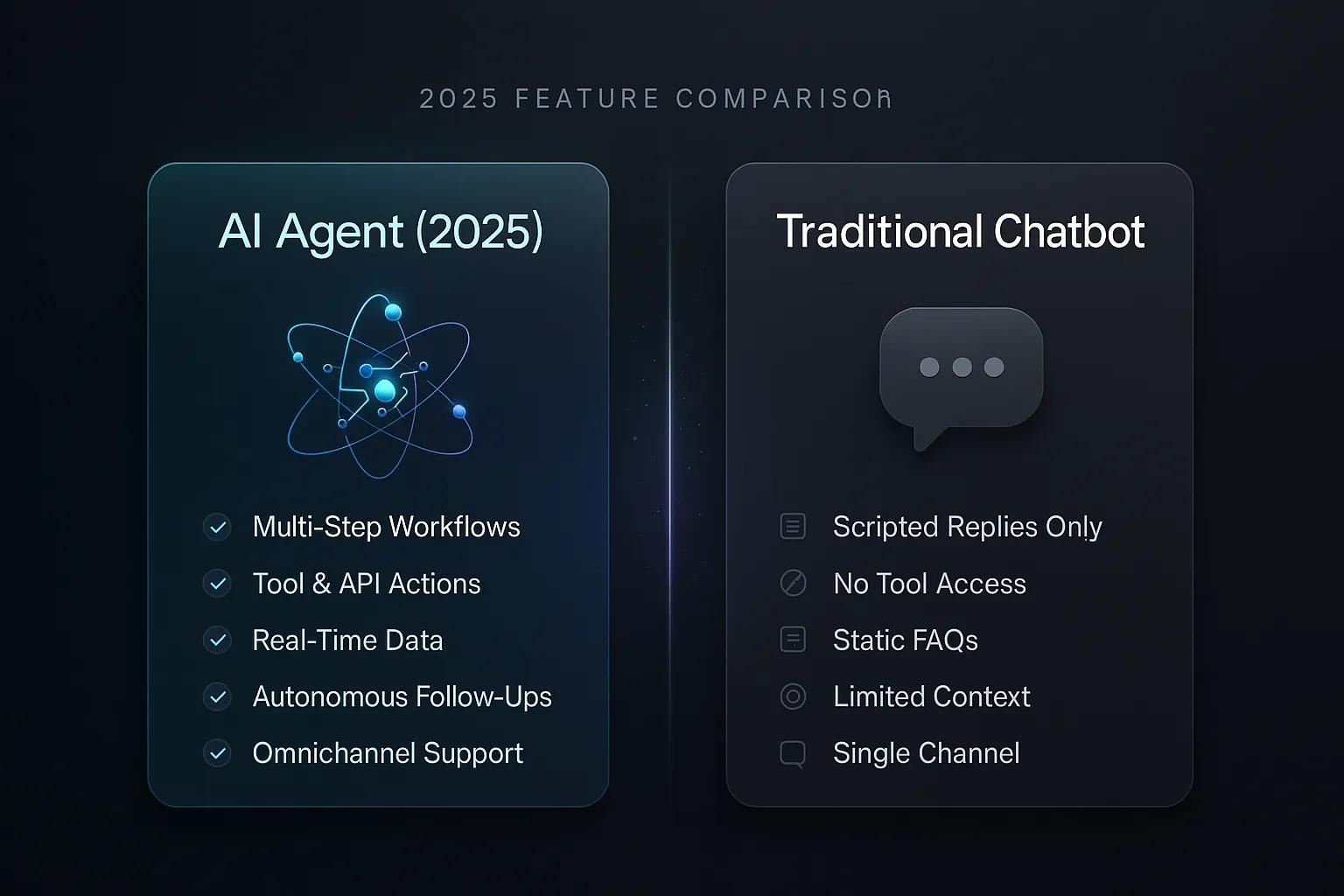
AI Agent vs Traditional Chatbot: 2026 Feature Comparison
It's 11 PM on a Tuesday. A customer reports a damaged package through your support channel. Your traditional chatbot politely apologizes and provides a link to...
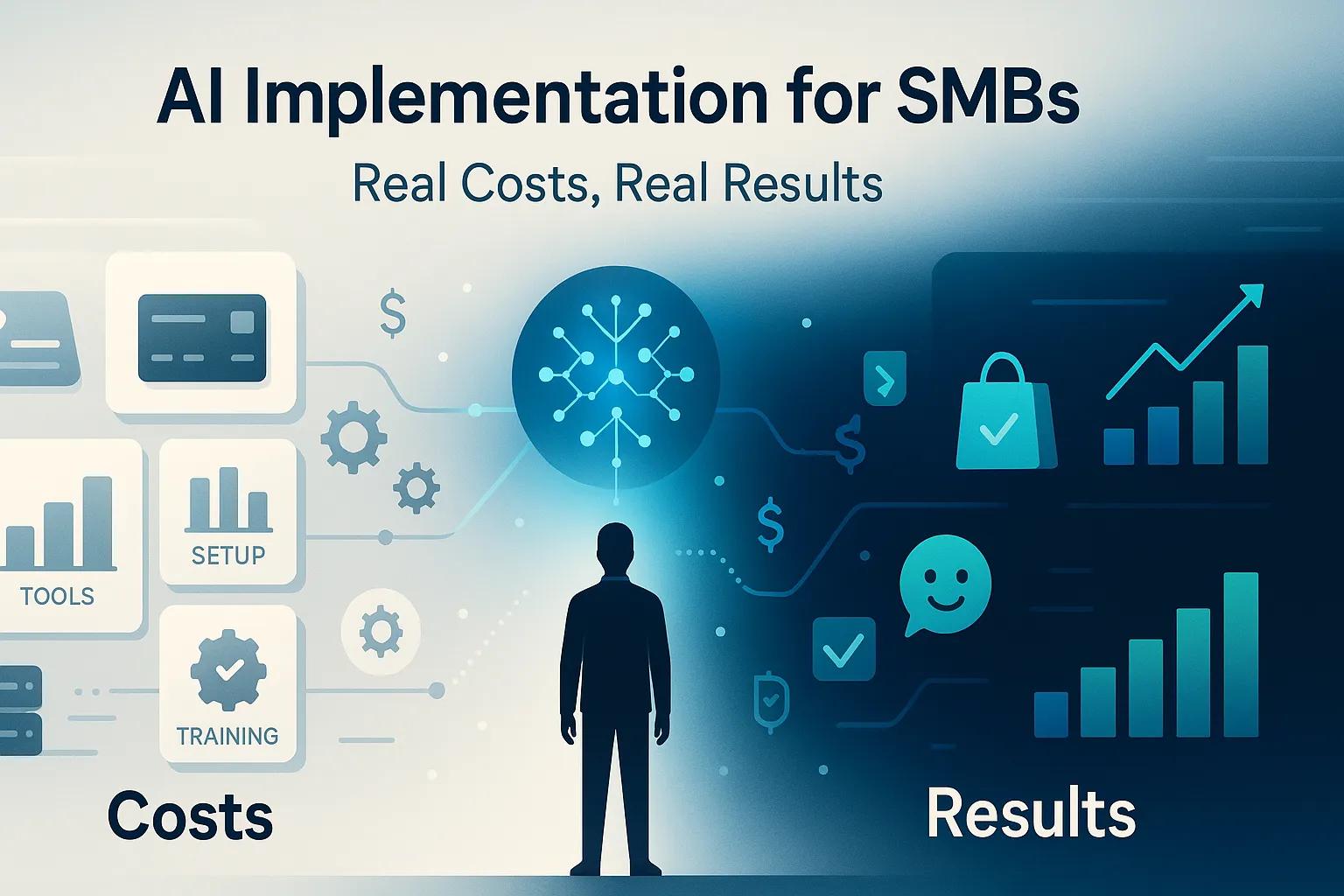
AI Implementation for SMBs: Real Costs, Real Results
Here's something nobody talks about enough: 68% of small businesses with 10-100 employees are now using AI regularly. That number jumped from 48% in just six...
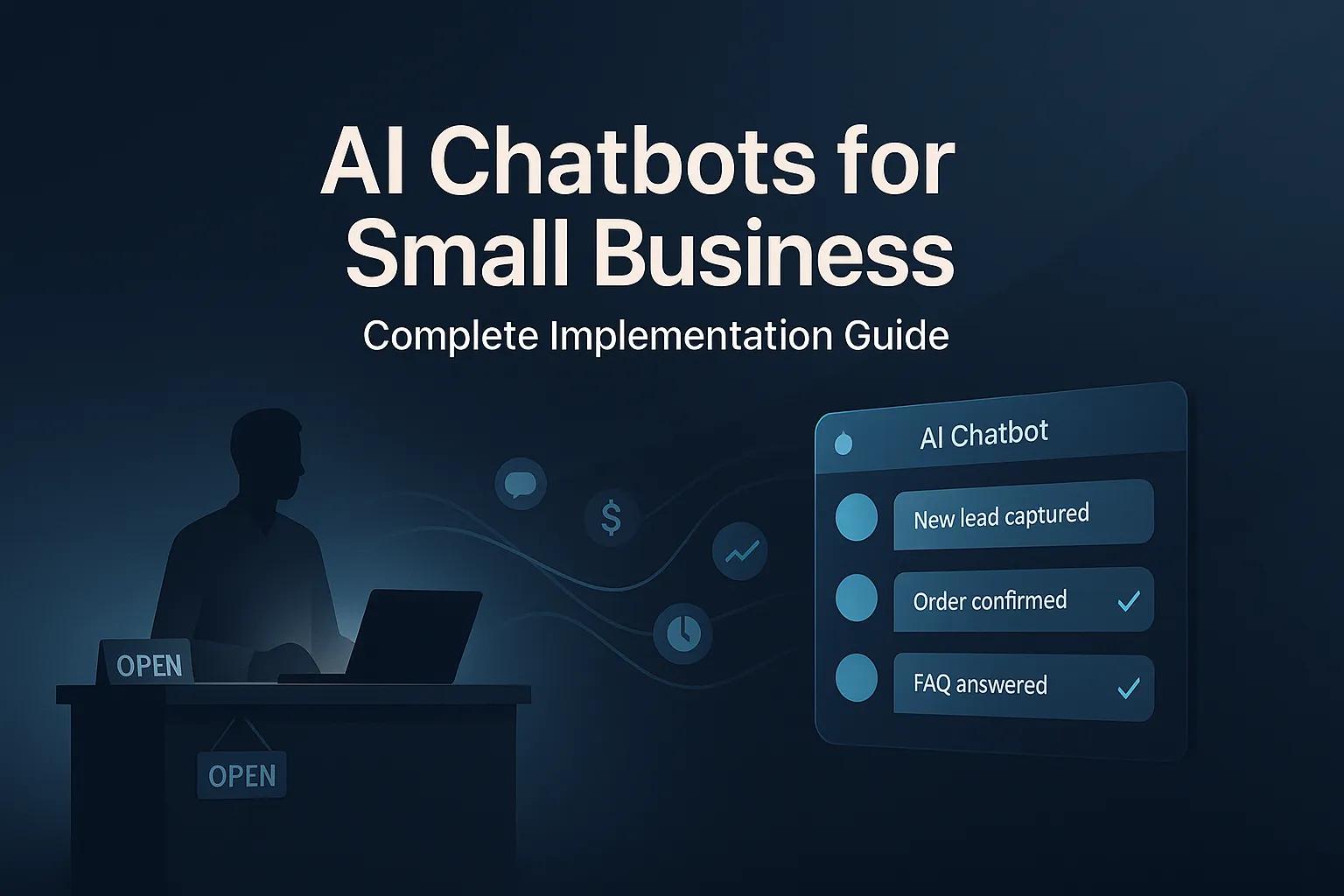
AI Chatbots for Small Business: Complete Implementation Guide
It's 2:47 AM. A potential customer lands on your website, ready to book your service. But there's nobody there to answer. By morning, they've moved on to your...