
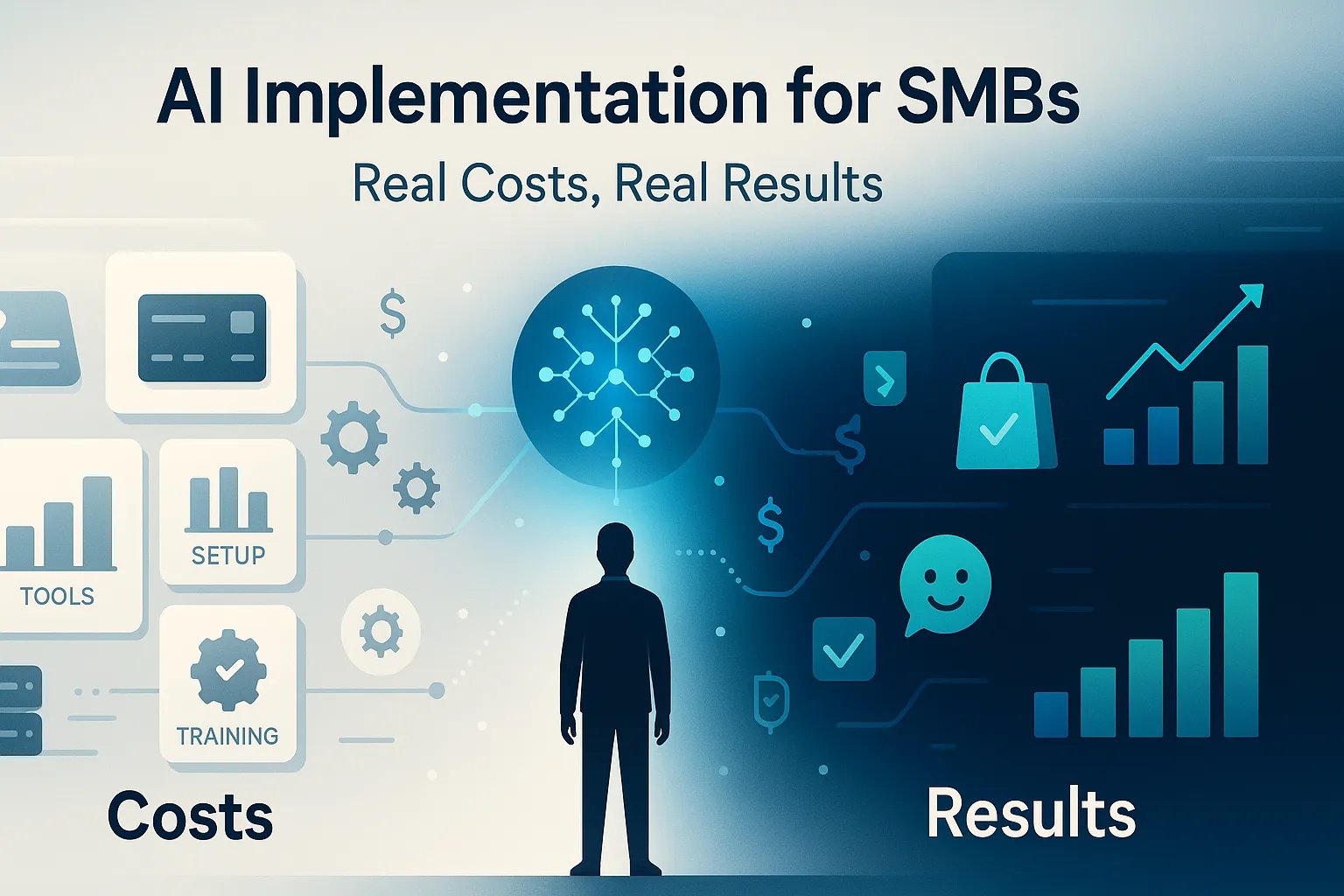
AI Implementation for SMBs: Real Costs, Real Results
The Practical Roadmap to AI Success (With Actual ROI Data)

Here's something nobody talks about enough: 68% of small businesses with 10-100 employees are now using AI regularly. That number jumped from 48% in just six months.
But here's the kicker, while adoption rates are soaring, somewhere between 70-85% of AI projects crash and burn. RAND Corporation's research confirms what we've seen firsthand: AI project failure rates are literally double the failure rate of regular IT projects.
So what's the disconnect? After implementing AI solutions across a range of industries at Gaazzeebo, we've learned exactly where companies go wrong, and more importantly, how to get it right. This isn't another generic "AI is the future" think piece. This is the implementation roadmap we wish we'd had three years ago.
The AI Reality Check: What's Actually Happening in 2026
Let's start with the good news. Companies using AI aren't just experimenting anymore, they're seeing real returns. Salesforce's 2024 survey of 3,350 SMB leaders found that 91% of businesses using AI report it boosts their revenue. Not "might boost" or "could potentially boost", actually boosts.
The average ROI? Companies are seeing $3.70 returned for every dollar spent on generative AI. The top performers? They're hitting $10.30 for every dollar invested. Those aren't promises from a vendor pitch deck. Those are actual numbers from companies that figured out the implementation puzzle.
But here's what the hype articles won't tell you: most businesses never get close to those numbers. A 2025 S&P Global Market Intelligence study found that 42% of companies are abandoning most of their AI initiatives, up from just 17% the previous year. The average organization scraps 46% of AI proof-of-concepts before they ever reach production.
That's a lot of wasted budgets and disappointed stakeholders.
Why "Just Add AI" Doesn't Work
We once had a Tampa restaurant owner call us asking for "an AI." Not an AI solution for a specific problem, just "an AI" because their competitor had one. That's like calling and asking for "a marketing." It's not a thing you buy; it's a capability you build to solve specific problems.
This happens all the time. According to MIT's 2025 research analyzing 150 leadership interviews and 300 public deployments, only 5% of AI pilot programs achieve rapid revenue acceleration. The other 95%? They stall out, delivering little to no measurable impact.
Here's why most AI projects fail:
Problem #1: Solution Looking for a Problem
Companies start with "We need AI" instead of "We're losing four hours a day to X problem." RAND's research confirms this is the most common cause of failure. Business leaders misunderstand what problem needs solving, or they communicate it poorly to the technical team.
We saw this with a property management company that wanted AI for "efficiency." That's not actionable. After digging deeper, we found their real pain point: coordinating with 30+ vendors across 200+ properties was eating 15 hours per week of manager time. Now we had something concrete to solve.
Problem #2: Dirty Data Syndrome
A NewVantage Partners 2024 survey found that 92.7% of executives identify data quality as the most significant barrier to AI implementation. You can't train an AI on garbage and expect gold.
Think of it this way: if you hired a new employee and handed them incomplete, contradictory information to learn from, they'd make terrible decisions. AI is no different. Gartner predicts that through 2025, at least 50% of generative AI projects will be abandoned due to poor data quality.
Problem #3: The Pilot Trap
Companies launch a proof-of-concept, it works beautifully in a controlled environment, and then... nothing. They never plan for production deployment. The integration challenges, authentication, compliance, training users, remain unaddressed until someone asks "when does this go live?"
Boston Consulting Group's 2024 research shows that 74% of companies struggle to achieve and scale value from their AI initiatives. The technology works. The implementation strategy doesn't.
The Real Cost of AI Implementation (No BS Edition)
Let's talk numbers. Real numbers, not "contact us for pricing" vagueness.
Basic Automation (Task-Level)
Cost: $500-$2,000
Timeline: 2-4 weeks
Examples: Email autoresponders, data entry automation, basic chatbots
Best for: Repetitive tasks you can document in a simple flowchart
AI Agents (Complex Problem-Solving)
Cost: $2,000-$5,000
Timeline: 6-10 weeks
Examples: Customer service agents, lead qualification, appointment scheduling
Best for: Tasks requiring context understanding and decision-making
Take our restaurant AI agent, AEDAN. It handles phone calls, takes reservations, answers menu questions, and routes complex issues to staff. Initial implementation: $3,200. Monthly operational cost after optimization: $80-120 (we had to fix an early design flaw where database costs were eating 92% of the budget, learn from our mistakes).
Custom AI Solutions (Process Transformation)
Cost: $10,000-$50,000+
Timeline: 12-20 weeks
Examples: Vendor management systems, bid processing automation, predictive analytics
Best for: Core business processes where off-the-shelf solutions don't cut it
For context, the average AI deployment takes less than 8 months, with companies typically seeing value realization within 13 months. That's actual production deployment, not just a proof-of-concept.
Compare those numbers to hiring. The Bureau of Labor Statistics puts the median hourly wage for customer service reps at $18-22. That's $37,440-$45,760 annually, plus benefits, training, and turnover costs. A $3,000 AI agent that works 24/7 without sick days or vacation? The ROI math isn't complicated.
The Pre-Implementation Playbook
Before you spend a dollar on AI, work through these questions. If you can't answer them clearly, you're not ready.
Is Your Business AI-Ready?
Run this quick diagnostic:
Digital Infrastructure Baseline
✅ Do you have reliable internet and cloud storage?
✅ Are your business processes documented (even roughly)?
✅ Can you access your data electronically, or is everything in filing cabinets?
If you're still primarily paper-based or your "system" is a bunch of Excel files on someone's desktop, pump the brakes. Focus on basic digitization first.
Data Availability
✅ Do you collect customer interaction data (emails, calls, support tickets)?
✅ Is it stored in one place, or scattered across six different platforms?
✅ Can you export it in a usable format?
You don't need perfect data. But you need data. One of our orthodontic practice clients had years of patient communications in their practice management software but had never exported any of it. That historical data became the training foundation for their AI scheduling assistant.
Budget Reality Check
Industry standard is allocating 3-7% of revenue for technology investments. For a $2 million revenue business, that's $60,000-$140,000 annually. That might sound like a lot, but remember, you're already spending on technology. This is about redirecting some of that budget strategically.
Team Readiness
Here's the thing nobody tells you: 70% of successful AI transformations comes down to upskilling people, updating processes, and evolving culture, not the technology itself. If your team isn't on board, your fancy AI solution will collect dust.
Finding Your High-Impact Use Case
Not every problem needs AI. Start with our "Time Audit" methodology:
- Track one week of your team's time. Where are the hours actually going?
- Identify repetitive, high-volume tasks. Things you do 10+ times per day/week.
- Calculate the cost. If it takes 30 minutes each time and happens 20 times per week, that's 10 hours weekly, $20,000-$30,000 annually at typical labor rates.
- Assess AI suitability. Does it follow consistent logic? Is there enough volume to justify automation?
Real example from our work: A construction company was spending 4 hours per bid request gathering past project data, pricing information, and subcontractor availability. They processed 50+ bids monthly. That's 200 hours, or one full-time employee just on bid preparation. We built a custom software solution that cut that to 45 minutes per bid. ROI timeline: 6 months.
Looking for industry-specific guidance? See how we apply AI across home services, fintech, real estate, and ecommerce.
The Prioritization Matrix
Plot your potential use cases on two axes:
- Impact: How much time/money does this save?
- Feasibility: How clean is your data? How well-defined is the process?
Start with high-impact, high-feasibility items. Those quick wins build momentum and fund more ambitious projects.
Red Flags: Where AI Won't Help
❌ Tasks requiring genuine creativity or empathy
❌ Processes that change constantly with no pattern
❌ Problems where you don't have (and can't get) relevant data
❌ Situations where "good enough" isn't good enough (high-stakes legal decisions, medical diagnoses without oversight)
The Six-Phase Implementation Roadmap
Here's the actual process we use, with real timelines and deliverables.
Phase 1: Discovery & Planning (2-4 Weeks)
What Happens:
- Process mapping workshops (usually 2-3 sessions)
- Data audit, what you have, what you need, what's missing
- Define success metrics upfront (response time? cost reduction? error rate?)
- Budget finalization with contingency (add 20% for unexpected issues)
Deliverable: A one-page implementation brief that a smart eighth-grader could understand. If you can't explain it simply, you don't understand it well enough to build it.
Real Example: For a commercial real estate firm, we mapped their tenant inquiry process. Turns out 60% of inquiries were answered with information already on their website. Another 25% needed one piece of specific information from their property database. Only 15% required actual human judgment. That shaped the entire AI agent design.
Phase 2: Pilot Development (4-8 Weeks)
What Happens:
- Building the actual solution (or configuring purchased software)
- Integration with your existing systems (this always takes longer than expected)
- Training data preparation and initial model training
- Internal testing with 2-5 team members
Why Pilots Matter: Harvard Business Review's research on tech adoption consistently shows that phased rollouts have 60-70% higher success rates than "big bang" launches. Pilots let you discover problems when the stakes are low.
Build vs. Buy Decision:
- Buy if: The use case is common (customer service, scheduling, basic CRM automation) and off-the-shelf solutions exist
- Build if: Your process is unique, you need deep integration with proprietary systems, or you have specific compliance requirements
- Hybrid (our most common recommendation): Buy the core platform, customize for your specific needs
Phase 3: Testing & Refinement (2-4 Weeks)
What Happens:
- User acceptance testing with your actual team
- Edge case identification ("What if the customer speaks Spanish?" "What if they're calling about a custom order?")
- Performance benchmarking against your predefined metrics
- Cost monitoring, are operational costs where you projected?
Critical Testing Checklist:
✅ Does it handle the happy path? (Normal use case)
✅ Does it handle the angry customer? (Emotional edge case)
✅ Does it handle nonsense inputs gracefully?
✅ What happens when it doesn't know the answer?
✅ Are there any bias issues? (Run tests with varied demographics)
With AEDAN, our restaurant agent, we discovered during testing that it handled standard reservation requests perfectly but got confused by requests for "a table for 8 but we might be 10." That kind of ambiguity? We trained it to ask clarifying questions rather than guess.
Phase 4: Deployment (1-2 Weeks)
What Happens:
- Phased rollout (we typically start at 20% of traffic, then 50%, then 100%)
- Real-time monitoring dashboards
- Team training on working alongside AI
- Communication to customers (if customer-facing)
Change Management Reality: Some of your team will resist. They're worried about being replaced. Address this head-on:
- Frame AI as "your new assistant" not "your replacement"
- Show how it handles the boring stuff so they can do more interesting work
- Involve skeptics in the testing process, make them feel ownership
One property management team member told us "If this AI can handle vendor scheduling, I never want to touch it again. Do you know how many times a week I call plumbers?"
Phase 5: Optimization (Ongoing)
What Happens:
- Weekly performance reviews for the first month
- Monthly refinement after that
- Retraining with new data as patterns emerge
- Scaling decisions based on actual usage
This phase never really ends. AI isn't "set and forget." It's "set and improve."
Typical Timeline Summary:
- Simple AI chatbot: 6-8 weeks total, 2-3 weeks to first value
- Process automation: 8-12 weeks total, 4-6 weeks to first value
- Custom AI agent: 12-16 weeks total, 8-10 weeks to first value
The Seven Deadly Sins of AI Implementation
Learn from others' expensive mistakes:
Sin #1: Solution Looking for a Problem
Starting with "We need AI" instead of "We need to solve X problem." One client wanted an AI for marketing. Why? Because their competitor had one. After some probing, their actual problem was creating consistent social media content, which needed a content calendar and templates more than it needed AI.
Sin #2: Dirty Data Syndrome
Implementing AI on poor-quality data. We can't stress this enough, Gartner reports this kills 50% of AI projects. If your data is a mess, clean it first. Budget 30-40% of your project timeline for data preparation.
Sin #3: Over-Automation
Removing necessary human touchpoints. AI should handle the routine 80%, but that empathetic, creative, judgment-heavy 20% still needs humans. We've seen companies automate customer service complaints and lose customers because nobody wants to argue with a bot when they're angry.
Sin #4: Vendor Lock-In
Not planning for portability. If your entire business process becomes dependent on one vendor's proprietary system, you've created a different problem. Use open standards where possible. Make sure you can export your data.
Sin #5: Training Neglect
Not preparing teams for change. Research consistently shows that organizational factors, not technical ones, determine AI success. Budget for training time. Give people space to learn. Celebrate early adopters.
Sin #6: Premature Scaling
Expanding before pilot success. We've watched companies spend $50,000 scaling a solution that wasn't working at small scale. Nail it before you scale it.
Sin #7: ROI Impatience
Expecting results in weeks instead of months. The average value realization timeline is 13 months. Plan accordingly. Set interim milestones so you're seeing progress, but don't expect full ROI in quarter one.
Measuring Success: The Metrics That Actually Matter
Forget vanity metrics. Here's what to track:
Efficiency Metrics
Time saved: Hours reclaimed per week/month (actual logged time, not estimates)
Cost reduction: Calculated as (Labor Cost Saved) - (AI Implementation + Operating Cost)
Throughput increase: Volume of work completed per time period
Real example: Our construction bid management system reduced bid prep time from 4 hours to 45 minutes per bid. At 50 bids monthly, that's 162.5 hours saved. At $45/hour loaded labor cost, that's $7,312 monthly savings, or $87,744 annually.
Quality Metrics
Error rate: Mistakes per 100 transactions (compare pre/post implementation)
Customer satisfaction: CSAT or NPS scores
First-contact resolution: Percentage of issues resolved without escalation
AEDAN, our restaurant agent, maintains 94% first-contact resolution on reservations and inquiries, versus 78% when handled by staff distracted by other tasks.
Growth Metrics
Revenue impact: Tracked through increased capacity or conversion rates
Customer capacity increase: How many more customers can you serve?
Response time improvement: From hours to minutes matters
The ROI Formula
Here's the actual math:
Total Savings Annually:
(Hours Saved Weekly × 52 weeks × Hourly Rate) + Additional Revenue Generated
Total Cost:
Implementation Cost + (Monthly Operating Cost × 12)
ROI Percentage:
((Total Savings - Total Cost) / Total Cost) × 100
Payback Period:
Implementation Cost / (Monthly Savings - Monthly Operating Cost)
Real Calculation Example:
Customer service AI agent for a 20-employee service business:
- Implementation: $4,500
- Monthly operating cost: $150
- Hours saved weekly: 25 (handling routine inquiries)
- Average hourly rate: $28 (loaded cost)
- Additional revenue: $2,400/month (can handle more customers)
Annual savings: (25 hours × 52 weeks × $28) + ($2,400 × 12) = $36,400 + $28,800 = $65,200
Annual cost: $4,500 + ($150 × 12) = $6,300
ROI: 935%
Payback period: 1.5 months
Not all use cases are that dramatic, but that's a real example from a client deployment.
When to Expect Break-Even
Based on our implementations:
- High-volume, repetitive tasks: 3-6 months
- Complex process automation: 6-12 months
- Custom solutions with significant development: 12-18 months
Deloitte's Q4 2024 State of Gen AI report found that 74% of organizations said their most advanced AI initiatives met or exceeded ROI expectations. But notice the word "most advanced", these are companies that got good at implementation.
What Success Actually Looks Like
Numbers tell part of the story. Here's the rest:
Quantitative Success:
✅ You hit your target metrics (time saved, cost reduced, etc.)
✅ Operating costs are stable and predictable
✅ ROI meets or exceeds your projected timeline
✅ You're scaling to additional use cases
Qualitative Success:
✅ Team adoption rate exceeds 80% (people actually use it)
✅ Customer feedback is positive or neutral (no complaints about "talking to a robot")
✅ You've identified 2-3 additional use cases you want to tackle next
✅ Leadership understands what you built and why
We measure success for clients using a simple framework:
- Did it solve the problem? (Effectiveness)
- Did people adopt it? (Usability)
- Did it cost what we projected? (Budget accuracy)
- Would we do it again? (Strategic value)
If the answer to all four is "yes," it's a success. Three out of four? Pretty good, identify the gap. Two or fewer? Time for serious recalibration.
Future-Proofing Your AI Investment
AI is evolving fast. Here's how to build for the long term:
Design for Flexibility
Use modular architecture. If you need to swap out the AI model later (moving from one platform to another), you shouldn't have to rebuild everything.
Build Feedback Loops
Every interaction should feed back into improvement. User ratings, edge case logs, performance metrics, capture it all. The best AI solutions get better over time.
Stay Current (But Don't Chase Shiny Objects)
New AI capabilities drop constantly. Establish a quarterly review: What's new? Does it solve a problem we have? What's the effort to integrate?
Don't jump on every new model or feature. But don't ignore meaningful advances either.
Plan for Scaling
If your pilot succeeds, what's next? Map out 2-3 additional use cases in advance. This helps you build with the right architecture from day one.
Monitor Total Cost of Ownership
Initial implementation is one cost. Ongoing operations, maintenance, and updates are another. IBM's research on AI ROI emphasizes tracking both hard costs (infrastructure, tools) and soft costs (training time, adoption challenges).
The Bottom Line
AI implementation for SMBs isn't rocket science, but it's not plug-and-play either. It's a strategic project that requires clear thinking, realistic budgeting, and systematic execution.
Here's what we've learned implementing solutions across a range of industries:
Start Small, Think Big: Pick one high-impact use case. Nail it. Then expand. Companies trying to "AI all the things" at once are the ones in that 70-85% failure bucket.
Invest in Foundations: Clean data, documented processes, and team training aren't sexy. They're also not optional. RAND's research is explicit: up-front investment in infrastructure and data governance substantially reduces project timelines and increases success rates.
Measure What Matters: Revenue, time saved, error rates, customer satisfaction. Pick 3-5 metrics you'll actually track. Make someone responsible for reporting them monthly.
Be Patient With ROI, Impatient With Problems: Most companies see value within 13 months, but problems should surface in weeks. If something isn't working in month two, fix it. Don't wait until month twelve to realize your pilot was flawed.
Keep the Human in the Loop: AI augments people, it doesn't replace human judgment. The best implementations we've seen use AI for the repetitive 80% and free humans for the high-value 20%.
The companies seeing that 3.7x ROI and 91% revenue boost? They're not doing anything magical. They're being systematic, realistic, and focused on solving actual problems rather than chasing buzzwords.
Your Next Steps
If you made it this far, you're already ahead of most companies that jump into AI without a plan. Here's what to do next:
- ✅ Run the readiness diagnostic from the Pre-Implementation section
- ✅ Complete the Time Audit for one week to identify high-impact use cases
- ✅ Calculate potential ROI for your top 1-2 use cases using the formula above
- ✅ Talk to your team about what frustrates them most in their daily work
- ✅ Document one process end-to-end that you might want to automate
Don't start with technology selection. Start with problem identification.
And remember: the goal isn't to have AI. The goal is to solve problems more efficiently, serve customers better, and give your team time to focus on work that actually moves your business forward.
The AI implementation playbook isn't complicated. It's just rarely followed. Be the company that does it right.
Want to dive deeper? Schedule a free 30-minute AI strategy session → where we'll walk through your highest-impact use case.
Contact Gaazzeebo:
- Website: gaazzeebo.net
- Email: carter@gaazzeebo.net
- Phone: (813) 444-3798
Sources & References
- Salesforce SMB Trends Report 2024-2025
- RAND Corporation - Root Causes of AI Project Failure
- McKinsey's State of AI 2025
- Boston Consulting Group - AI Implementation Research 2024
- IBM - Maximizing ROI on AI
- MIT Research on Enterprise AI Deployments
- Gartner AI Adoption Reports
- Deloitte State of Gen AI Q4 2024
- S&P Global Market Intelligence AI Survey 2025
- QuickBooks Small Business AI Usage Study
- NewVantage Partners Data Quality Survey 2024
- Harvard Business Review - Technology Adoption Research
- Bureau of Labor Statistics - Wage Data
About Gaazzeebo: Tampa-based technology company specializing in AI agents, custom automation, and business process optimization. Serving small and medium businesses since 2024.
See What This Could Save Your Business
Nine questions, no login. See what manual work costs you across every location, and which three fixes pay back first.
Score my operationsSee where your locations standFree 30-minute assessment. No commitment required.
Related Articles
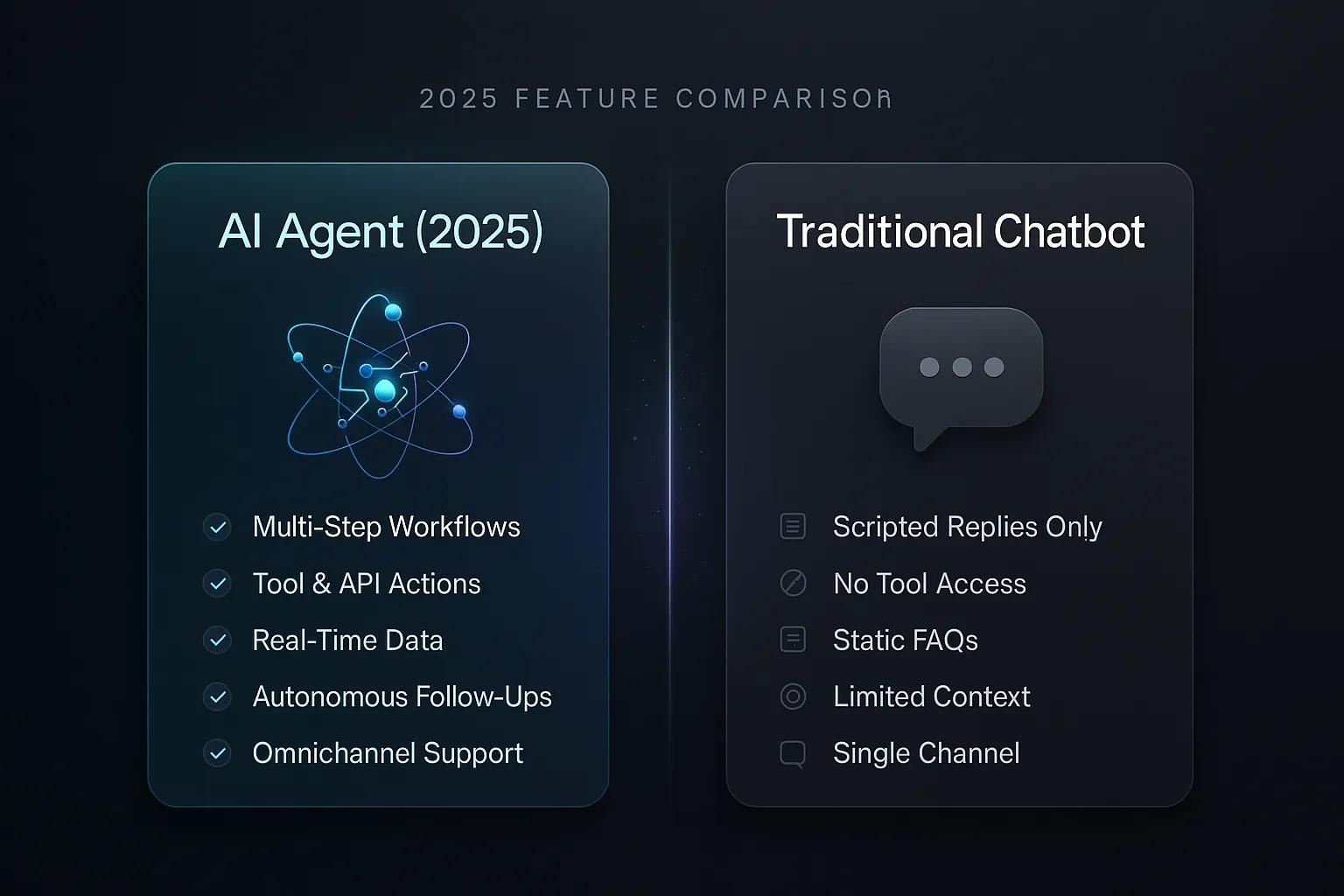
AI Agent vs Traditional Chatbot: 2026 Feature Comparison
It's 11 PM on a Tuesday. A customer reports a damaged package through your support channel. Your traditional chatbot politely apologizes and provides a link to...
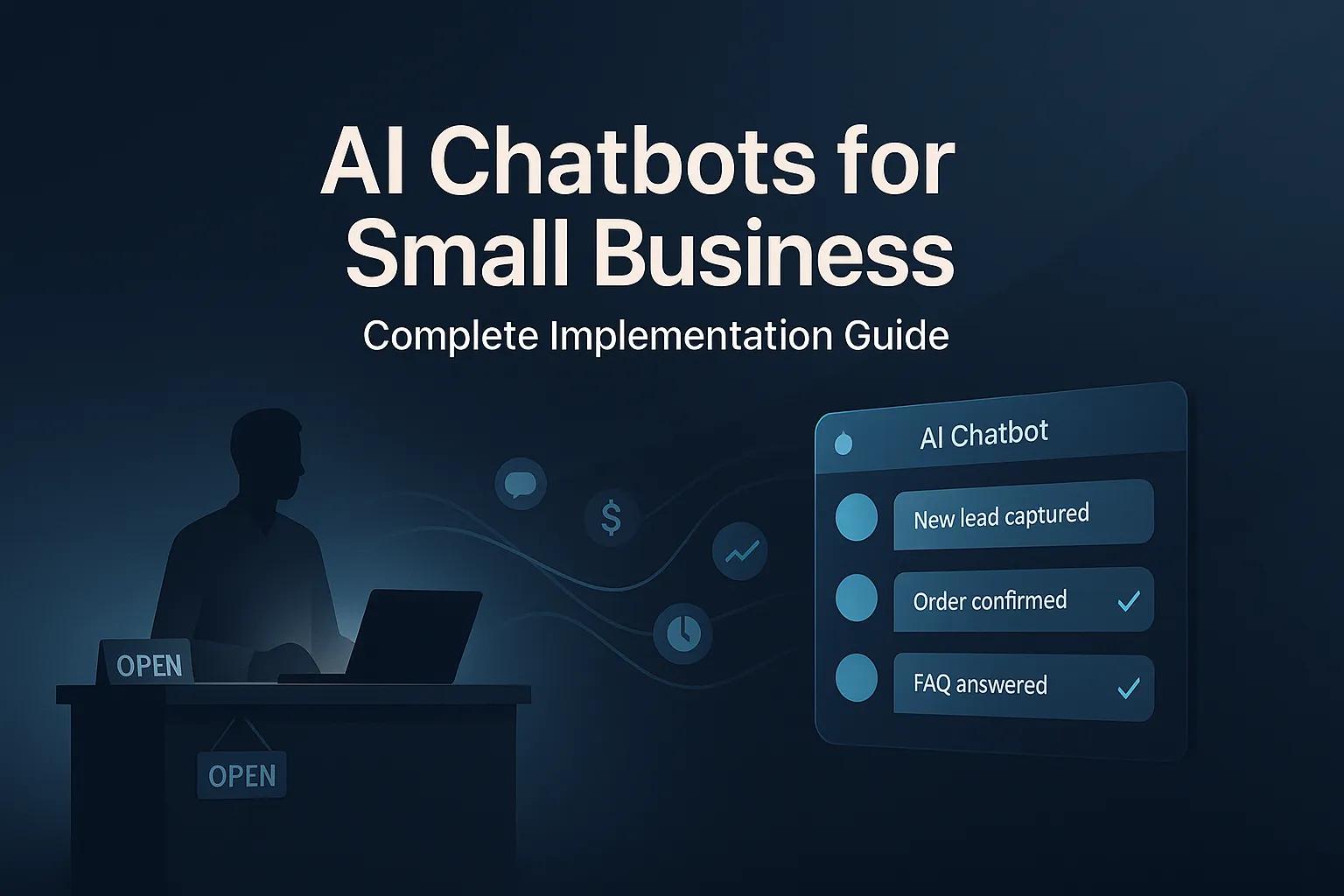
AI Chatbots for Small Business: Complete Implementation Guide
It's 2:47 AM. A potential customer lands on your website, ready to book your service. But there's nobody there to answer. By morning, they've moved on to your...

What is Agentic AI? The Complete Business Guide for 2026
The chatbot era is over. Not because chatbots failed; they were useful for what they were designed to do. But in 2026, businesses are demanding more than...