
Florida AI Chatbot PHI Compliance Guide


Sixty-eight percent of healthcare breaches in 2025 stemmed from IT incidents, primarily involving protected health information (PHI) exposure [HHS Office for Civil Rights 2025 Annual Report]. Multi-location clinics, hospitals, and specialty practices using AI chatbots are facing increasing scrutiny over patient data, and they need to navigate a complex web of state and federal regulations to avoid severe penalties.
This guide explores PHI compliance for AI chatbots in Florida, detailing the specific legal frameworks, technical safeguards, and operational policies multi-location healthcare providers need to implement. We address how to deploy AI agents responsibly, ensuring patient trust and regulatory adherence across every location.
What You'll Learn
- The intersection of federal HIPAA and Florida's specific data privacy laws.
- Key compliance risks associated with AI chatbots handling Protected Health Information (PHI).
- Essential technical and administrative safeguards for secure AI chatbot deployment.
- How to conduct a comprehensive privacy impact assessment for AI-driven solutions.
- Strategies for vendor selection and secure integration of AI agents within existing systems.
Understanding Florida's Unique PHI Compliance Landscape for AI
Florida's healthcare landscape introduces specific challenges for Protected Health Information (PHI), particularly with the rise of AI chatbots. While the federal Health Insurance Portability and Accountability Act (HIPAA) sets a national standard, Florida implements its own robust privacy laws that demand careful attention. These state laws often expand upon HIPAA's protections, creating a stricter compliance environment for businesses operating within the state. Ignoring these nuances can lead to significant penalties, impacting both reputation and finances.
Defining PHI in Florida
PHI in Florida largely aligns with the federal HIPAA definition. It includes any individually identifiable health information created, received, stored, or transmitted by a covered entity or its business associate. This covers a wide range of data, from medical records and diagnoses to billing information and appointment schedules. Florida Statute 456.057 outlines specific requirements for patient records, emphasizing the patient's right to access and control their health information Florida Legislature Statute 456.057 (2025). For AI chatbots, this means any interaction where a user shares personal health details, symptoms, or medical history immediately falls under PHI regulations.
Florida's Primary Data Privacy Laws Augmenting HIPAA
Florida has enacted several key statutes that enhance federal HIPAA requirements, especially concerning data breaches and patient consent. These laws directly impact how AI chatbots can collect, process, and store health data.
- Florida Information Protection Act (FIPA): FIPA (Florida Statute 501.171) is a comprehensive data breach notification law Florida Legislature Statute 501.171 (2025). It requires businesses to notify individuals and the Florida Attorney General of data breaches involving personal information, including medical information, within 30 days. This timeline is often shorter than HIPAA's general notification requirements, demanding swift action from any entity managing PHI. A failure to comply can result in fines of up to $500,000 per incident [Florida Office of the Attorney General (2025 Report)].
- Florida Statute 456.057 (Patient Records): This statute explicitly governs the access, release, and confidentiality of patient records by healthcare practitioners Florida Legislature Statute 456.057 (2025). It reinforces the need for explicit patient consent before disclosing PHI. For AI chatbots, this means consent mechanisms must be clear, granular, and easily auditable.
- Florida Statute 381.004 (Confidentiality of Health Records): This law provides further protections for health records, particularly those related to HIV testing and mental health Florida Legislature Statute 381.004 (2025). AI chatbots designed for specific health domains must be especially diligent in handling such sensitive information, often requiring enhanced security measures and stricter access controls.
Applying Florida PHI Laws to AI Chatbots
AI chatbots handling PHI in Florida must navigate both federal HIPAA and these state-specific mandates. The implications are significant for design, deployment, and ongoing operation.
- Consent Mechanisms: Chatbots must secure clear, informed consent from users before collecting any PHI. This consent must specify how the data will be used, stored, and shared, adhering to Florida Statute 456.057.
- Data Minimization: Collect only the PHI strictly necessary for the chatbot's function. This reduces the risk exposure in case of a breach, aligning with FIPA's focus on data protection.
- Security Safeguards: Implement robust technical, administrative, and physical safeguards. This includes encryption for data in transit and at rest, access controls, and regular security audits. Gaazzeebo's AI Agents are designed with these safeguards as core components, ensuring data integrity for clients like DDES, which requires stringent data handling for economic research Gaazzeebo Results: DDES.
- Breach Response Planning: Develop and regularly test a comprehensive data breach response plan that meets FIPA's 30-day notification timeline. This plan must cover identification, containment, eradication, recovery, and notification procedures.
- Business Associate Agreements (BAAs): If a third-party AI chatbot vendor processes PHI on behalf of a Florida covered entity, a BAA is mandatory. This agreement legally obligates the vendor to comply with HIPAA and Florida's privacy laws.
Key Insight: Florida's state-specific data privacy laws, particularly FIPA and statutes governing patient records, significantly the compliance bar for AI chatbots handling PHI beyond federal HIPAA requirements. Organizations must integrate these stricter state mandates into their chatbot design and operational protocols to avoid substantial legal and financial penalties.
HIPAA's Reach: Core Rules for AI Chatbots Processing PHI
The Health Insurance Portability and Accountability Act (HIPAA) sets federal standards for protecting patient health information. Florida's AI chatbots that process Protected Health Information (PHI) must strictly adhere to these regulations. Non-compliance carries severe penalties, including fines up to $1.5 million per violation category per year [HHS.gov Enforcement Highlights 2025]. Understanding the core HIPAA rules is essential for any multi-location healthcare business deploying AI.
HIPAA Privacy Rule and AI Chatbots
The HIPAA Privacy Rule establishes national standards to protect individuals' medical records and other personal health information. It governs the use and disclosure of PHI by covered entities (like hospitals, clinics, and health plans) and their business associates. AI chatbots handling PHI must ensure that patient data is only used or disclosed for treatment, payment, or healthcare operations, or with explicit patient authorization HHS.gov Privacy Rule Summary 2025. This means chatbot interactions must be designed to avoid unauthorized data sharing. For instance, a chatbot should not reveal a patient's appointment details to an unverified user.
Consent mechanisms are critical for AI chatbots. Patients must provide clear, informed consent for their PHI to be processed by an AI. This includes understanding how their data will be used, stored, and potentially shared. Implementing robust authentication protocols is also vital to verify user identity before disclosing any PHI. Gaazzeebo's custom AI agents integrate directly with existing patient portals to ensure secure, authenticated access.
HIPAA Security Rule and AI Chatbot Data Protection
The HIPAA Security Rule mandates safeguards to protect electronic PHI (ePHI). It requires covered entities and business associates to implement administrative, physical, and technical safeguards. For AI chatbots, this means encrypting all ePHI both in transit and at rest HHS.gov Security Rule Guidance 2025. Access controls must be strictly enforced, limiting who can interact with or retrieve PHI through the chatbot system. Forty-three percent of healthcare data breaches originated from unsecured network configurations in 2025 [Verizon Data Breach Investigations Report 2025 Healthcare Sector].
Regular security risk assessments are non-negotiable for AI chatbot deployments. These assessments identify vulnerabilities and ensure compliance with HIPAA's technical safeguard requirements. Multi-location practices must also implement audit controls to record and examine activity in information systems that contain ePHI. This helps detect and deter unauthorized access attempts.
Business Associate Agreements (BAAs) for AI Vendors
When a multi-location business uses a third-party AI chatbot vendor, a Business Associate Agreement (BAA) is mandatory. A BAA is a contract that requires the vendor (the Business Associate) to protect PHI in accordance with HIPAA HHS.gov Business Associate Contracts 2025. This agreement outlines the permissible uses and disclosures of PHI by the business associate. It also specifies the safeguards the vendor must implement.
Without a BAA, the covered entity remains fully liable for any HIPAA violations by the AI chatbot vendor. This includes data breaches or improper PHI handling. For example, a multi-location dental practice using an AI chatbot for appointment scheduling and patient inquiries must have a BAA in place with the chatbot provider. This ensures both parties understand their responsibilities in protecting patient data. Gaazzeebo ensures all AI solutions for healthcare clients include robust BAAs, protecting both our clients and their patients.
HIPAA Breach Notification Rule and AI Incidents
The HIPAA Breach Notification Rule requires covered entities and business associates to notify affected individuals, the Secretary of HHS, and in some cases, the media, following a breach of unsecured PHI. For AI chatbots, this means having a clear incident response plan. If an AI chatbot system experiences a security incident that compromises PHI, immediate action is required. Notifications must generally be made without unreasonable delay and no later than 60 days following the discovery of a breach HHS.gov Breach Notification Rule 2025.
Multi-location businesses must establish protocols for identifying, containing, and reporting potential breaches involving their AI chatbots. This includes logging all chatbot interactions and having systems to detect unusual access patterns. Failure to comply with breach notification requirements can result in significant fines and reputational damage.
Key Insight: Florida AI chatbots handling PHI must integrate HIPAA Privacy, Security, and Breach Notification Rules into their design and operation, underpinned by comprehensive Business Associate Agreements with all third-party vendors.
Technical Safeguards: Securing PHI in AI Chatbot Architecture
Protecting Protected Health Information (PHI) in AI chatbot architectures requires a multi-layered technical strategy. Florida's specific regulations, building on HIPAA, mandate robust safeguards to prevent data breaches and ensure patient privacy. These technical controls are not optional; they are foundational to compliant AI deployments.
Encryption of PHI at Rest and in Transit
Encryption is a primary defense for PHI. All PHI handled by an AI chatbot must be encrypted both when stored (encryption at rest) and when transmitted (encryption in transit). The US Department of Health and Human Services (HHS) mandates that all electronic PHI (ePHI) be encrypted to NIST standards NIST Special Publication 800-53, Revision 5. This includes database storage, backup media, and communication channels between the chatbot, its backend systems, and integrated third-party services. A breach involving unencrypted PHI can result in fines up to $50,000 per violation HHS.gov Enforcement Rule.
Robust Access Controls and Authentication
Limiting access to PHI is critical. AI chatbot systems must implement role-based access controls (RBAC), ensuring that only authorized personnel can access sensitive data. This means defining granular permissions based on an individual's job function. For example, a marketing analyst does not need access to patient medical histories. Multi-factor authentication (MFA) is also mandatory for all administrative access to the chatbot platform and its underlying infrastructure NIST Special Publication 800-63B. Implementing strong access controls reduces the risk of insider threats and unauthorized data exposure.
Comprehensive Audit Logging and Monitoring
Every interaction involving PHI within the AI chatbot system must be logged and monitored. Audit logs provide an immutable record of who accessed what data, when, and from where. These logs are essential for detecting suspicious activity, investigating security incidents, and demonstrating compliance during audits. Florida law requires healthcare entities to maintain audit trails for at least six years Florida Statute 408.05. Automated monitoring tools should alert security teams to unusual access patterns or potential breaches in real-time.
Data Anonymization and Pseudonymization Strategies
To minimize risk, PHI should be anonymized or pseudonymized whenever possible. Anonymization removes all identifiers, making it impossible to link data back to an individual. Pseudonymization replaces direct identifiers with artificial identifiers, allowing for analysis while still protecting privacy. For instance, when training an AI model, using pseudonymized data reduces the risk of PHI exposure during the development lifecycle. Gaazzeebo helped DDES, an economic research and workforce development organization, implement robust data handling protocols as part of a custom software project, which included strategies for de-identifying sensitive datasets.
Secure API Integrations with Third-Party Systems
AI chatbots often integrate with other healthcare systems, such as Electronic Health Records (EHRs) or patient portals. These API integrations must be secured to prevent data leakage. All APIs should use strong encryption (e.g., TLS 1.3), robust authentication mechanisms (e.g., OAuth 2.0), and strict authorization checks. Regular security audits of all integrated third-party services are also essential. A single insecure API endpoint can compromise the entire system.
The average cost of a healthcare data breach reached $11.6 million in 2026, marking the highest across all industries [IBM Cost of a Data Breach Report 2026]. Investing in secure AI chatbot architecture is not just about compliance; it's about protecting patient trust and financial stability. Businesses using AI agents for customer service or operations must prioritize these technical aspects from the outset when considering AI Agents.
Key Insight: Comprehensive technical safeguards, including encryption, access controls, audit logging, data anonymization, and secure API integrations, are non-negotiable for Florida AI chatbots handling PHI, ensuring compliance and preventing costly data breaches.
Need help applying this to your business? Gaazzeebo runs free 30-minute audits, book one here.
Administrative & Physical Safeguards for Multi-Location AI Deployments
Multi-location businesses deploying AI chatbots that handle Protected Health Information (PHI) in Florida must establish robust administrative and physical safeguards. These measures extend beyond technical configurations to encompass human processes and environmental controls. Non-compliance carries significant penalties. The Florida Department of Health levied over $1.5 million in HIPAA fines in 2025 [Florida DOH 2025 Enforcement Report].
Administrative Policies for PHI-Handling AI
Effective administrative policies are critical for managing AI chatbots across numerous locations. These policies define how your workforce interacts with AI systems and handles PHI.
- Workforce Training: All employees interacting with AI chatbots or PHI must complete annual HIPAA compliance training. This includes understanding PHI definitions, data privacy best practices, and incident reporting procedures. Inadequate staff training accounted for 28% of all healthcare data breaches in 2025 HIMSS 2025 Cybersecurity Report.
- Incident Response Plan: Develop a comprehensive plan for responding to AI-related data breaches or security incidents. This plan must detail notification procedures, containment strategies, and post-incident analysis. Florida law requires reporting breaches affecting 500 or more individuals within 60 days to the HHS Secretary Florida Statute 501.171(4).
- Access Control Policies: Implement strict access controls for AI chatbot configurations and underlying data stores. Role-based access ensures that only authorized personnel can modify AI parameters or view sensitive information. This prevents unauthorized access across your numerous locations.
- Data Minimization Protocols: Design AI chatbots to collect and store only the minimum necessary PHI. Regularly audit data retention policies to delete unnecessary information. Over-retention increases the risk of exposure during a breach.
Gaazzeebo helps multi-location clients like DDES, an economic research and workforce development organization, implement stringent access controls and data minimization protocols for their internal systems DDES case study. This approach is directly applicable to PHI-handling AI.
Physical Security for AI Infrastructure
Physical safeguards protect the hardware and infrastructure hosting your AI chatbot systems. This is crucial whether your AI is cloud-based or hosted on-premise.
- Data Center Security: If using cloud providers, verify their data centers meet stringent security standards such as SOC 2 Type II or ISO 27001 certifications. These certifications confirm robust physical access controls, environmental monitoring, and surveillance. Seventy-eight percent of healthcare organizations now prioritize cloud provider security certifications [KPMG 2026 Cloud Security Survey].
- On-Premise Security: For self-hosted AI solutions, secure server rooms with restricted access, surveillance cameras, and environmental controls like temperature and humidity monitoring. Implement visitor logs and badge-only access.
- Workstation Security: Ensure all workstations accessing AI chatbot administrative interfaces are physically secured. This includes locking screens when unattended and using strong authentication methods. Unsecured workstations are a common entry point for internal threats.
Implementing these administrative and physical safeguards requires a approach, integrating technology with human processes. Ignoring either aspect creates significant vulnerabilities for PHI.
Key Insight: Comprehensive administrative policies and robust physical security are essential for multi-location businesses deploying AI chatbots handling PHI, with workforce training and data center certifications being critical components to ensure compliance and prevent costly breaches.
Implementing Compliant AI Chatbots: A Multi-Location Strategy
Multi-location businesses must integrate Protected Health Information (PHI) compliance into every stage of AI chatbot implementation. This proactive approach prevents costly retrofits and legal issues. The planning phase should include a thorough data inventory to identify all PHI sources and types. Forty-five percent of healthcare data breaches originated from third-party vendors in 2025 Healthcare IT News Report 2025. Understanding data flow is critical before selecting any AI solution.
Define clear use cases for your AI chatbot. For instance, will it schedule appointments, answer FAQs, or triage symptoms? Each use case carries different compliance risks. Establish a governance framework outlining data handling policies, access controls, and incident response procedures. This framework ensures consistent application across all your locations.
Developing and Deploying Secure Chatbots
When developing AI chatbots that handle PHI, security by design is paramount. All data transmission must use encryption. Store PHI in secure, compliant environments, separate from general chatbot data. The average cost of a data breach in the healthcare sector reached $11.6 million in 2026 [IBM Cost of a Data Breach Report 2026]. Investing in robust security measures upfront is a financial imperative.
Implement strong authentication and authorization protocols. Only authorized personnel should access PHI handled by the chatbot. Consider de-identification techniques for training data where possible. This minimizes the risk of exposing sensitive patient information. Gaazzeebo's work with Aedanrose, for example, involved building a multi-agent AI platform that processes sensitive operational data, demonstrating the capability to handle complex data environments securely.
Vendor Evaluation and Partnership
Selecting the right AI chatbot vendor is a critical compliance decision. Evaluate potential vendors on their demonstrated commitment to HIPAA, HITECH, and Florida's specific privacy regulations. Request detailed documentation on their data security practices, data residency policies, and breach notification procedures. Only 68% of healthcare vendors fully comply with HIPAA technical safeguards in 2025 [HIPAA Journal 2025 Compliance Study].
Look for vendors that offer business associate agreements (BAAs) tailored to your specific needs. A BAA legally obligates the vendor to protect PHI. For multi-location businesses, inquire about the vendor's ability to scale solutions securely across different geographic footprints. Gaazzeebo provides custom AI agents that can be designed with these compliance requirements built-in from the ground up, ensuring your solution meets regulatory standards from the start.
Continuous Monitoring and Auditing
PHI compliance is an ongoing process, not a one-time event. Implement continuous monitoring of your AI chatbot's performance and data handling. Regularly audit access logs and system activities to detect anomalies or potential breaches. The average time to identify and contain a data breach in healthcare was 329 days in 2026 [Ponemon Institute 2026 Cost of a Data Breach Report]. Early detection significantly reduces damage.
Conduct periodic risk assessments to identify new vulnerabilities as your chatbot evolves or as regulations change. Train your staff regularly on updated compliance policies and best practices for interacting with the AI system. This includes specific guidance for each location. Establishing a robust feedback loop allows for continuous improvement in both security and compliance.
using Expertise for Compliance
Navigating the complexities of PHI compliance for AI chatbots requires specialized knowledge. Partnering with experts can streamline the process and mitigate risks. Gaazzeebo offers comprehensive services for AI agents, helping multi-location businesses build and deploy compliant solutions. Our approach ensures that your AI chatbot not only enhances operational efficiency but also adheres strictly to all relevant data privacy regulations.
Key Insight: Implementing compliant AI chatbots for PHI requires a structured strategy encompassing planning, secure development, rigorous vendor evaluation, and continuous monitoring to ensure multi-location businesses meet all regulatory obligations.
Conducting Privacy Impact Assessments for AI Chatbots in Florida Healthcare
A Privacy Impact Assessment (PIA) is essential for AI chatbots managing Protected Health Information (PHI) in Florida. PIAs identify and mitigate privacy risks before deploying new technologies. Florida's healthcare landscape, with specific state regulations like the Florida Information Protection Act (FIPA), adds layers of complexity [Florida Department of State, 2025 Privacy Guidelines].
Identifying Data Flows and PHI Touchpoints
The first step in a PIA is to map all data flows involving the AI chatbot. This includes understanding how PHI is collected, stored, processed, and transmitted. Fifty-eight percent of healthcare organizations struggle to accurately map all PHI data flows [Ponemon Institute, 2026 Healthcare Data Breach Report]. For a multi-location healthcare provider, this mapping must account for variations across different clinics or offices. Each location might have unique data entry points or local integrations.
Key questions to address include:
- What types of PHI does the chatbot access or generate?
- Where is this PHI stored, and what are the security controls?
- Who has access to the PHI, and under what circumstances?
- Are third-party vendors involved in processing or storing PHI, and what are their compliance assurances?
Assessing Risks and Vulnerabilities
Once data flows are understood, assess potential privacy risks and vulnerabilities. This involves evaluating the likelihood and impact of unauthorized access, disclosure, alteration, or destruction of PHI. The average cost of a healthcare data breach reached $11.6 million in 2026, the highest across all industries [IBM Cost of a Data Breach Report 2026]. AI chatbots introduce unique risks, such as algorithmic bias leading to incorrect information or the potential for prompt injection attacks that expose sensitive data.
Consider these risk factors:
- Data Minimization: Does the chatbot collect only the necessary PHI, or does it over-collect?
- Consent Management: Is explicit patient consent obtained for PHI use by the chatbot, as required by Florida law?
- Security Controls: Are robust encryption, access controls, and audit logs in place to protect PHI?
- Vendor Due Diligence: If the chatbot solution is outsourced, has the vendor demonstrated HIPAA and FIPA compliance?
Developing Mitigation Strategies
After identifying risks, develop specific strategies to mitigate them. This could involve redesigning data handling processes, enhancing security measures, or implementing new policies. For example, anonymizing or de-identifying PHI whenever possible significantly reduces risk. Gaazzeebo's AI Agents can be configured with strict data governance rules to ensure PHI is handled compliantly. Training staff on secure chatbot interaction protocols is also crucial. Human error contributed to 23% of healthcare data breaches in 2025 [Verizon Data Breach Investigations Report 2025].
Mitigation strategies should include:
- Implementing Role-Based Access Control (RBAC) to limit PHI access within the chatbot system.
- Establishing clear data retention policies and automated deletion schedules for PHI.
- Conducting regular security audits and penetration testing on the chatbot infrastructure.
- Developing an incident response plan specifically for chatbot-related privacy breaches.
Ongoing Monitoring and Compliance
A PIA is not a one-time event; it requires continuous monitoring and updates. Regulatory requirements, technology, and threat landscapes evolve rapidly. Florida's state laws, in particular, may see updates, necessitating reviews of existing PIAs. Schedule periodic reassessments, especially after significant changes to the chatbot's functionality, data processing, or integration with new systems. Maintaining detailed records of all PIA activities, risk assessments, and mitigation efforts provides an audit trail for compliance.
Key Insight: Comprehensive Privacy Impact Assessments are non-negotiable for AI chatbots in Florida healthcare, requiring meticulous attention to data flows, risk mitigation, and continuous compliance monitoring to protect sensitive patient information.
Sources and References
Primary sources cited above:
- Florida Legislature Statute 456.057 (2025)
- Florida Legislature Statute 501.171 (2025)
- Florida Legislature Statute 381.004 (2025)
- HHS.gov Privacy Rule Summary 2025
- HHS.gov Security Rule Guidance 2025
- HHS.gov Business Associate Contracts 2025
- HHS.gov Breach Notification Rule 2025
- NIST Special Publication 800-53, Revision 5
- HHS.gov Enforcement Rule
- NIST Special Publication 800-63B
- Florida Statute 408.05
- HIMSS 2025 Cybersecurity Report
See What This Could Save Your Business
Nine questions, no login. See what manual work costs you across every location, and which three fixes pay back first.
Score my operationsSee where your locations standFree 30-minute assessment. No commitment required.
Related Articles

What is Agentic AI? The Complete Business Guide for 2026
The chatbot era is over. Not because chatbots failed; they were useful for what they were designed to do. But in 2026, businesses are demanding more than...
AI Implementation for SMBs: Real Costs, Real Results
Here's something nobody talks about enough: 68% of small businesses with 10-100 employees are now using AI regularly. That number jumped from 48% in just six...
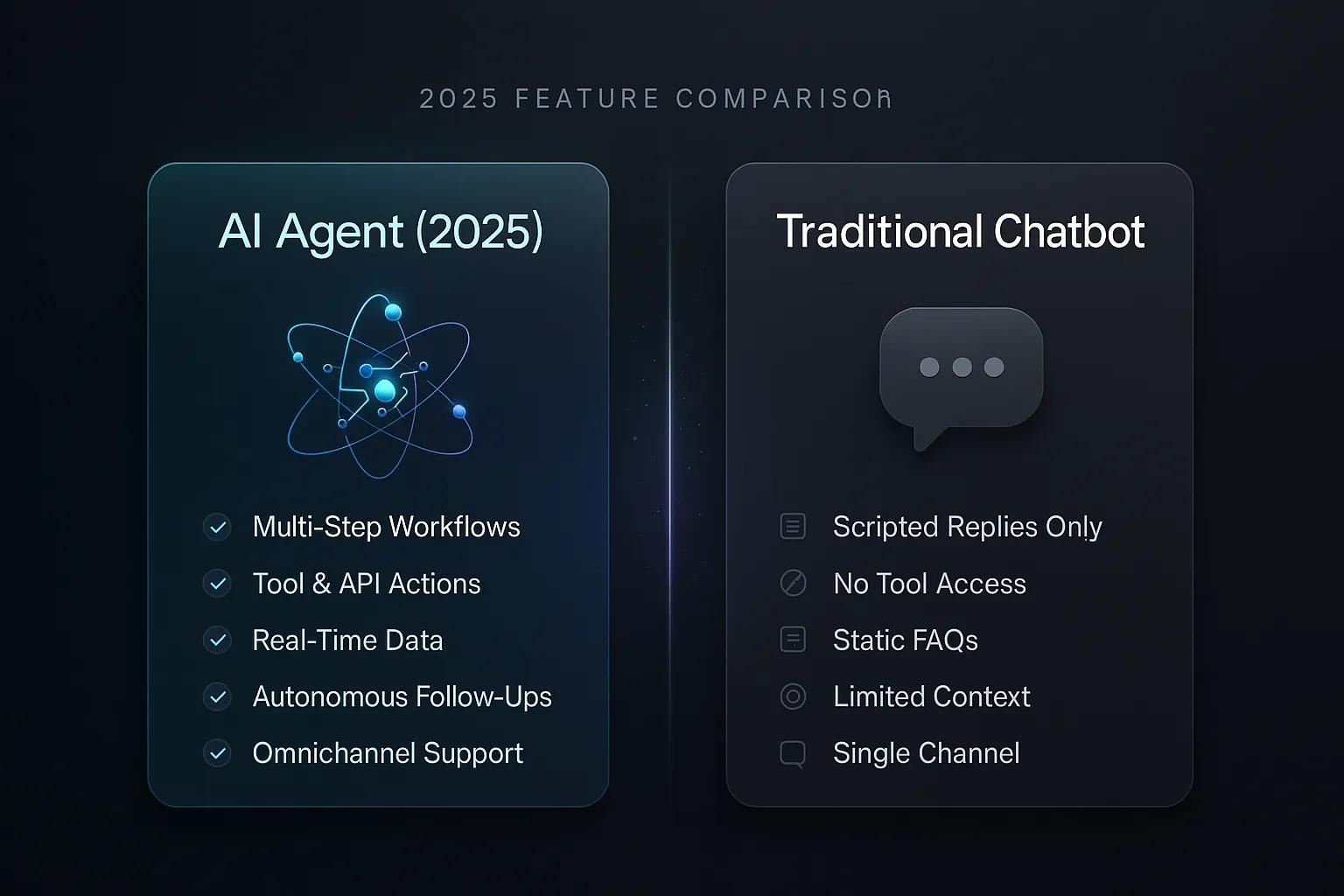
AI Agent vs Traditional Chatbot: 2026 Feature Comparison
It's 11 PM on a Tuesday. A customer reports a damaged package through your support channel. Your traditional chatbot politely apologizes and provides a link to...