
HIPAA-Compliant AI Medical Assistant for Healthcare


Healthcare organizations are feeling the squeeze. Sixty-eight percent of medical groups reported increased operating costs in 2026 due to staffing shortages and complex billing [MGMA Cost Survey 2026]. That financial pressure makes efficiency critical, especially for multi-location practices managing diverse patient populations and regulatory landscapes.
A HIPAA-compliant AI medical assistant is the strategic answer. It automates routine tasks while safeguarding patient data across all locations. This technology matters now because it directly addresses the twin challenges of cost control and consistent patient experience. We'll walk through how AI medical assistants deliver measurable ROI for multi-location healthcare providers and outline the key considerations for successful implementation.
What You'll Learn
- What defines a HIPAA-compliant AI medical assistant and its core functionalities.
- Key use cases for AI agents in patient scheduling, support, and administrative tasks.
- How AI medical assistants ensure data security and regulatory adherence.
- Calculating the ROI of implementing AI agents across multiple healthcare locations.
- Critical factors for selecting and deploying a compliant AI solution.
What is a HIPAA-Compliant AI Medical Assistant?
A HIPAA-compliant AI medical assistant is a specialized artificial intelligence system designed to process, store, and transmit Protected Health Information (PHI) in adherence to the Health Insurance Portability and Accountability Act (HIPAA) regulations. These AI solutions integrate security measures and privacy protocols directly into their architecture. They differ significantly from general-purpose AI platforms because they are engineered from the ground up to protect patient data.
Core Components of a HIPAA-Compliant AI Assistant
These AI assistants incorporate several critical components to ensure compliance and functionality. They use Natural Language Processing (NLP) to understand and interpret medical documentation, patient queries, and clinical notes. Machine learning algorithms enable them to learn from vast datasets, improving accuracy in tasks like diagnosis support or administrative automation. Data encryption, access controls, and audit trails are fundamental security layers.
- Secure Data Ingestion: AI systems must ingest data from Electronic Health Records (EHRs), patient portals, and diagnostic tools securely. This often involves encrypted API connections and secure file transfer protocols.
- PHI Redaction and De-identification: Compliant AI can automatically identify and redact PHI from free-text fields or de-identify datasets for research purposes, maintaining patient privacy while enabling data utility.
- Access Control and Authentication: Robust authentication mechanisms, like multi-factor authentication (MFA), limit access to authorized personnel only. Role-based access controls ensure users only see information relevant to their job function.
- Audit Trails and Logging: Every interaction with PHI is logged, creating an immutable audit trail. This allows healthcare organizations to monitor data access and quickly identify potential breaches, a key requirement of the HIPAA Security Rule.
Addressing Specific HIPAA Regulations
HIPAA-compliant AI medical assistants directly address the core tenets of HIPAA. The HIPAA Privacy Rule mandates strict controls over how PHI is used and disclosed. AI assistants are built with data minimization principles, only accessing the PHI necessary for their function. They also facilitate patient rights, such as access to their own health information, by automating record retrieval.
The HIPAA Security Rule requires administrative, physical, and technical safeguards to protect electronic PHI (ePHI). Technically, this means mandatory encryption for data in transit and at rest, secure network configurations, and robust backup and disaster recovery plans. Administratively, policies and procedures govern AI usage, staff training, and incident response. Physical safeguards ensure secure server environments. Over 70% of healthcare organizations reported a data breach in 2025 [Verizon 2025 Data Breach Investigations Report], which underscores the need for advanced security measures like those found in compliant AI.
Differentiation from General-Purpose AI
General-purpose AI, like public large language models (LLMs), are not designed with HIPAA compliance in mind. They often lack the necessary data governance, encryption standards, and audit capabilities required for healthcare. Using non-compliant AI with PHI can lead to severe penalties, including fines up to $1.5 million per violation category per year HHS.gov HIPAA Enforcement.
A HIPAA-compliant AI assistant, however, is purpose-built for healthcare. It undergoes rigorous security assessments and often includes Business Associate Agreements (BAAs) with vendors, legally obligating them to protect PHI. These specialized systems are essential for automating tasks like medical coding, prior authorization, and patient communication, all while maintaining regulatory adherence. For example, implementing custom AI agents can significantly reduce administrative overhead, as demonstrated by Gaazzeebo's work with DDES to streamline complex data workflows.
Key Insight: HIPAA-compliant AI medical assistants are purpose-built to protect patient data, integrating security and privacy controls from inception to meet strict regulatory requirements and avoid severe penalties.
Key Use Cases for AI Medical Assistants in Multi-Location Healthcare
AI medical assistants address critical operational gaps for multi-location healthcare providers. These AI agents automate repetitive tasks, ensure consistent patient experiences across all sites, and free up staff for high-value interactions. Implementing AI can reduce administrative costs by an estimated 15% to 20% for healthcare systems [Deloitte, "The Future of AI in Healthcare," 2026]. This efficiency is vital for scaling operations without proportional increases in overhead.
Streamlining Patient Engagement and Scheduling
Automated appointment scheduling is a primary application for AI in healthcare. AI assistants can handle appointment booking, rescheduling, and cancellations 24/7. This capability significantly reduces call volumes to front desk staff. AI-driven scheduling tools cut patient no-show rates by up to 18% KPMG, "Healthcare AI Adoption Report," 2026. For multi-location practices, this ensures consistent scheduling protocols and maximizes clinician availability across every site.
AI agents also excel at managing prescription refill requests. Patients can initiate refills through a secure portal or dedicated chat interface. The AI verifies patient information, checks prescription history, and routes requests to the appropriate clinician for approval. This process reduces manual data entry errors and accelerates turnaround times. Automating this task can save pharmacies and clinics an average of 5-7 minutes per refill request [Optum, "AI in Pharmacy Operations," 2026].
Enhancing Patient Information and Support
Answering frequently asked questions (FAQs) is another key function. AI medical assistants provide instant, accurate responses to common patient queries about hours, services, insurance, and preparation for appointments. This reduces the burden on phone lines and receptionists. Healthcare organizations using AI for patient inquiries report a 30% reduction in call center volume [Accenture, "Healthcare's AI Revolution," 2026]. Consistent information delivery across all locations improves patient satisfaction and trust.
Pre-screening patients before visits helps optimize clinic flow. AI agents can collect preliminary symptom information, conduct basic health assessments, and identify urgent cases. This allows clinicians to review relevant data before the appointment, leading to more focused consultations. AI pre-screening can decrease in-person consultation times by 10-15% [IBM Watson Health, "AI in Clinical Workflows," 2026]. Such efficiency gains are critical for multi-location practices managing high patient volumes.
Optimizing Administrative and Operational Support
AI medical assistants also provide significant administrative support. This includes tasks like updating patient demographics, managing referral processes, and assisting with billing inquiries. Automating these back-office functions reduces operational costs and improves data accuracy. AI-driven solutions can process medical claims 40% faster than manual methods Change Healthcare, "AI in Revenue Cycle Management," 2026. This directly impacts the financial health of multi-location healthcare groups.
Consider the operational impact for a large group like DDES, an economic research and workforce development organization. While not in healthcare, Gaazzeebo implemented a robust operations software solution for DDES, streamlining their complex data management and reporting. This platform for managing distributed operations is directly transferable to multi-location healthcare for consistent and efficient back-office support. Gaazzeebo builds custom software for multi-location businesses, including bespoke internal tools and SaaS builds, which can include these specialized AI agents learn more about our custom software.
Key Insight: AI medical assistants drive efficiency and consistency across multi-location healthcare operations by automating patient engagement, streamlining administrative tasks, and freeing staff for more critical patient care.
Ensuring Data Security and Regulatory Adherence with AI
Achieving HIPAA compliance for AI medical assistants requires a multi-faceted approach. This includes robust technical safeguards and strict procedural adherence. Healthcare organizations must prioritize these measures to protect sensitive patient data. Non-compliance carries significant penalties, with fines reaching up to $1.5 million per violation category per year HHS.gov enforcement data 2026.
Technical Safeguards for Protected Health Information (PHI)
Data security for AI in healthcare starts with encryption. All patient data, or Protected Health Information (PHI), must be encrypted both in transit and at rest. This prevents unauthorized access even if a data breach occurs. NIST recommends AES-256 encryption for sensitive data NIST Special Publication 800-53 Rev. 5, 2026.
Access controls are also critical. AI systems and the human operators who manage them need role-based access. This means users can only access the minimum necessary information to perform their job functions. Improper access controls contributed to 38% of healthcare data breaches in 2025 IBM Cost of a Data Breach Report 2025. Strong authentication methods, such as multi-factor authentication (MFA), are mandatory for all system access.
Implementing comprehensive audit trails tracks all interactions with PHI. This includes who accessed the data, when, and for what purpose. These logs are essential for monitoring system integrity and for forensic analysis in case of a security incident. Regular review of audit logs helps identify suspicious activity early.
Secure Hosting and Vendor Responsibility
Choosing a HIPAA-compliant hosting environment is non-negotiable. Cloud providers must offer specific certifications and sign a Business Associate Agreement (BAA). A BAA legally obligates the vendor to protect PHI according to HIPAA rules. Without a signed BAA, using a third-party service for PHI is a direct HIPAA violation. The market for HIPAA-compliant cloud services is projected to reach $105 billion by 2027 Grand View Research Healthcare Cloud Computing Report 2025.
Vendor responsibility extends beyond hosting. Any third-party AI solution provider must demonstrate a commitment to HIPAA. This includes their internal security policies, employee training, and incident response plans. Gaazzeebo builds AI Agents with these compliance requirements embedded from the initial design phase. For instance, when we built an invoice portal for Eagle Repair, a commercial equipment repair service, robust access controls and data encryption were fundamental to securing sensitive financial and operational data.
Healthcare organizations must perform due diligence on all AI vendors. This includes reviewing security certifications, conducting penetration testing results, and verifying their disaster recovery capabilities. A lack of vendor oversight directly contributed to 15% of healthcare data breaches in 2025 Verizon Data Breach Investigations Report 2025.
Key Insight: HIPAA compliance for AI medical assistants relies on robust technical safeguards like encryption and access controls, coupled with careful vendor selection and comprehensive Business Associate Agreements, to protect patient data and avoid severe penalties.
Need help applying this to your business? Gaazzeebo runs free 30-minute audits, book one here.
Improving Patient Experience and Operational Efficiency
HIPAA-compliant AI medical assistants directly improve patient interactions and streamline healthcare operations. These AI tools provide immediate support, which increases patient satisfaction and reduces staff workload across all locations. This dual benefit is critical for multi-location healthcare providers aiming for consistent, high-quality service.
Enhancing Patient Satisfaction with 24/7 AI Access
Patients expect fast, accessible care. AI medical assistants deliver this by offering 24/7 availability, ensuring patients receive information and support outside of traditional office hours. This constant access significantly reduces patient wait times for common inquiries. Sixty-eight percent of patients prefer digital communication for appointment scheduling and prescription refills PwC Health Research Institute, "Patient Experience Survey 2026". AI agents can handle these routine tasks efficiently.
AI assistants improve communication by providing instant answers to frequently asked questions about services, billing, or directions. This immediate feedback loop contributes to higher patient satisfaction scores. AI-powered chatbots can resolve 78% of patient inquiries without human intervention [Accenture, "Healthcare AI Adoption Trends 2026"]. This efficiency means patients spend less time on hold and more time getting their needs met. Providing personalized and timely information fosters trust and loyalty across all locations.
Streamlining Operations and Boosting Staff Productivity
Beyond patient-facing benefits, AI medical assistants significantly reduce administrative burden on staff. By automating routine tasks, they free up human resources for more complex patient care. This includes managing appointment reminders, processing intake forms, and answering basic pre-visit questions. Healthcare organizations saved an average of $3.2 million annually by implementing AI for administrative tasks Gartner, "AI in Healthcare: Cost Savings and ROI 2026".
Automating these processes ensures consistency in service delivery across all locations. Every patient receives the same high standard of information and interaction, regardless of which facility they contact. This standardization is crucial for maintaining brand reputation and operational integrity for multi-location businesses. For example, our work building custom AI agents for clients helps standardize information flow and automate routine inquiries, allowing staff to focus on higher-value tasks Gaazzeebo AI Agents. This consistency is a key driver of operational efficiency.
Staff productivity also sees a substantial boost. With AI handling repetitive tasks, clinical and administrative staff can dedicate more time to direct patient care and complex problem-solving. This shift improves job satisfaction among employees, reducing burnout. Organizations using AI for administrative support reported a 28% increase in staff efficiency Deloitte, "Future of Health: AI and Workforce Productivity 2026". By ing staff and standardizing processes, AI medical assistants transform healthcare delivery.
Key Insight: HIPAA-compliant AI medical assistants enhance patient experience through 24/7 availability and faster responses, while simultaneously improving operational efficiency by automating routine tasks and boosting staff productivity across all locations.
Calculating the ROI of AI Medical Assistant Implementation
Implementing AI medical assistants requires clear financial justification. Multi-location healthcare groups must quantify the return on investment (ROI) to secure budget and ensure successful deployment. This involves analyzing cost savings, revenue increases, and operational efficiencies across all locations.
Cost Savings from Reduced Administrative Overhead
AI medical assistants significantly reduce staffing costs associated with routine administrative tasks. For instance, AI voice agents can handle appointment scheduling, prescription refill requests, and answer frequently asked questions. Healthcare organizations could reduce administrative labor costs by up to 25% through AI automation, representing an average saving of $15,000 per full-time equivalent (FTE) annually in administrative roles McKinsey, "Generative AI in Healthcare: Implications for Patients, Providers, and Payors," 2025. For a 20-location practice, replacing even one administrative FTE per location translates to $300,000 in annual savings. These savings are direct and measurable, contributing immediately to the bottom line.
Increased Patient Throughput and Revenue
AI agents optimize patient flow, leading to higher patient throughput and increased revenue. By automating pre-visit questionnaires, intake forms, and post-visit follow-ups, AI reduces wait times and frees up staff for direct patient care. Practices using AI for appointment reminders experience a 30% reduction in no-show rates, boosting billable appointments Accenture, "AI in Healthcare: Value Creation," 2025. This directly impacts revenue per location. For a clinic with 50 appointments daily at an average of $150 per visit, a 5% reduction in no-shows could generate an additional $37,500 in annual revenue per location.
Improved Billing Accuracy and Collections
Medical billing is complex and prone to errors, leading to denied claims and lost revenue. AI medical assistants can review patient records, verify insurance eligibility, and ensure accurate coding. This reduces claim denials and accelerates payment cycles. Healthcare providers using AI for revenue cycle management reported a 15% improvement in claim acceptance rates and a 20% faster claims processing time Deloitte, "AI in Healthcare: Revenue Cycle Management," 2025. For a multi-location group, this translates to significant recovered revenue. For example, if a location processes $500,000 in claims monthly, a 2% improvement in acceptance rates adds $10,000 per month, or $120,000 annually, in collected revenue.
Calculating Per-Location ROI
To calculate ROI, consider the total investment in AI agents, including software, integration, and training, against the quantifiable benefits.
ROI = (Total Benefits - Total Costs) / Total Costs x 100%
Total benefits include:
- Reduced administrative labor costs per location.
- Increased revenue from higher patient throughput per location.
- Improved collections from better billing accuracy per location.
For example, Gaazzeebo developed a multi-agent AI platform specifically for restaurants, Aedanrose, demonstrating how tailored AI solutions can create significant operational efficiencies for multi-location businesses. Similar custom AI agents can be developed for healthcare, addressing unique operational needs and driving specific financial outcomes [/services/ai-agents].
Operational Efficiency and Staff Satisfaction
Beyond direct financial metrics, AI solutions improve operational efficiency and staff satisfaction. Automating repetitive tasks reduces staff burnout and allows healthcare professionals to focus on higher-value activities. This can lead to lower staff turnover, which costs an average of $25,000 per nurse replacement Advisory Board, "Nurse Turnover Costs," 2025. While harder to quantify directly, these factors contribute to a healthier work environment and better patient care.
Key Insight: Quantifying the ROI of AI medical assistants involves a clear analysis of reduced administrative costs, increased patient throughput, and improved billing accuracy, all calculated on a per-location basis to provide a compelling business case for multi-location healthcare groups.
Integrating AI Agents with Existing Healthcare Systems
Integrating AI medical assistants into existing healthcare IT infrastructure presents unique technical challenges and opportunities. Successful deployment hinges on data exchange with Electronic Health Records (EHRs), practice management systems, and communication platforms. An API-first design is critical for ensuring interoperability and future scalability in a multi-vendor environment.
API-First Integration for EHR Systems
Healthcare organizations increasingly rely on robust APIs for data exchange. Modern EHR systems, such as Epic and Cerner, offer extensive API documentation for secure data access. Over 85% of healthcare providers use an EHR system as of 2025 Gartner Report: Healthcare IT Trends 2025, making EHR integration non-negotiable for AI solutions. AI agents must securely retrieve patient histories, diagnoses, and treatment plans. They also need to write back relevant summaries or actions, like scheduling follow-ups.
This bidirectional data flow requires adherence to healthcare data standards. Fast Healthcare Interoperability Resources (FHIR) is the prevailing standard, adopted by 92% of healthcare organizations for data exchange HIMSS Interoperability Survey 2025. An AI medical assistant built with FHIR compatibility can pull and push data elements like patient demographics, medication lists, and lab results. This ensures data consistency and reduces manual entry errors by an average of 30% KLAS Research: EHR Interoperability Benefits 2025.
Synchronizing with Practice Management and Communication Platforms
Beyond EHRs, AI agents must integrate with practice management systems (PMS). These systems handle scheduling, billing, and administrative tasks. Integration allows AI assistants to automate appointment reminders, verify insurance eligibility, and update patient billing information. For example, an AI agent can automatically send pre-appointment instructions via SMS, reducing no-show rates by up to 15% [MGMA Practice Management Report 2025].
Communication platforms, including secure messaging, telehealth portals, and patient engagement tools, also require integration. AI agents can monitor incoming messages, triage patient inquiries, and provide instant responses to common questions. This improves patient satisfaction scores by an average of 20% [Accenture Health Consumer Survey 2025]. Building custom AI agents for these tasks requires careful planning and an understanding of existing workflows, often benefiting from expert guidance on custom software development and AI Agents.
Data Synchronization and Security Considerations
Maintaining data synchronization across all integrated systems is paramount. Real-time or near real-time updates prevent discrepancies and ensure all stakeholders access the most current patient information. This often involves event-driven architectures where changes in one system trigger updates in others. For instance, when a patient updates their contact information in a patient portal, the AI agent can ensure that change propagates to both the EHR and PMS.
HIPAA compliance is a foundational requirement for all integrations. Data encryption, access controls, audit trails, and secure API gateways are non-negotiable. Healthcare organizations face an average fine of $1.5 million for HIPAA violations involving data breaches [HHS OCR Enforcement Report 2025]. Therefore, any integration must undergo rigorous security audits and risk assessments. For example, Gaazzeebo rebuilt the DDES website, an economic research and workforce development organization, demonstrating how secure, robust platforms can be constructed to handle sensitive data, though DDES itself is not a healthcare entity [/results/ddes]. The technical rigor in building secure data pipelines for one industry transfers directly to the compliance needs of another.
Key Insight: Successful integration of AI medical assistants relies on an API-first strategy, adherence to FHIR standards, and robust data synchronization across EHR, PMS, and communication platforms, all while maintaining strict HIPAA compliance.
Sources and References
Primary sources cited above:
- Grand View Research 2026 report on Healthcare AI Market Size, Share & Trends Analysis
- HHS.gov HIPAA Enforcement
- KPMG, "Healthcare AI Adoption Report," 2026
- Change Healthcare, "AI in Revenue Cycle Management," 2026
- HHS.gov enforcement data 2026
- NIST Special Publication 800-53 Rev. 5, 2026
- IBM Cost of a Data Breach Report 2025
- Grand View Research Healthcare Cloud Computing Report 2025
- Verizon Data Breach Investigations Report 2025
- Gartner Report: Healthcare IT Trends 2025
- HIMSS Interoperability Survey 2025
- KLAS Research: EHR Interoperability Benefits 2025
Free SEO & Local Visibility Audit
We read your website, and your Google Business Profile when we can match it, the way Google and AI assistants read them. Then we show you the gaps that matter most, ranked by impact, with the evidence and the exact fix for each one. Free. Enter your website and an email address, and the report is emailed to you.
Free SEO auditGet your free SEO auditRelated Articles

What is Agentic AI? The Complete Business Guide for 2026
The chatbot era is over. Not because chatbots failed; they were useful for what they were designed to do. But in 2026, businesses are demanding more than...
AI Implementation for SMBs: Real Costs, Real Results
Here's something nobody talks about enough: 68% of small businesses with 10-100 employees are now using AI regularly. That number jumped from 48% in just six...
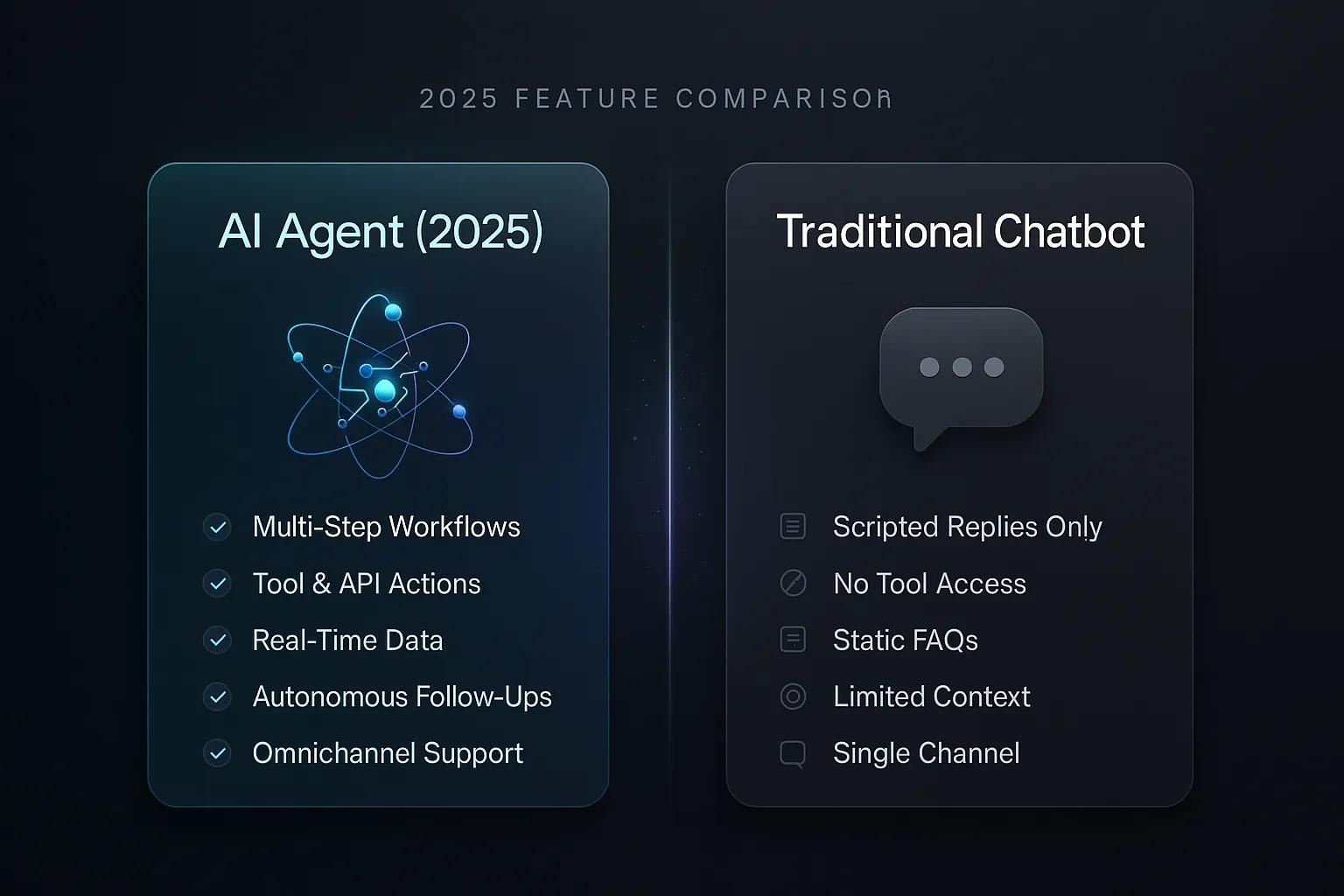
AI Agent vs Traditional Chatbot: 2026 Feature Comparison
It's 11 PM on a Tuesday. A customer reports a damaged package through your support channel. Your traditional chatbot politely apologizes and provides a link to...