
AI Agent Data Privacy and Retention Policy Template


Multi-location businesses face a 68% increase in regulatory scrutiny for data handling with AI deployments International Association of Privacy Professionals (IAPP) 2026 report. It hits different when you're running ten locations instead of one. This heightened oversight directly impacts how customer interactions, operational data, and proprietary business logic flow through your AI agents across every site. Non-compliance can result in significant penalties and erode customer trust faster than a single bad review.
An AI Agent Data Privacy and Retention Policy Template gives you a structured framework for managing the sensitive information your AI agents touch. This template is critical if you're a multi-location operator trying to standardize data governance, stay legal, and protect your brand reputation across all your sites. This article walks through the essential components and why you can't skip them if you're scaling AI safely.
What You'll Learn
- The core components of an effective AI agent data privacy policy.
- How to establish clear data retention schedules for AI-generated data.
- Strategies for ensuring compliance with global and regional data protection regulations like GDPR and CCPA.
- Best practices for securing sensitive customer interactions handled by AI agents.
- How to integrate privacy considerations into the AI agent development and deployment lifecycle.
Why Multi-Location Businesses Need AI Agent Data Privacy Policies
Multi-location businesses face complex data privacy challenges with AI agents. These challenges amplify because you're dealing with varied local regulations and the need for consistent brand experience across every location. Each site, whether a franchise or corporate-owned, generates unique data streams. This data often includes sensitive customer information, transaction details, and operational metrics. Without a clear privacy policy, inconsistencies emerge. That's when compliance risks and reputational damage follow.
Navigating Diverse Regulatory Landscapes
Operating across multiple states or countries means adhering to a patchwork of data privacy laws. California's CCPA and GDPR in Europe impose strict requirements on data collection, processing, and retention California Consumer Privacy Act (CCPA) guidance. A single AI agent deployment has to account for these disparate rules. This complexity increases costs and the potential for legal penalties. Non-compliance fines under GDPR can reach €20 million or 4% of annual global turnover, whichever is higher GDPR Enforcement Tracker. You have to implement robust mechanisms to classify and handle data according to its origin.
Even within the United States, states are enacting their own comprehensive privacy laws. Over 15 states have adopted or are considering such legislation as of 2026 International Association of Privacy Professionals (IAPP) State Privacy Law Tracker. This creates a dynamic compliance environment. AI agents, designed to learn and interact, have to be trained and operated with these geographical nuances in mind. A unified policy simplifies this process, ensuring that data practices meet the highest applicable standards across your entire network of locations.
Maintaining Brand Consistency and Trust
Brand consistency is critical for multi-location businesses. Customers expect the same level of service and data protection regardless of which location they interact with. Inconsistent privacy practices erode trust and can lead to negative public perception. Eighty-eight percent of consumers prioritize data privacy when choosing a brand PwC Global Consumer Insights Survey 2025. Breaches at one location can impact your entire brand's reputation.
For example, an AI-powered chatbot handling customer service has to provide uniform responses about data handling. If one location's chatbot shares data differently than another's, it creates confusion and legal exposure. A single, well-defined data privacy policy for AI agents ensures every interaction reinforces your brand's commitment to privacy. This commitment builds long-term customer loyalty and reduces churn. Gaazzeebo helps businesses like Breckenridge Vipers implement consistent digital experiences across their professional sports and entertainment operations, which includes secure data handling for their ticketing and fan engagement platforms Breckenridge Vipers Case Study.
Mitigating Data Security Risks
AI agents often process vast amounts of data, increasing the attack surface for cyber threats. Each data point collected, stored, or transmitted by an agent represents a potential vulnerability. Multi-location businesses, with their distributed IT infrastructure, face even greater security challenges. Small to medium-sized businesses (SMBs) with multiple locations are 1.5 times more likely to experience a data breach than single-location businesses Verizon 2026 Data Breach Investigations Report (DBIR).
AI agent data privacy policies have to include explicit guidelines for data encryption, access controls, and incident response. They should define how long data is retained and when it gets purged. This minimizes the risk associated with stale or unnecessary data. Clear policies also dictate how third-party AI service providers handle data, ensuring their practices align with your standards. Investing in secure AI agent deployment protects sensitive customer information and proprietary operational data.
Ensuring Operational Efficiency and Compliance Audits
A standardized privacy policy streamlines compliance audits and internal reviews. Without one, each location might have its own ad-hoc data practices, making auditing a nightmare. Centralized policies provide a clear framework for data governance. This reduces the time and resources spent on compliance activities. It also ensures that all locations are prepared for regulatory scrutiny.
Effective policies detail data collection points, processing methods, and storage locations for AI agents. They assign clear roles and responsibilities for data protection within the organization. This clarity helps prevent missteps and ensures accountability. For multi-location businesses, operational efficiency gained from a unified policy translates directly into cost savings and reduced legal exposure.
Key Insight: Multi-location businesses require specialized AI agent data privacy policies to navigate diverse regulations, maintain brand trust, mitigate security risks, and ensure efficient compliance across all operational units.
Key Components of an AI Agent Data Privacy Policy Template
Multi-location businesses deploying AI agents have to establish robust data privacy policies. These policies protect customer information and ensure compliance with evolving regulations. A comprehensive template includes specific clauses for data collection, usage, and consent. Potential fines of up to 4% of global annual revenue exist for General Data Protection Regulation (GDPR) violations European Commission Report, 2026. Clear policies mitigate these risks.
Data Collection and Purpose Specification
An effective AI agent data privacy policy begins by explicitly stating what data is collected. This includes the types of personal data, such as names, contact information, and interaction history. The policy has to also define the specific purposes for data collection. For instance, an AI agent might collect customer queries to improve service response times or personalize recommendations. Eighty-seven percent of consumers are more likely to trust a company that clearly outlines its data practices PwC Global Consumer Insights Survey, 2025.
The policy should detail how data is obtained. This covers direct input from users, data from integrated systems, or publicly available information. It also specifies the legal basis for processing, such as user consent or legitimate business interests. Clearly articulating these points builds user trust and ensures regulatory adherence.
Data Usage and Processing Guidelines
This section outlines how collected data is utilized by AI agents. It addresses how data trains machine learning models, personalizes user experiences, and automates tasks. For example, an AI agent might analyze past purchase data to suggest relevant products, increasing conversion rates by an average of 15% Salesforce State of the Connected Customer Report, 2026. The policy has to differentiate between data used for internal operations and data shared with third parties.
Specific clauses should cover:
- Data Minimization: Only collecting data essential for the stated purpose.
- Anonymization and Pseudonymization: Techniques used to protect identity, especially for training data.
- Data Aggregation: How data is combined for analytical insights without identifying individuals.
- Automated Decision-Making: Explaining the logic involved when AI agents make decisions without human intervention. This is crucial for transparency.
User Consent and Opt-Out Mechanisms
Obtaining explicit user consent is a cornerstone of data privacy. The policy has to detail how consent is requested, recorded, and managed. This includes clear language for consent forms and easily accessible opt-out options. Users have to have the right to withdraw consent at any time. Companies that offer clear consent options see a 20% increase in customer loyalty Accenture Global Consumer Study, 2025.
Furthermore, the policy should explain users' rights regarding their data. These rights include:
- Right to Access: Users can request copies of their personal data.
- Right to Rectification: Users can correct inaccurate data.
- Right to Erasure (Right to Be Forgotten): Users can request deletion of their data.
- Right to Data Portability: Users can obtain their data in a structured, machine-readable format.
Gaazzeebo helps multi-location businesses implement custom AI Agents that embed these privacy controls directly into their operational workflows. For example, our work with DDES, an economic research and workforce development organization, involved building a multi-agent system that processed sensitive data while adhering to strict compliance protocols DDES Case Study. This ensured data integrity and user trust.
Data Security and Retention
A robust privacy policy mandates stringent data security measures. This includes encryption protocols, access controls, and regular security audits. The policy should specify how data breaches are handled, including notification procedures. Cyberattacks cost businesses an average of $4.45 million per incident in 2025 IBM Cost of a Data Breach Report, 2025. Strong security reduces this risk.
Data retention policies define how long data is stored. This period should align with legal requirements and business needs. Once data is no longer necessary, the policy has to outline secure deletion or anonymization procedures. Indefinite data storage increases liability.
Key Insight: A comprehensive AI agent data privacy policy is essential for compliance and trust, explicitly detailing data collection, usage, consent, security, and retention to protect both the business and its customers.
Establishing AI Agent Data Retention Schedules and Deletion Protocols
Defining clear data retention schedules and deletion protocols is critical for AI agent deployments. These policies protect sensitive information and ensure compliance with evolving global regulations. Multi-location businesses have to standardize these practices across all their sites to avoid legal penalties and maintain customer trust. Failing to do so can result in significant fines. The European Union's GDPR can levy fines up to €20 million or 4% of global annual revenue for non-compliance [https://gdpr-info.eu/art-83-gdpr/].
Regulatory Compliance and Data Lifecycle Management
AI agent data often contains personally identifiable information (PII) or other sensitive business data. Regulations like GDPR, CCPA [https://oag.ca.gov/privacy/ccpa], and HIPAA [https://www.hhs.gov/hipaa/for-professionals/security/index.html] mandate specific retention periods and secure deletion methods. Organizations have to categorize data based on its sensitivity and regulatory requirements. This includes data generated by conversational AI, training data, and operational logs.
A robust data lifecycle management strategy for AI agents involves several stages:
- Data Collection and Classification: Identify what data the AI agent collects and its sensitivity level. This determines the applicable retention rules.
- Retention Period Definition: Establish clear timeframes for how long each data category is stored. These periods have to align with legal obligations and business needs. For instance, customer interaction data might be retained for seven years for auditing purposes [https://www.irs.gov/businesses/small-businesses-self-employed/how-long-should-i-keep-records].
- Secure Storage: Implement encryption and access controls to protect data while it is retained. Data breaches cost companies an average of $4.24 million per incident in 2026 [https://www.ibm.com/reports/data-breach].
- Deletion and Destruction: Define methods for permanent data removal once its retention period expires. This prevents data recovery and misuse.
Implementing Secure Deletion Protocols
Simply deleting files from a server is often insufficient for true data destruction. AI agent data, especially in distributed environments common to multi-location businesses, requires more robust methods. Gaazzeebo helps businesses implement secure deletion for their AI agents. This ensures compliance and mitigates risk.
Consider these secure deletion methods:
- Physical Destruction: For data stored on physical media like hard drives, shredding or degaussing ensures complete data loss.
- Data Overwriting: Multiple passes of random data overwriting renders original data unrecoverable. Standards like the DoD 5220.22-M specification outline secure overwriting techniques.
- Cryptographic Erasure: Deleting encryption keys makes encrypted data unreadable. This is effective for cloud-stored data.
- Sanitization Software: Specialized software can securely wipe data from various storage devices.
Multi-location enterprises should centralize their data retention and deletion policies. This ensures consistency across all branches. It also simplifies auditing and compliance reporting. For example, a multi-location restaurant group using an AI agent for order taking has to apply the same privacy standards to customer data regardless of which location processed the order. This reduces the risk of fragmented data governance.
Key Insight: Establishing clear, legally compliant data retention schedules and secure deletion protocols is essential for AI agent deployments, minimizing risk and fostering customer trust across all business locations.
Need help applying this to your business? Gaazzeebo runs free 30-minute audits, book one here.
Ensuring Regulatory Compliance: GDPR, CCPA, and Industry Standards for AI
Organizations deploying AI agents have to build data policies that explicitly address major global and regional data protection regulations. Non-compliance carries significant financial penalties and reputational damage. The European Union's GDPR (General Data Protection Regulation) imposes fines up to €20 million or 4% of annual global turnover, whichever is higher European Commission, "GDPR Fines and Penalties," 2026. The CCPA (California Consumer Privacy Act), and its successor CPRA, allows for fines up to $7,500 per intentional violation California Attorney General, "CCPA Enforcement Actions," 2025. Adhering to these frameworks requires a proactive approach to data handling throughout the AI agent lifecycle.
Data Minimization and Purpose Limitation
AI agent data policies have to prioritize data minimization. This principle dictates that organizations should only collect and process data strictly necessary for a specified, legitimate purpose. For AI agents, this means defining precisely what data inputs are required for the agent to perform its function, and avoiding the collection of extraneous personal or sensitive information. Companies implementing data minimization strategies reduced their data storage costs by an average of 18% Deloitte, "Data Minimization Impact Report," 2025. Explicitly state the purpose for each data type an AI agent processes within the policy.
Consent Management and Transparency
Obtaining explicit consent is crucial, especially when AI agents interact directly with individuals. Data policies have to outline how consent is acquired, documented, and managed, particularly for sensitive data categories. Users have to be informed about the types of data collected, how it will be used by the AI agent, and their rights regarding that data. Transparency builds trust and reduces regulatory risk. Companies that provide clear data usage policies see a 15% higher customer trust score than those with opaque practices PwC, "Global Digital Trust Insights 2025," 2025. This includes informing users about the role of AI in interactions.
Data Retention and Deletion Protocols
A robust data retention policy is essential for AI agents. Data should only be stored for as long as necessary to fulfill its original purpose, or to meet legal and regulatory obligations. Policies have to specify retention periods for different data types processed by AI agents, along with clear protocols for secure deletion or anonymization once those periods expire. Improper data retention practices contribute to 60% of data breaches involving legacy systems IBM Security, "Cost of a Data Breach Report 2025," 2025. Implementing automated data lifecycle management tools can streamline this process. Gaazzeebo's custom AI agents often integrate with existing data management systems to ensure compliance with these protocols, as seen in our work with DDES, an economic research organization, where we ensured their data handling processes met stringent industry standards [/results/ddes].
Security Measures and Access Controls
Protecting the data processed by AI agents requires strong security measures. Data policies have to detail encryption standards, access controls, and regular security audits. This includes both data in transit and at rest. Role-based access control (RBAC) ensures that only authorized personnel can access sensitive AI agent data, reducing the risk of internal breaches. Forty-five percent of data breaches involved internal actors with excessive access privileges Verizon, "2026 Data Breach Investigations Report," 2026. Regular vulnerability assessments and penetration testing of AI agent systems are also critical components of a comprehensive security strategy.
Industry-Specific Compliance
Beyond GDPR and CCPA, multi-location businesses have to also consider industry-specific compliance standards. For example, healthcare organizations have to adhere to HIPAA, while financial institutions have to comply with PCI DSS and other financial regulations. AI agent data policies should incorporate these sector-specific requirements, ensuring that data handling practices align with all applicable mandates. Failure to meet industry standards can result in significant penalties, such as the average $2.5 million fine for HIPAA violations in 2025 HHS Office for Civil Rights, "Annual Enforcement Report 2025," 2025. Custom software solutions can be tailored to embed these compliance requirements directly into AI agent workflows.
Key Insight: A comprehensive AI agent data privacy policy has to integrate GDPR, CCPA, and industry-specific regulations through data minimization, explicit consent, defined retention, robust security, and continuous compliance monitoring to mitigate legal and financial risks.
Implementing Data Security Measures for AI-Powered Interactions
Protecting data in AI-powered interactions requires a multi-layered approach. Businesses have to implement strong technical and organizational safeguards. This protects sensitive customer information and maintains compliance with regulations like GDPR and CCPA. Breaches of customer data cost companies an average of $4.45 million in 2025 IBM Cost of a Data Breach Report 2025.
Data Encryption for AI Agents
Encryption is a fundamental security measure. It scrambles data, making it unreadable to unauthorized parties. Data should be encrypted both in transit and at rest. Data in transit refers to information moving between systems, such as from a user's device to an AI agent server. Data at rest is stored on servers, databases, or cloud storage. Implementing AES-256 encryption for data at rest and TLS 1.3 for data in transit is standard practice National Institute of Standards and Technology (NIST) 2025 Guidelines. This ensures that even if data is intercepted or accessed without authorization, it remains protected.
Access Controls and Least Privilege
Strict access controls limit who can view or modify data. The principle of least privilege dictates that users and systems should only have the minimum access necessary to perform their functions. For AI agents, this means restricting database access to only the specific services that require it. Role-based access control (RBAC) systems define permissions based on job roles. Privilege misuse was a factor in 17% of data breaches Verizon Data Breach Investigations Report 2025. Regular audits of access logs help identify and prevent unauthorized data access.
Regular Security Audits and Vulnerability Assessments
Consistent security oversight is crucial. Security audits involve a systematic review of an AI system's security posture. These audits identify weaknesses and ensure compliance with internal policies and external regulations. Vulnerability assessments actively scan for security flaws in the AI agent's underlying infrastructure and code. These should be conducted quarterly, at minimum OWASP Top 10 for LLM Applications 2025. Penetration testing, where ethical hackers attempt to breach the system, provides a real-world evaluation of defenses. For multi-location businesses, standardized security protocols across all locations prevent isolated vulnerabilities from impacting the entire operation. Integrating these security measures is part of building robust AI Agents that protect customer trust.
Key Insight: Comprehensive data security for AI agents relies on robust encryption, strict access controls based on least privilege, and continuous security audits to proactively identify and mitigate vulnerabilities.
Building Trust with Transparent AI Agent Data Practices
Customers are more aware of their data privacy rights than ever before. Transparent communication about AI agent data practices builds essential trust. Organizations have to clearly explain how AI agents collect, use, and store customer information. This includes details on data retention periods and deletion protocols. Eighty-seven percent of consumers are concerned about their data privacy when interacting with AI systems PwC 2026 AI Trust Report. Ignoring these concerns damages brand reputation and customer loyalty.
Crafting Clear Data Privacy Policies
A robust data privacy policy for AI agents addresses several key areas. It should outline the types of data collected, such as customer queries, interaction history, and personal identifiers. The policy has to also specify the purpose of data collection, like improving service or personalizing interactions. For example, a customer service AI might collect interaction data to train its natural language processing model. This improves the agent's ability to understand and respond to future queries Gartner AI Ethics Guidelines 2026.
Consider these elements for your policy:
- Data Collection: List every data point the AI agent gathers.
- Purpose of Use: Explain why each data point is collected and processed.
- Data Storage: Detail where data is stored and security measures in place.
- Retention Period: State how long data is kept before permanent deletion.
- User Rights: Inform customers of their rights, including access, correction, and deletion.
- Third-Party Sharing: Disclose any instances where data is shared with external partners.
Gaazzeebo's Approach to Trust and Transparency
Gaazzeebo emphasizes transparent data practices in all our AI agent deployments. For Aedanrose, a multi-agent AI platform for restaurants, we integrated clear data handling protocols. This platform uses specialized agents to assist independent restaurant operators. Customer interaction data, such as menu preferences or order history, is crucial for personalized service. However, it is also highly sensitive.
Gaazzeebo ensured that Aedanrose's agents collected only necessary data. The platform's privacy policy explicitly states how customer interactions are used to refine AI responses and personalize dining experiences. This focus on privacy contributed to Aedanrose becoming the first affordable AI platform of its kind for independent restaurant operators [/results/aedanrose]. Such transparency is vital for businesses adopting new AI technologies. It reinforces customer confidence and promotes ethical AI use.
The Impact of Non-Compliance
Failing to implement clear data privacy and retention policies carries significant risks. Non-compliance with regulations like GDPR or CCPA can result in substantial fines. The average cost of a data breach reached $4.45 million in 2025 IBM Cost of a Data Breach Report 2025. Beyond financial penalties, businesses face severe reputational damage. Customers lose trust in brands that mishandle their personal information. This directly impacts sales and long-term customer relationships. Proactive transparency is a defensive strategy against these risks. It also positions a business as a responsible innovator in the AI space.
Key Insight: Transparent communication about AI agent data practices, including collection, use, and retention, is crucial for building customer trust and ensuring regulatory compliance.
Sources and References
Primary sources cited above:
- GDPR Enforcement Tracker
- Verizon 2026 Data Breach Investigations Report (DBIR)
- IBM Cost of a Data Breach Report, 2025
- California Attorney General, "CCPA Enforcement Actions," 2025
- PwC, "Global Digital Trust Insights 2025," 2025
- OWASP Top 10 for LLM Applications 2025
- Gartner AI Ethics Guidelines 2026
See What This Could Save Your Business
Nine questions, no login. See what manual work costs you across every location, and which three fixes pay back first.
Score my operationsSee where your locations standFree 30-minute assessment. No commitment required.
Related Articles

What is Agentic AI? The Complete Business Guide for 2026
The chatbot era is over. Not because chatbots failed; they were useful for what they were designed to do. But in 2026, businesses are demanding more than...
AI Implementation for SMBs: Real Costs, Real Results
Here's something nobody talks about enough: 68% of small businesses with 10-100 employees are now using AI regularly. That number jumped from 48% in just six...
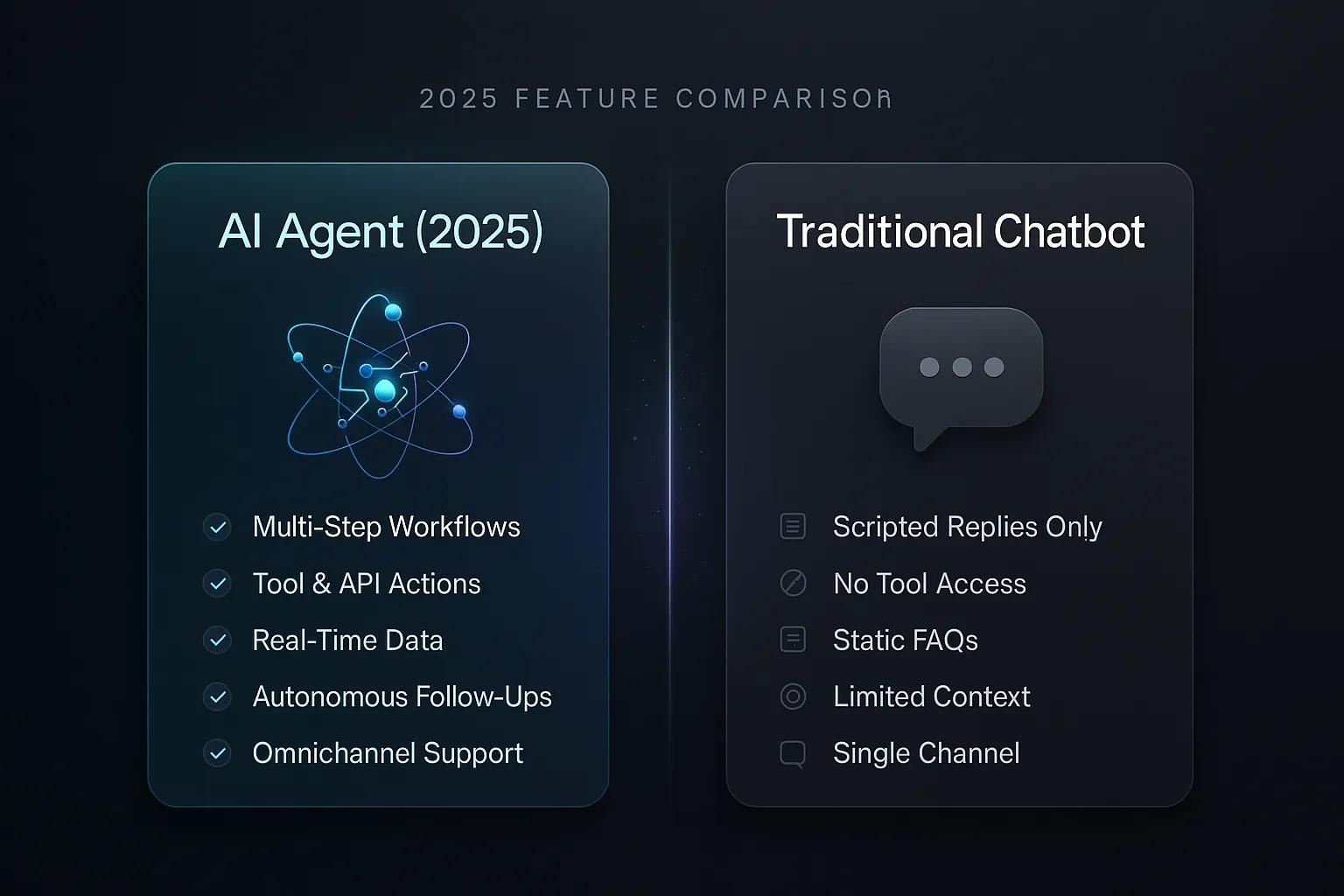
AI Agent vs Traditional Chatbot: 2026 Feature Comparison
It's 11 PM on a Tuesday. A customer reports a damaged package through your support channel. Your traditional chatbot politely apologizes and provides a link to...