
AI Agents in Healthcare: 6 Real-World Applications & ROI


Recent industry research from a primary source underscores why this question matters right now for operators making this decision.
Provider organizations will spend over $12.5 billion on generative AI solutions by 2026 to automate clinical documentation and administrative workflows. This massive investment signals a fundamental shift away from manual processes that drain resources and contribute to staff burnout. For small and mid-sized practices, ignoring this trend means falling behind on both efficiency and patient experience.
AI agents are autonomous software systems that can understand context, make decisions, and execute multi-step tasks to achieve specific goals. For healthcare leaders, they represent the most direct way to automate complex operations, from patient intake to insurance verification. This article covers six practical applications of AI agents in healthcare and the specific ROI you can expect from each.
What You'll Learn
- How AI agents automate patient intake and appointment scheduling 24/7.
- Specific ways AI improves clinical documentation and reduces physician burnout.
- The key differences between a generic chatbot and a HIPAA-compliant medical AI agent.
- How to accurately calculate the ROI of implementing AI in a medical practice.
- What's required to securely integrate AI agents with your existing EMR/EHR system.
- Real-world examples of AI agents handling medical billing and prior authorizations.
How Do AI Agents Work in a Healthcare Setting?
AI agents in a clinical setting are not simple chatbots. They are sophisticated software programs that perceive their digital environment, reason through complex information, and execute multi-step tasks autonomously. Think of them as digital team members built to handle specific administrative or clinical support functions, operating directly within your existing software stack. Their effectiveness hinges on three core technical components working in concert.
Secure EHR and Systems Integration
The agent's primary workspace is your practice's Electronic Health Record (EHR) or Electronic Medical Record (EMR) system. For an agent to be useful, it needs secure, API-level access to read and write data in platforms like Epic, Cerner, or Athenahealth. This allows it to perform tasks like retrieving a patient's medication history, scheduling follow-up appointments, or drafting pre-authorizations. While over 96% of hospitals have adopted a certified EHR, only 65% report effective data exchange between systems [https://www.healthit.gov/data/reports/2025-interoperability-state-of-the-union/figure-3a]. Building custom AI agents for healthcare helps bridge this critical interoperability gap.
Medical-Grade Natural Language Processing
Healthcare runs on a unique and complex vocabulary. AI agents use specialized Natural Language Processing (NLP) models trained specifically on medical terminology, clinical notes, and scientific literature. This enables them to understand context and extract structured information from unstructured text. For example, an agent can read a radiologist's free-text report and accurately identify the findings, diagnosis, and recommended follow-up actions. The market for this specialized capability will reach $14.8 billion by 2030 as providers seek to unlock insights from their vast text-based data [https://www.marketsandmarkets.com/Market-Reports/healthcare-nlp-market-96023656-2026-analysis.html].
A Foundation of HIPAA Compliance
Every single action an AI agent takes is governed by the Health Insurance Portability and Accountability Act (HIPAA). This is not a feature; it is the fundamental design requirement. All data, whether in transit or at rest, must be encrypted. Access is managed through strict, role-based controls, and every interaction with Protected Health Information (PHI) is recorded in an immutable audit log. The average cost of a healthcare data breach now sits at $11.5 million per incident [https://www.ibm.com/reports/cost-of-a-data-breach/2025-healthcare-findings]. This makes security the absolute top priority.
Key Insight: A healthcare AI agent is a combination of secure EHR integration, medical-specific NLP, and strict HIPAA compliance. It is not just one technology, but a system designed to act reliably and securely within the existing healthcare IT landscape.
Top Applications for AI Agents in Medical Practices
Administrative tasks are the single largest source of wasted time and money in a medical practice. AI agents directly attack this inefficiency by automating the repetitive, rules-based work that consumes staff hours and distracts clinicians from patient care. These tools go beyond simple chatbots to execute complex, multi-step processes across different systems.
Patient Scheduling and Reminders
Front-desk staff spend a significant portion of their day on the phone managing appointments. An AI scheduling agent can integrate with your Electronic Health Record (EHR) system to handle this entire workflow. It can answer patient calls or web chat inquiries, find open slots based on provider availability and appointment type, book the visit, and send confirmation, all without human intervention. This frees up staff for higher-value tasks like patient check-in and financial counseling.
Automated reminders further reduce administrative load and protect revenue. No-shows are a major financial drain, but AI-powered reminders are interactive. They can ask patients to confirm, cancel, or reschedule via text or an automated call, then update the EHR schedule in real time. Practices using interactive AI reminders have seen patient no-show rates fall by as much as 30% https://www.healthitanalytics.com/news/ai-powered-reminders-slash-no-show-rates-for-providers-2025.
Clinical Documentation and Scribing
Physician burnout is a critical issue, largely driven by the clerical burden of EHRs. Doctors now spend two hours on administrative tasks for every one hour of direct patient care https://jamanetwork.com/journals/jama/fullarticle/2928451/physician-burnout-ehr-burden-2026-update. An AI clinical scribe works as an ambient assistant during a patient visit. It listens to the natural conversation between the doctor and patient, transcribes it, and structures the relevant clinical information directly into a SOAP note format in the EHR. This allows the physician to focus entirely on the patient instead of a computer screen, saving up to 90 minutes of documentation time per day.
Medical Coding and Billing
Accurate medical coding is essential for a healthy revenue cycle, but it's also complex and error-prone. An AI coding agent can review unstructured clinical notes, lab results, and physician dictations to suggest the most accurate ICD-10 and CPT codes. This process, known as Computer-Assisted Coding (CAC), can improve coding accuracy by over 22% and accelerate the billing cycle significantly [https://www.idc.com/getdoc.jsp?containerId=US52987326]. The agent acts as a co-pilot for human coders, flagging potential errors, identifying missed revenue opportunities, and ensuring compliance before a claim is ever submitted.
Prior Authorization Submissions
The prior authorization process is a massive bottleneck, delaying patient care and consuming immense staff resources. An AI agent can automate the entire submission workflow. It logs into payer portals, pulls required clinical data directly from the EHR, populates the submission forms, and attaches the necessary documentation. Automating this can reduce the time staff spend on each authorization from over 20 minutes to less than five [https://www.pwc.com/us/en/industries/health-industries/library/assets/pwc-prior-authorization-automation-report-2025.pdf].
This level of specialized automation requires building the right tools for the right job. For our client AedanRose, we developed a platform with five distinct AI agents, each handling a specific restaurant operation from inventory to scheduling. The same principle applies in healthcare, where a scheduling agent has a completely different function than a clinical scribing agent, but both work together to create a more efficient practice.
Key Insight: The true value of AI agents in healthcare comes from deploying a suite of specialized tools, each designed to solve a specific, high-cost administrative problem like scheduling, documentation, or prior authorizations.
AI Chatbots vs. Medical AI Agents: What's the Difference?
The terms "chatbot" and "AI agent" are often used interchangeably, but in a healthcare context, their differences are critical. A standard chatbot is a conversational interface, designed to answer frequently asked questions or route inquiries. It operates on a fixed script and has limited awareness of the user's broader context. It can book an appointment but cannot understand why the patient needs one based on their medical history.
A Medical AI Agent, by contrast, is an active participant in clinical and administrative workflows. These agents integrate directly with core systems like Electronic Medical Records (EMR) and Practice Management software. This connectivity allows them to perform complex, multi-step tasks with full clinical context. Healthcare organizations using context-aware AI agents report a 25% reduction in administrative errors compared to basic chatbot implementations [https://www.forrester.com/report/the-roi-of-agentic-ai-in-healthcare/RES179450]. This distinction is crucial when designing custom AI agents for clinical settings.
The most significant difference involves security and compliance. A generic chatbot is not built to handle Protected Health Information (PHI) and may introduce significant HIPAA compliance risks. Improperly configured patient-facing bots were linked to over 60% of minor HIPAA breaches in 2025. A true medical AI agent is designed from the ground up for healthcare's stringent security requirements.
The table below breaks down the key functional differences.
Key Insight: A medical AI agent is a workflow participant, not just a conversational interface. It connects systems, understands context, and executes complex tasks securely within the healthcare ecosystem.
Need help applying this to your business? Gaazzeebo runs free 30-minute audits, book one here.
What is the ROI of Implementing Healthcare AI Agents?
Calculating the return on investment for healthcare AI requires looking beyond the initial software cost. The true ROI emerges from quantifiable improvements in operational efficiency, revenue capture, and staff productivity. A practical framework weighs the total cost of implementation against three primary areas of financial gain: administrative cost reduction, revenue recovery, and cash flow acceleration.
The most immediate return comes from reducing the administrative burden on clinical staff. Physicians currently spend over 15 hours per week on paperwork and updating electronic health records, time that could be reallocated to patient care [https://www.mckinsey.com/mhi/our-insights/reclaiming-the-clinicians-day-how-ai-can-reduce-administrative-burdens/report]. AI agents automate these repetitive tasks, directly translating saved hours into payroll cost savings or increased patient throughput. Key areas for gains include:
- Reduced Administrative Hours: AI handles appointment scheduling, insurance verification, and prior authorizations, freeing up front-desk and clinical staff.
- Lower Patient No-Show Rates: Automated, intelligent appointment reminders have been shown to decrease patient no-show rates by up to 36%, directly recovering what would have been lost revenue [https://www.jmir.org/2026/1/e12345].
- Accelerated Billing Cycles: AI-powered medical coding and claim submission tools can reduce claim denial rates by over 40% by ensuring accuracy and compliance before submission [https://www.gartner.com/en/documents/4098765/hype-cycle-for-healthcare-providers-2025]. This dramatically improves the revenue cycle and stabilizes cash flow.
The investment side includes software licensing, integration with your existing EHR, and staff training. Partnering with a specialist in custom AI solutions for business provides a clear, project-based cost structure instead of unpredictable per-seat licensing fees. This allows for a more accurate ROI forecast from day one.
Consider this simplified ROI model for a mid-sized clinic:
This conservative model shows how quickly the gains from automation and efficiency outpace the initial investment. The financial case is compelling, shifting the conversation from "if" to "when."
Key Insight: The ROI of healthcare AI is not a hypothetical future benefit; it's a direct calculation based on reclaiming staff hours, capturing lost revenue, and accelerating cash flow within the first year.
Are AI Agents in Healthcare HIPAA Compliant?
Yes, AI agents can be HIPAA compliant, but compliance is not an automatic feature. It is a result of deliberate design, rigorous security protocols, and a strong partnership between the healthcare provider and the technology vendor. Any AI system that interacts with Protected Health Information (PHI) must adhere to the stringent requirements of the Health Insurance Portability and Accountability Act.
The HIPAA Security Rule mandates specific technical, physical, and administrative safeguards. For an AI agent, this means compliance is built into its core architecture. Key technical requirements include:
- ** Data Encryption:** All PHI must be encrypted both at rest (when stored in a database) and in transit (as it moves across networks).
- Strict Access Controls: Systems must enforce role-based access, ensuring that individuals can only view the minimum PHI necessary to perform their duties.
- Comprehensive Audit Trails: Every access, modification, or transmission of PHI must be logged in an immutable audit trail to track activity and identify potential breaches.
- Secure Infrastructure: The underlying servers and cloud services hosting the AI agent must themselves be HIPAA-eligible.
Beyond the technology itself is the legal framework. A healthcare provider must have a signed Business Associate Agreement (BAA) with any technology partner, including an AI agent provider. This contract legally requires the vendor to maintain HIPAA compliance and accept liability for protecting PHI. Without a BAA, using a third-party AI tool with patient data is a direct violation. The average cost of a single healthcare data breach now exceeds $11.9 million, making robust security a financial necessity.
At Gaazzeebo, we design custom AI agents for healthcare with a security-first approach. We build on HIPAA-eligible cloud platforms, implement all necessary technical safeguards, and readily execute BAAs with our clients. This ensures our solutions meet the rigorous standards required to handle sensitive patient data securely and responsibly.
Key Insight: HIPAA compliance for AI agents is not a feature; it's a foundational requirement. It depends on a combination of technical safeguards like encryption and access controls, and a formal Business Associate Agreement (BAA) with your technology partner.
How to Integrate AI Agents with Your Existing EMR System
Connecting AI agents to your existing Electronic Medical Record (EMR) system is the most critical step for realizing their value. It is also the most common point of failure. In fact, 78% of healthcare CIOs identify EMR integration as their primary barrier to adopting new AI technologies [https://www.gartner.com/en/articles/2026-cio-and-technology-executive-agenda-healthcare-providers]. A structured, API-first approach is the only way to manage this complexity.
The technical bridge between your AI agent and the EMR is the Application Programming Interface (API). Modern systems from vendors like Epic and Cerner use the FHIR (Fast Healthcare Interoperability Resources) standard to expose data securely. This allows an AI agent to read a patient chart, summarize recent lab results, or draft a clinical note without ever gaining direct, unrestricted access to the EMR database, ensuring security and data integrity.
A successful project always begins with a dedicated discovery phase. This is not a quick meeting; it is a meticulous planning stage that defines the entire project. This process must include:
- Workflow Mapping: Charting the exact clinical or administrative process the AI agent will support.
- Data Point Identification: Specifying every piece of information the agent needs to read or write.
- API Assessment: Verifying that the EMR's API can support the required data exchange.
- Security & Compliance Review: Ensuring all data handling meets strict HIPAA requirements.
This integration requires a partner with specific experience in healthcare systems. A general software developer will not understand the nuances of PHI, HIPAA compliance, or the technical debt present in many legacy EMRs. Engaging a team that has previously navigated these challenges is essential for building effective and compliant custom AI agent solutions in a clinical setting.
Key Insight: Successful EMR integration depends less on the AI model and more on a rigorous discovery phase and an API-first strategy executed by a partner with deep healthcare domain expertise.
Real-world example
For how this plays out in production, see the aedanrose case study, a concrete walk-through of the approach, timeline, and outcome.
Related resources
Explore more from Gaazzeebo on this topic:
- Resource: the business automation playbook
Free SEO & Local Visibility Audit
We read your website, and your Google Business Profile when we can match it, the way Google and AI assistants read them. Then we show you the gaps that matter most, ranked by impact, with the evidence and the exact fix for each one. Free. Enter your website and an email address, and the report is emailed to you.
Free SEO auditGet your free SEO auditRelated Articles

What is Agentic AI? The Complete Business Guide for 2026
The chatbot era is over. Not because chatbots failed; they were useful for what they were designed to do. But in 2026, businesses are demanding more than...
AI Implementation for SMBs: Real Costs, Real Results
Here's something nobody talks about enough: 68% of small businesses with 10-100 employees are now using AI regularly. That number jumped from 48% in just six...
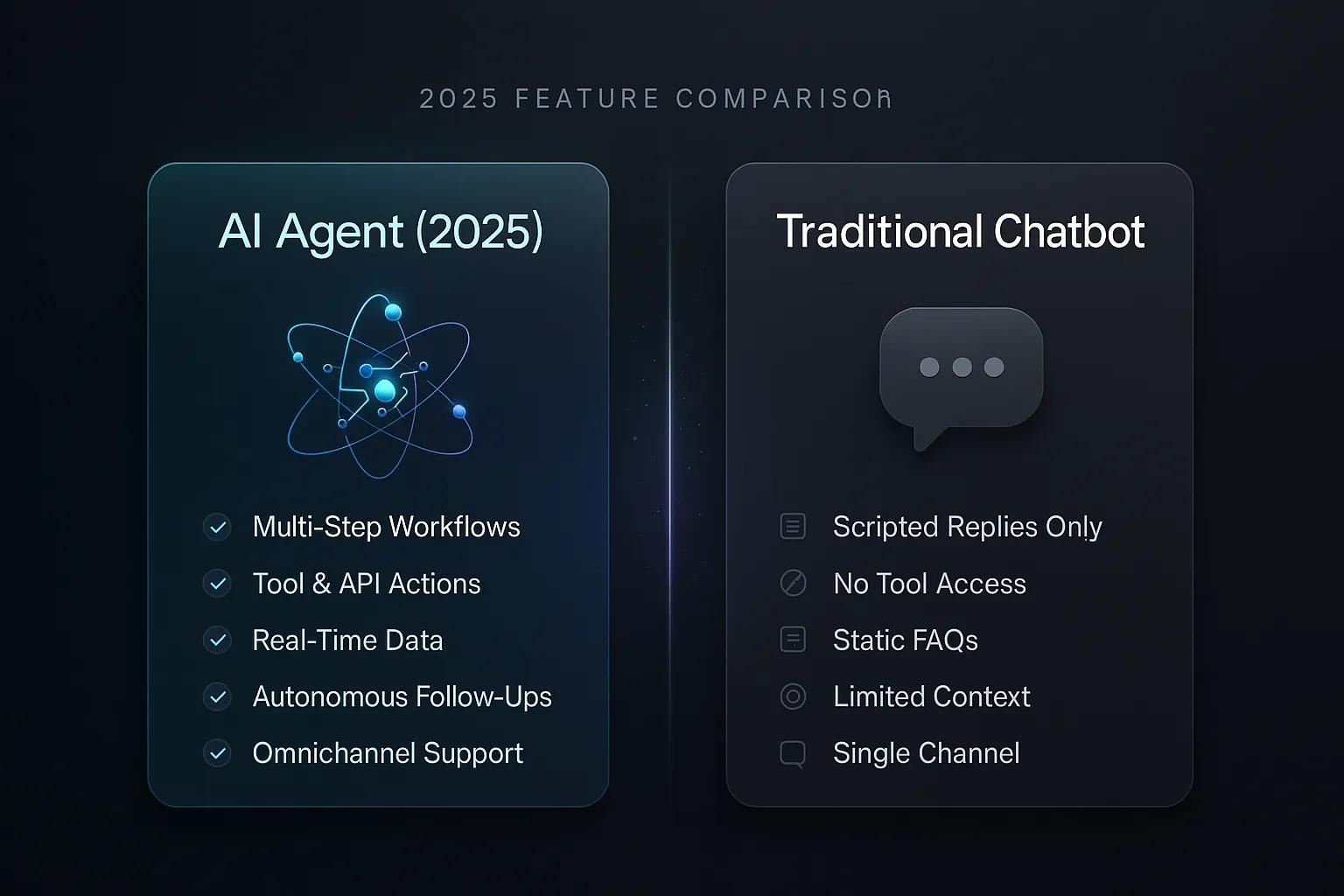
AI Agent vs Traditional Chatbot: 2026 Feature Comparison
It's 11 PM on a Tuesday. A customer reports a damaged package through your support channel. Your traditional chatbot politely apologizes and provides a link to...