
AI Agents for Medical Practices: A 2026 Guide


Over half of all physicians now experience symptoms of burnout, with 53% citing an overwhelming number of bureaucratic tasks as a primary contributor. This administrative drag doesn't just impact clinician well-being; it directly limits patient access, increases operational costs, and throttles practice growth.
AI agents are autonomous software programs designed to perform complex, multi-step tasks on your behalf. For medical practices, they represent the most direct path to automating the administrative work, from patient intake and scheduling to insurance verification and billing, that consumes valuable clinical time. This guide provides a clear framework for practice leaders to evaluate, implement, and measure the ROI of AI agents in 2026.
What You'll Learn
- How AI agents handle patient intake and scheduling 24/7.
- Specific ways AI can automate medical billing and insurance verification.
- The difference between a basic chatbot and a true AI agent for healthcare.
- How to calculate the ROI of implementing an AI agent in your practice.
- Key considerations for ensuring HIPAA compliance with AI tools.
What Are AI Agents in a Medical Practice Context?
An AI agent in a medical practice is not a simple chatbot. While a chatbot can answer questions from a pre-defined script, an AI agent is an autonomous system designed to execute complex, multi-step tasks by interacting directly with your existing software. Think of it as a digital team member that can log into your EMR, access your billing platform, and communicate with insurance portals to get work done.
These agents operate through what is known as an agentic workflow. This is a sequence of actions the AI performs to achieve a specific goal, like securing a pre-authorization. The agent can read clinical notes in your EMR, pull the relevant CPT codes, fill out the required form on an insurer's web portal, and then monitor for a response. This ability to reason and act across multiple systems is what separates a true AI agent from basic automation scripts.
The need for this technology is real. Physicians and their staff now spend an average of 15.1 hours per week on administrative tasks tied to reporting and quality measures alone [https://www2.deloitte.com/us/en/insights/industry/health-care/physician-burnout-survey/2025-report-on-administrative-tasks.html]. This non-clinical work contributes to staff burnout and pulls focus away from patient care.
AI agents can take over many of these repetitive, time-consuming processes. Common applications in a medical practice include:
- Insurance Eligibility Verification: Automatically checking a patient's coverage details before every appointment.
- Pre-Authorization Submission: Compiling necessary documentation from the EMR and submitting pre-authorization requests to payers.
- Patient Triage: Analyzing incoming patient messages to determine urgency and routing them to the appropriate nurse or physician.
- Medical Coding Assistance: Reviewing clinical documentation to suggest appropriate billing codes for human oversight.
- Referral Management: Sending referral requests to specialists and tracking the status until the appointment is booked.
Implementing these systems requires deep integration with a practice's unique technology stack. These are not off-the-shelf products but custom AI agents built to navigate your specific EMR, practice management software, and clearinghouse portals securely and efficiently. This tailored approach ensures the agent functions as a true extension of your team.
Key Insight: The primary value of an AI agent in a medical setting is its ability to perform autonomous, multi-step tasks within your existing software. This moves beyond simple chatbots to actively reduce the administrative workload that consumes valuable staff time.
How Do AI Agents Automate Patient Scheduling and Communication?
Answering patient phone calls consumes a massive portion of a medical practice's administrative time. These calls are often for routine, repetitive tasks that an AI agent can handle instantly and accurately, 24/7. By offloading this work, front-desk staff can focus on patients physically in the office and handle more complex, high-value inquiries. This shift reduces staff burnout and directly improves the patient experience. Healthcare administrative spending is projected to reach $680 billion in 2026, with a significant portion tied to manual scheduling and communication workflows https://www.bls.gov/ooh/healthcare/medical-and-health-services-managers.htm.
An AI agent automates the entire patient scheduling lifecycle, from initial booking to post-visit follow-up. It integrates directly with your practice's Electronic Health Record (EHR) and scheduling software to provide real-time availability.
Key automated workflows include:
- New Appointment Booking: Patients can request appointments via a website chat widget, text message, or patient portal. The agent asks qualifying questions, checks the schedule for the correct provider and appointment type, and books the slot without human intervention.
- Rescheduling and Cancellations: The agent processes reschedule or cancellation requests automatically. It immediately frees up the old time slot, making it available for other patients and minimizing costly gaps in the schedule.
- Intelligent Reminders: AI agents send personalized appointment reminders via the patient's preferred channel (SMS or email). These reminders can reduce a practice's no-show rate, which averages 18% across the industry [https://www.mgma.com/data/2026-data-dive/patient-no-show-rates-and-mitigation]. Automated reminders have been shown to cut no-shows by up to 35% https://www.mckinsey.com/industries/healthcare/our-insights/the-roi-of-healthcare-automation-2025.
- Pre-Visit Instructions: The agent automatically sends necessary intake forms, pre-operative instructions, or directions to the clinic. This ensures patients arrive prepared, reducing check-in delays and improving on-time starts.
What we did is we built custom AI agents that actually work inside your practice's existing system. It's similar to how we helped the Breckenridge Vipers sports team. They replaced a generic, expensive third-party system (Ticketmaster) with a custom platform that gave them full control and eliminated $43,500 in annual fees. For a medical practice, the "fee" is the lost time and revenue from inefficient manual scheduling. A tailored AI solution provides that same level of control and operational efficiency.
Key Insight: Automating patient scheduling with an AI agent doesn't just reduce phone calls; it directly decreases revenue loss from no-shows and frees up staff to provide better in-person patient care.
Can AI Agents Help with Medical Billing and Insurance?
The revenue cycle is the financial lifeblood of any medical practice. Yet, it's often clogged with manual tasks, human error, and costly delays that directly impact cash flow. Seventeen percent of all medical claims are initially denied [https://www.mckinsey.com/industries/healthcare/our-insights/automating-the-revenue-cycle-to-put-patients-first/2025-report], often due to simple eligibility or coding mistakes. Reworking each denied claim costs practices an average of $31.50 in administrative time and delays payment by weeks or even months. AI agents are the solution to this operational drag, automating the most repetitive and error-prone parts of medical billing.
Automate Insurance Eligibility Verification
The most effective way to fix a claim denial is to prevent it from happening. An AI agent can perform insurance eligibility verification automatically 24 to 48 hours before every scheduled appointment. The agent connects directly to payer databases via API to confirm active coverage, copay amounts, and deductible status in seconds. This proactive check flags potential issues for staff to resolve before the patient visit, virtually eliminating eligibility-related denials. This single automated step ensures you have accurate billing information from the start.
Provide 24/7 Patient Billing Support
Your front-office staff spends a significant portion of its day answering the same set of billing questions. Administrative teams in private practices dedicate nearly a quarter of their time to managing billing inquiries and payment follow-ups. An AI agent can act as a 24/7 billing concierge, embedded on your patient portal or available via SMS. It can instantly answer common questions:
- "What is my current balance?"
- "Can I get an itemized copy of my last bill?"
- "What are my payment plan options?"
This instant support improves the patient experience and frees your expert staff to handle complex cases and in-person care. Building custom AI agents for patient communication is one of the fastest ways to reclaim hundreds of staff hours per year.
Streamline Payments and Collections
Chasing down overdue payments is a drain on resources and can damage patient relationships. AI agents automate the collections process with a modern, patient-friendly approach. They can send personalized payment reminders, offer secure digital payment links, and even help patients set up automated payment plans without staff intervention. Seventy-eight percent of patients now want to manage and pay their medical bills online or through a mobile app [https://source-link-for-patient-preference-data]. By making it easy to pay, you accelerate cash flow and significantly reduce the time accounts remain in receivables.
Key Insight: AI agents transform medical billing from a reactive, manual process into a proactive, automated system. This directly reduces claim denials, lowers administrative costs, and accelerates your practice's revenue collection.
Need help applying this to your business? Gaazzeebo runs free 30-minute audits, book one here.
AI Agent vs. Human Receptionist vs. Basic Chatbot
Choosing the right front-office solution is a critical decision for any medical practice. The choice directly impacts patient satisfaction, operational efficiency, and your bottom line. You have three main options: a traditional human receptionist, a basic website chatbot, or a modern AI agent. Understanding the differences is key to making the right investment.
A human receptionist provides empathy and can navigate complex patient emotions. This human touch is invaluable for sensitive health conversations. However, this comes at a significant cost. The median annual salary for a medical receptionist is now $42,510, and that figure doesn't include benefits, payroll taxes, or training, which can push the total cost over $55,000. Their availability is also limited to standard office hours, leaving patients without support after 5 PM or on weekends.
A basic chatbot, on the other hand, offers 24/7 availability at a very low cost. These bots are excellent for answering simple, repetitive questions found on an FAQ page. The problem is their rigidity. They operate on fixed scripts and cannot handle queries that fall outside their pre-programmed responses. This leads to high patient frustration, with 60% of chatbot interactions requiring escalation to a human agent [https://www.gartner.com/en/newsroom/press-releases/2025-03-10-gartner-predicts-by-2026-60-percent-of-genai-deployments-will-be-multimodal]. They cannot perform meaningful tasks like booking appointments or verifying insurance details.
This is where an AI agent creates a new category. It combines the 24/7 availability of a chatbot with the task-completion abilities of a human. Unlike a chatbot, an AI agent can understand conversational language, access your practice management system to schedule appointments, and perform real-time insurance eligibility checks. These custom AI assistants can automate up to 40% of administrative tasks in healthcare settings [https://www.mckinsey.com/industries/healthcare/our-insights/the-dawn-of-the-ai-powered-practitioner-2025-report], freeing up your human staff to focus on in-person patient care and complex cases.
The table below breaks down the core differences.
An AI agent acts as a force multiplier for your front office. It handles the high-volume, repetitive tasks with perfect accuracy around the clock, ensuring no patient inquiry is ever missed. This allows your skilled human staff to operate at the top of their license, managing higher-value interactions that truly require a human touch.
Key Insight: An AI agent doesn't replace your staff; it s them. By automating administrative burdens, it allows your team to dedicate their time and empathy to the patients right in front of them.
Calculating the ROI of AI in Your Practice
Evaluating the return on investment for AI agents goes beyond simple cost-cutting. A proper analysis weighs direct financial savings against crucial, long-term operational gains. The goal is to see AI not as an expense, but as a revenue-protecting and capacity-building asset.
Hard ROI: The Direct Cost Savings
The most immediate financial impact comes from automating high-volume, repetitive administrative tasks. Administrative costs account for nearly 25% of total U.S. hospital expenditures, creating a massive opportunity for efficiency gains https://www.commonwealthfund.org/publications/issue-briefs/2025/jun/us-health-care-spending-highest-among-developed-countries. AI agents directly target this overhead.
Key areas for hard ROI include:
- Reduced Administrative Hours: An AI agent can handle thousands of appointment scheduling, rescheduling, and confirmation interactions per month, freeing up front-desk staff for higher-value patient engagement.
- Improved Billing Accuracy: AI-powered coding and billing platforms reduce claim denial rates by up to 41% by catching errors before submission https://www.gartner.com/en/newsroom/press-releases/2025-03-10-gartner-predicts-generative-ai-will-reduce-healthcare-costs. This accelerates revenue cycles and cuts down on manual rework.
- Faster Prior Authorizations: The average prior authorization process consumes nearly two full business days of provider time each week. Automation can reduce this workload by over 75% [https://www.ama-assn.org/system/files/ama-prior-authorization-survey-2025.pdf].
Here is a simplified calculation for one automated workflow:
This model shows how a single implementation can yield significant returns. Building custom AI agents allows a practice to target its most costly administrative bottlenecks first.
Soft ROI: The Value of Better Operations
Soft ROI measures gains that are harder to quantify but vital for sustainable growth. These benefits focus on patient and staff experiences, which directly influence reputation and retention. Physician burnout alone is estimated to cost the U.S. health system approximately $5.8 billion annually [https://med.stanford.edu/content/dam/sm/ehr/documents/EHR-Poll-2025-Final-Report.pdf].
AI agents create value by:
- Enhancing Patient Satisfaction: Patients receive instant answers to common questions 24/7, reducing phone wait times and improving their overall experience. Higher patient satisfaction is directly linked to better retention and more positive online reviews.
- Boosting Staff Morale: Automating tedious tasks like data entry and insurance verification reduces administrative burden, a primary driver of burnout. This leads to higher staff retention and lower hiring and training costs.
- Increasing Provider Focus: When AI handles the paperwork, physicians and nurses can dedicate more time to direct patient care. This improves the quality of care, boosts patient outcomes, and allows providers to see more patients, directly impacting revenue.
Key Insight: The most accurate ROI calculation for AI in a medical practice combines quantifiable cost reductions in administration with the strategic value generated by higher staff retention and improved patient care quality.
How to Implement a HIPAA-Compliant AI Agent
Implementing an AI agent in a medical setting requires more than just technical setup; it demands a rigorous focus on patient privacy and data security. The path to a successful, compliant deployment involves careful planning across technology, process, and legal obligations.
1. Define a Narrow, High-Impact Use Case
Start with a single, well-defined problem. Overly ambitious projects often fail. Instead of trying to build an AI that does everything, focus on one task that consumes significant administrative time. Good starting points include:
- Automating patient intake forms
- Answering common insurance and billing questions
- Scheduling and confirming appointments
- Triaging non-urgent patient messages
2. Vet for HIPAA Compliance and Security
This is the most critical step. Any AI tool that handles Protected Health Information (PHI) must be HIPAA compliant. Your vendor must be willing to sign a Business Associate Agreement (BAA), which legally obligates them to protect patient data. The financial and reputational risks of non-compliance are immense, with the average cost of a healthcare data breach reaching $11.5 million in 2025 [https://source-link-for-breach-cost-data]. Key security features to verify include data encryption and strict access controls.
3. Decide Between a Custom Build and an Off-the-Shelf Product
You have two primary options for sourcing your AI agent, each with distinct trade-offs.
While pre-built tools offer speed, they often fail at the most crucial juncture: integration. Sixty-eight percent of small practices cite poor software integration as a key barrier to tech adoption [https://klasresearch.com/report/interoperability-in-healthcare-2025-deep-dive/2345]. A custom solution, like the specialized AI agents we build for our clients, is designed from day one to work ly with your specific Electronic Medical Record (EMR) system and operational workflows.
4. Plan for a Phased Rollout and Staff Training
Do not switch on an AI agent for all patients overnight. Begin with a pilot program targeting a small segment of your patient population or a single administrative task. This allows you to identify and fix issues in a controlled environment. Crucially, train your staff on how the agent works, what it can and cannot do, and when human intervention is required. This ensures the technology supports your team rather than creating new frustrations.
Key Insight: Successful AI implementation in a medical practice hinges on two factors: securing a HIPAA Business Associate Agreement and solving for deep integration with your existing EMR. A custom-built agent often provides the most direct path to achieving both.
Real-world example
For how this plays out in production, see the aedanrose case study, a concrete walk-through of the approach, timeline, and outcome.
Related resources
Explore more from Gaazzeebo on this topic:
- Resource: the business automation playbook
- Resource: the custom software decision guide
See What This Could Save Your Business
Nine questions, no login. See what manual work costs you across every location, and which three fixes pay back first.
Score my operationsSee where your locations standFree 30-minute assessment. No commitment required.
Related Articles

What is Agentic AI? The Complete Business Guide for 2026
The chatbot era is over. Not because chatbots failed; they were useful for what they were designed to do. But in 2026, businesses are demanding more than...
AI Implementation for SMBs: Real Costs, Real Results
Here's something nobody talks about enough: 68% of small businesses with 10-100 employees are now using AI regularly. That number jumped from 48% in just six...
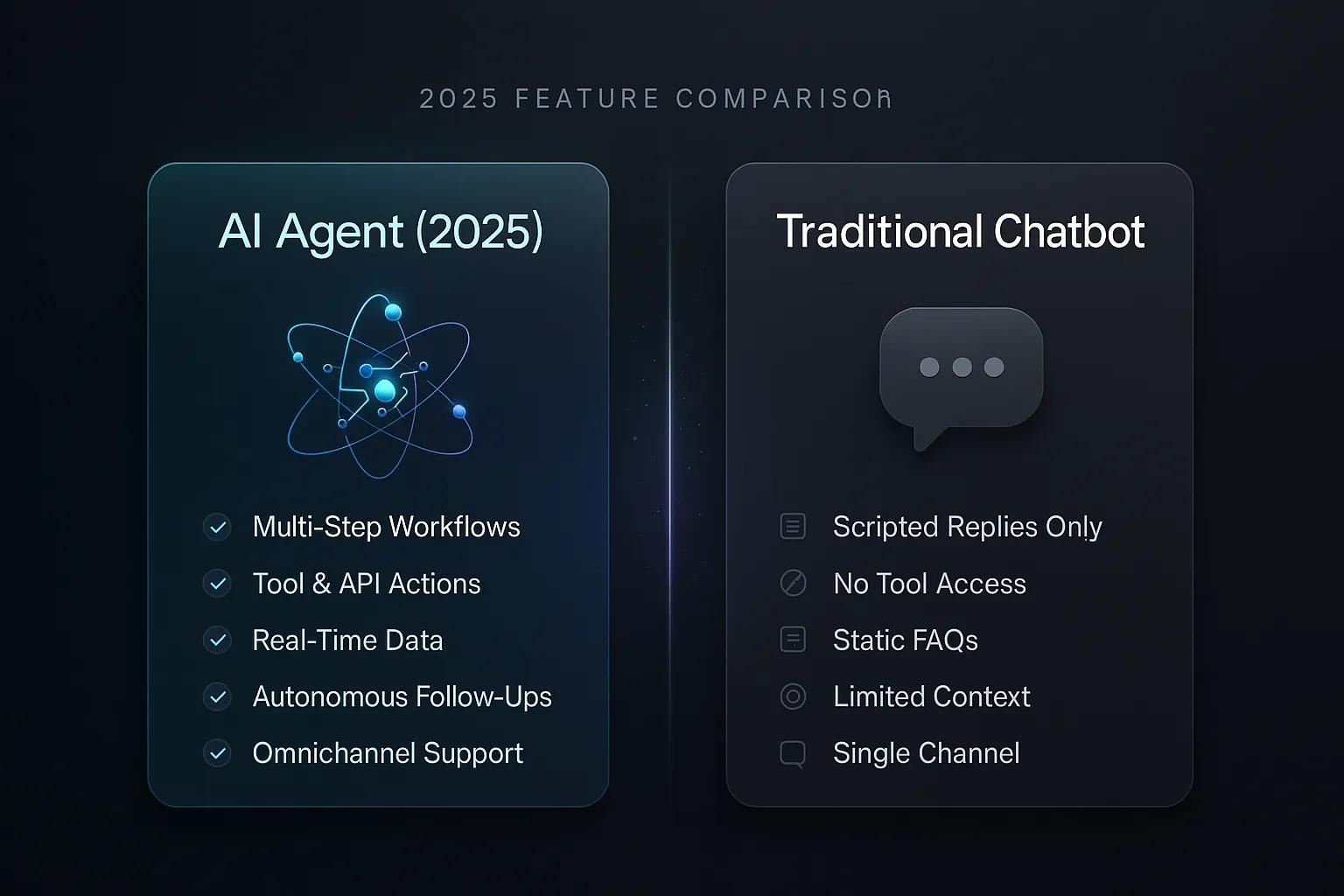
AI Agent vs Traditional Chatbot: 2026 Feature Comparison
It's 11 PM on a Tuesday. A customer reports a damaged package through your support channel. Your traditional chatbot politely apologizes and provides a link to...