
AI Chatbot Guide for Business
Implement AI chatbots to improve customer service and boost sales.


AI-augmented development is predicted to be a major driver of chatbot adoption
Gartner's call on this is striking: AI-augmented development is reshaping how chatbots get built and deployed. AI chatbots themselves are computer programs that simulate human conversation using artificial intelligence, and they're rapidly becoming essential tools for any business serious about customer service, lead generation, and task automation.
In 2026, we're seeing SMBs increasingly rely on AI chatbots to improve customer service, generate leads, and automate work that used to require a person sitting at a desk. This guide walks through what AI chatbots are, how they work, their benefits, implementation strategies, and the pitfalls to watch out for.
What You'll Learn
- The definition and core components of AI chatbots.
- How AI chatbots compare to traditional rule-based chatbots.
- Real-world use cases for AI chatbots in various industries.
- A step-by-step guide to implementing AI chatbots in your business.
- The costs, ROI, and business impact of AI chatbot implementation.
- Common mistakes and risks associated with AI chatbot implementation.
What are AI Chatbots?
AI chatbots are advanced conversational AI systems designed to interact with humans in a natural and intuitive way. Unlike traditional rule-based chatbots that follow pre-defined scripts, AI chatbots use natural language processing (NLP), machine learning (ML), and deep learning (DL) to understand user intent, provide personalized responses, and learn from interactions over time. Think of them as digital assistants capable of understanding and responding to human language, similar to how a human customer service representative would. Gaazzeebo specializes in building custom AI Agents that integrate ly with your existing business systems.
Key Components of AI Chatbots
AI chatbots rely on several key technologies to function effectively:
- Natural Language Processing (NLP): Enables the chatbot to understand and interpret human language, including its nuances and context.
- Machine Learning (ML): Allows the chatbot to learn from data and improve its responses over time.
- Deep Learning (DL): A subset of ML that uses artificial neural networks to analyze complex data patterns and provide more accurate responses.
- Intent Recognition: The ability to identify the user's goal or purpose behind their message.
- Entity Extraction: The process of identifying and extracting relevant information from the user's message, such as names, dates, and locations.
Key Insight: AI chatbots are more than just automated responders; they're intelligent systems that can understand, learn, and adapt to user needs, providing a more personalized and efficient experience.
AI Chatbots vs. Rule-Based Chatbots: What's the Difference?
The primary difference between AI chatbots and rule-based chatbots lies in their ability to understand and respond to complex user queries. Rule-based chatbots follow pre-defined scripts and can only answer questions that fall within their programmed parameters. AI chatbots, on the other hand, use NLP and ML to understand the intent behind user queries and provide more flexible and personalized responses.
Key Insight: AI chatbots offer greater flexibility, personalization, and scalability compared to rule-based chatbots, making them a more effective solution for businesses with complex customer service needs.
Real-World Use Cases for AI Chatbots
AI chatbots are being used across a wide range of industries to improve customer service, generate leads, and automate tasks.
Aedanrose: AI Agents for Restaurants
Aedanrose, a restaurant technology company, partnered with Gaazzeebo to develop a multi-agent AI platform with 5 specialized AI agents designed for independent restaurant operators. This platform, the first affordable AI solution of its kind for restaurants, automates tasks such as order taking, customer support, and inventory management, freeing up staff to focus on providing exceptional service. Learn more about the Aedanrose case study.
E-commerce: Personalized Shopping Experiences
E-commerce businesses are using AI chatbots to provide personalized shopping experiences for their customers. Forrester's 2025 report on the future of retail puts the upside clearly: AI-powered chatbots can increase sales by up to 25% by providing product recommendations, answering customer questions, and guiding them through the purchase process. Read the full report.
Healthcare: Appointment Scheduling and Medical Information
Healthcare providers are using AI chatbots to automate appointment scheduling, provide medical information, and answer patient questions. The beauty of this approach is the workload reduction, AI chatbots can reduce the burden on healthcare staff by up to 40% while improving patient satisfaction.
Key Insight: AI chatbots can be applied to a wide range of industries and use cases, providing businesses with a powerful tool for improving efficiency and enhancing customer experiences.
Implementation Guide: How to Get Started with AI Chatbots
Implementing an AI chatbot requires careful planning and execution. Here's a step-by-step guide to help you get started:
- Define Your Goals: Determine what you want to achieve with your AI chatbot. Are you looking to improve customer service, generate leads, or automate tasks?
- Choose a Platform: Select an AI chatbot platform that meets your needs and budget. Consider factors such as ease of use, scalability, and integration capabilities.
- Design Your Chatbot's Personality: Give your chatbot a unique personality that aligns with your brand and target audience.
- Train Your Chatbot: Provide your chatbot with the data it needs to understand and respond to user queries. This may involve training it on a large dataset of customer conversations.
- Test and Optimize: Continuously test and optimize your chatbot to improve its performance and ensure it's meeting your goals.
Key Insight: Successful AI chatbot implementation requires careful planning, a well-defined strategy, and ongoing optimization to ensure it's meeting your business goals.
Costs, ROI, and Business Impact
The cost of implementing an AI chatbot can vary widely depending on the platform you choose, the complexity of your chatbot, and the level of customization required. But here's the thing, the ROI of AI chatbot implementation can be significant. Take Eagle Repair, for example. We built them a custom Next.js marketing site and client invoice portal with QuickBooks Payments integration, which streamlined their financial processes and cut their invoice-to-paid cycle from weeks down to days. Read more about Eagle Repair's success.
Key Insight: While the initial investment in AI chatbots may seem daunting, the long-term ROI can be substantial, leading to significant cost savings, improved efficiency, and enhanced customer experiences.
Common Mistakes and Risks
Implementing an AI chatbot is not without its challenges. Here are some common mistakes and risks to watch out for:
- Lack of Planning: Failing to define clear goals and a well-defined strategy can lead to a failed implementation.
- Poor Training Data: Insufficient or inaccurate training data can result in a chatbot that provides incorrect or irrelevant responses.
- Over-Reliance on Automation: Relying too heavily on automation can lead to an impersonal and frustrating customer experience.
- Security Risks: Failing to address security concerns can leave your chatbot vulnerable to attacks.
Key Insight: Avoiding these common mistakes and addressing potential risks can help ensure a successful AI chatbot implementation that delivers the desired results.
The Bottom Line
- AI chatbots are transforming the way businesses interact with their customers, providing a more efficient and personalized experience.
- Implementing an AI chatbot requires careful planning, a well-defined strategy, and ongoing optimization.
- The ROI of AI chatbot implementation can be significant, leading to cost savings, improved efficiency, and enhanced customer experiences.
Ready to transform your business with AI chatbots? Gaazzeebo builds custom AI Agents for SMBs across Tampa, Florida, and beyond. Book a free assessment or explore our AI Agents services to see what's possible.
About Gaazzeebo: We are a Tampa-based technology company specializing in AI agents, business automation, custom software, websites, and mobile apps. Our team helps small and medium businesses harness technology to grow faster and operate more efficiently. Book a free assessment to see what we can build for you.
See What This Could Save Your Business
Nine questions, no login. See what manual work costs you across every location, and which three fixes pay back first.
Score my operationsSee where your locations standFree 30-minute assessment. No commitment required.
Related Articles

What is Agentic AI? The Complete Business Guide for 2026
The chatbot era is over. Not because chatbots failed; they were useful for what they were designed to do. But in 2026, businesses are demanding more than...
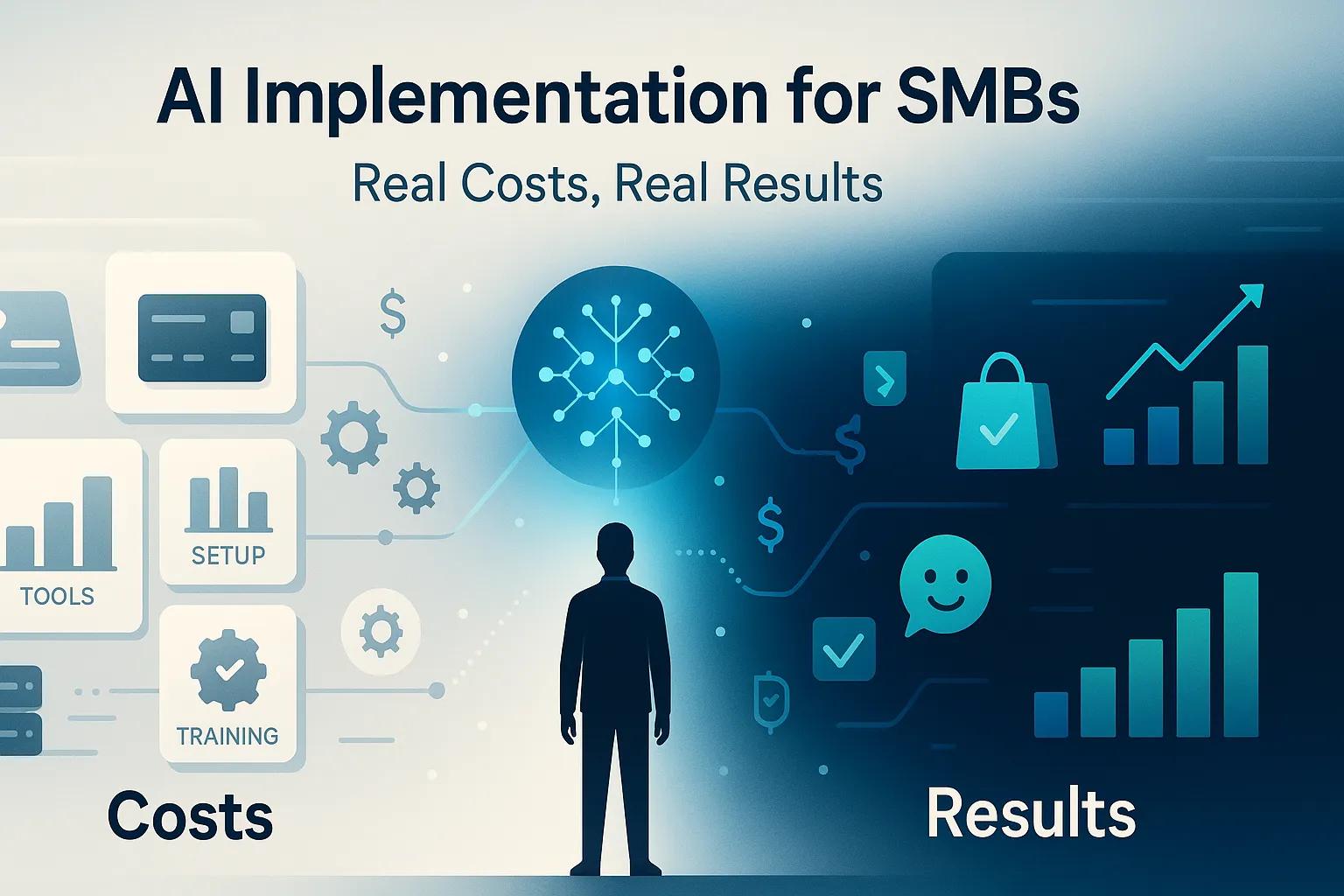
AI Implementation for SMBs: Real Costs, Real Results
Here's something nobody talks about enough: 68% of small businesses with 10-100 employees are now using AI regularly. That number jumped from 48% in just six...
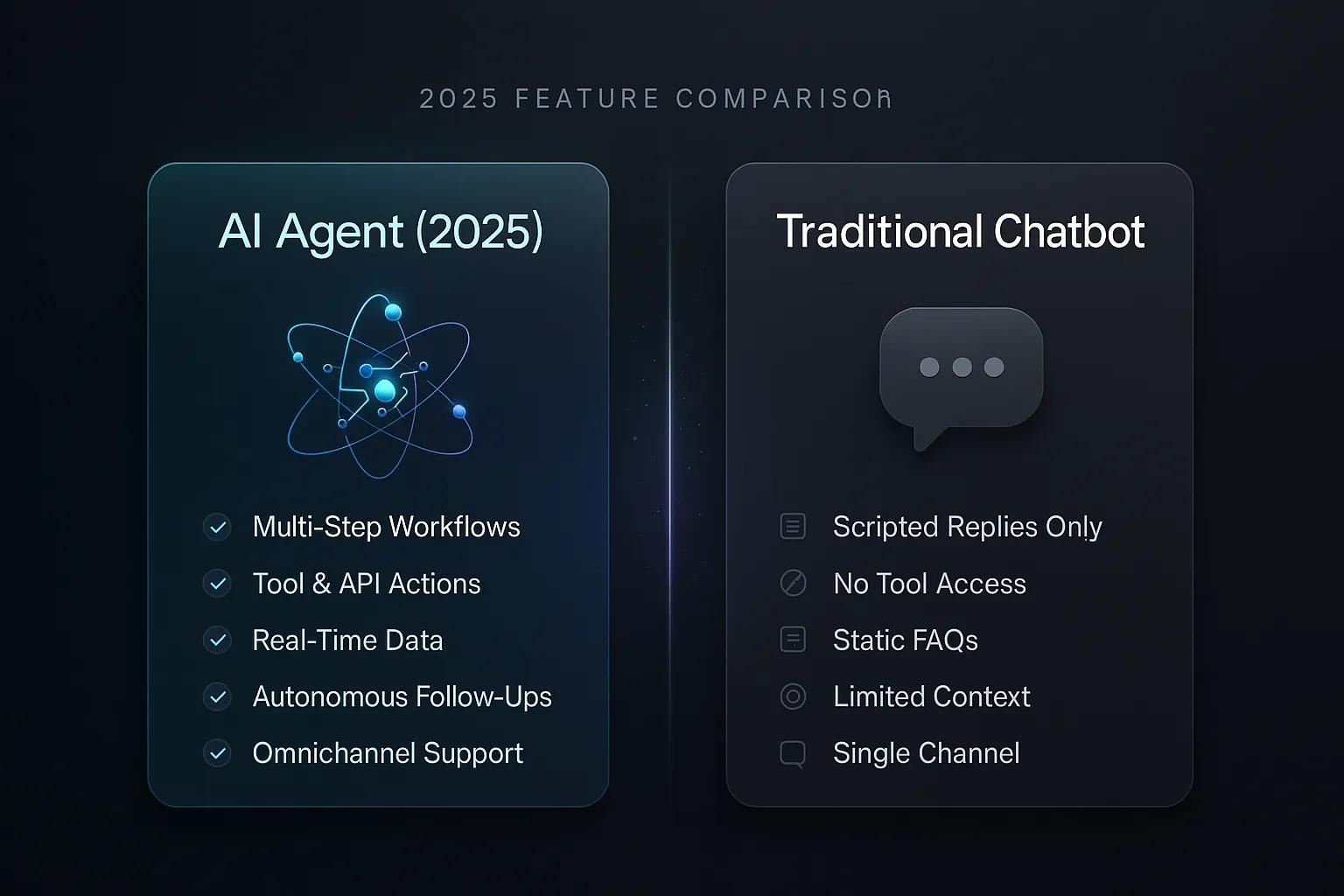
AI Agent vs Traditional Chatbot: 2026 Feature Comparison
It's 11 PM on a Tuesday. A customer reports a damaged package through your support channel. Your traditional chatbot politely apologizes and provides a link to...