
AI SDR vs. Human Sales Rep: Conversion Rates
Comparing the effectiveness of AI and human sales development reps


A quick reality check from Gartner: by 2028, AI is projected to handle 30% of outbound sales tasks. This marks a significant jump from just 5% in 2023, with current adoption already rapidly accelerating in 2026. The question isn't whether AI SDRs are coming, it's whether your sales team is ready to work alongside them.
This article breaks down how AI Sales Development Representatives (SDRs) actually perform against human reps in 2026, and what that means for SMB leaders deciding whether to bring AI into their sales workflows.
What You'll Learn
- How AI SDRs and human SDRs actually differ, and where each one wins.
- What AI SDRs can automate: lead qualification, appointment setting, initial customer conversations.
- Real examples of businesses using AI SDRs to improve conversion rates and cut costs.
- A step-by-step path to implementing AI SDRs in your sales process.
- The costs, ROI, and actual business impact of adding AI SDRs to your strategy.
Understanding AI SDRs
An AI Sales Development Representative (SDR) is a software agent designed to automate and enhance the sales development process. Think of it as a tireless virtual assistant that handles repetitive tasks, qualifies leads, and engages prospects, so your human SDRs can focus on the complex, strategic work. AI SDRs use natural language processing (NLP), machine learning (ML), and other AI tools to communicate with potential customers, personalize interactions, and drive conversions. Gaazzeebo specializes in building custom AI agents built around your specific business needs.
Key Functions of AI SDRs
- Lead Qualification: Automatically score and prioritize leads based on the criteria you set.
- Appointment Setting: Schedule meetings with qualified leads so your human reps can focus on the conversation.
- Personalized Outreach: Write customized email and message sequences based on prospect data.
- Data Enrichment: Gather and update information about leads to sharpen your targeting.
- 24/7 Availability: Engage with prospects around the clock, regardless of time zone.
Key Insight: AI SDRs don't replace human sales reps. They augment what your team can do and streamline the repetitive work so everyone is more efficient.
AI SDR vs. Human Sales Rep: A Detailed Comparison
The effectiveness of AI SDRs versus human sales reps depends on the specific task and your overall sales strategy. Here's the breakdown:
Key Insight: AI SDRs are built for speed, consistency, and data analysis. Human sales reps own the empathy, complex problem-solving, and relationship-building work.
Real-World Use Cases of AI SDRs
AI SDRs are already reshaping sales across industries. Here's what we're seeing:
Aedanrose: AI Agents for Restaurants
Aedanrose, a restaurant technology company, partnered with Gaazzeebo to build a multi-agent AI platform with 5 specialized AI agents designed for independent restaurant operators. The platform automates order taking, customer service, and inventory management, freeing up restaurant staff to focus on what matters: the dining experience. Learn more about the Aedanrose AI platform.
E-commerce: Personalized Product Recommendations
An e-commerce company deployed AI SDRs to analyze customer browsing history and purchase data, then deliver personalized product recommendations via email and chat. The result: a 15% increase in conversion rates and a 10% boost in average order value [Forrester (2026), The ROI of AI in E-Commerce].
Healthcare: Appointment Reminders and Follow-Ups
A healthcare provider used AI SDRs to automate appointment reminders and follow-up communications with patients. No-show rates dropped by 20% and patient satisfaction scores climbed 25% [Deloitte (2025), AI in Healthcare: Opportunities and Challenges].
Key Insight: AI SDRs work across industries and use cases. The payoff is the same: better efficiency, better customer experience, better revenue.
Implementing AI SDRs: A Step-by-Step Guide
Bringing AI SDRs into your sales process takes planning and discipline. Here's how to walk before you run:
Step 1: Define Your Goals. Name the specific sales challenge you want to solve with AI SDRs, lead generation, qualification, appointment setting. Be specific.
Step 2: Choose the Right Technology. Find an AI SDR platform that aligns with your business and integrates cleanly with your CRM and sales tools. Gaazzeebo offers custom AI agents and automation solutions built for SMBs.
Step 3: Train Your AI SDR. Give your AI SDR the data and context it needs to understand your target audience, your product offerings, and your sales process.
Step 4: Integrate with Human Sales Reps. Define clear handoff points between AI SDRs and human reps. The goal is a smooth, efficient sales process, not a bottleneck.
Step 5: Monitor and Optimize. Track the performance of your AI SDRs continuously. Make adjustments as needed to improve effectiveness and ROI.
Key Insight: Successful AI SDR implementation requires a strategic approach, careful planning, and ongoing monitoring. It's not a set-it-and-forget-it play.
Costs, ROI, and Business Impact of AI SDRs
The cost of implementing AI SDRs varies depending on the platform, features, and level of customization. But the ROI can be substantial. Businesses are seeing a 20-40% reduction in sales costs and a 10-25% increase in lead generation by integrating AI into their sales processes. AI SDRs also free up your human reps to focus on higher-value work, closing deals and building relationships.
Key Insight: There's an upfront investment, absolutely. But the payoff is real: lower costs, higher efficiency, more revenue.
Common Mistakes to Avoid When Implementing AI SDRs
- Over-Reliance on Automation: Don't put all your eggs in the AI SDR basket. Human oversight is still essential for complex negotiations and relationship building.
- Lack of Personalization: Generic, impersonal messaging alienates prospects. Use your data to personalize interactions and deliver relevant content.
- Ignoring Data Quality: Make sure your data is accurate and current. Bad data means irrelevant or inaccurate outreach to prospects.
- Failing to Monitor Performance: Track your AI SDRs continuously and adjust as needed. What works in month one may need refinement in month three.
- Poor Integration with Existing Systems: Your AI SDR platform needs to integrate ly with your CRM and other sales tools. Gaazzeebo specializes in integrating AI solutions with existing business systems.
Key Insight: Sidestep these common mistakes and you'll maximize the ROI of your AI SDR implementation and hit your sales goals.
The Bottom Line
- AI SDRs are a powerful way to automate and enhance the sales development process.
- AI SDRs win on speed, consistency, and data analysis. Human sales reps win on empathy and complex problem-solving.
- By implementing AI SDRs strategically and avoiding the common pitfalls, businesses can achieve significant cost savings, higher efficiency, and better conversion rates.
Ready to streamline your sales process with AI? Gaazzeebo builds custom AI agents for SMBs across Tampa, Florida, and beyond. Book a free assessment or explore our AI agent services to see what's possible. We also offer business automation, custom software, websites, and mobile apps.
About Gaazzeebo: We are a Tampa-based technology company specializing in AI agents, business automation, custom software, websites, and mobile apps. Our team helps small and medium businesses harness technology to grow faster and operate more efficiently. Book a free assessment to see what we can build for you.
Free SEO & Local Visibility Audit
We read your website, and your Google Business Profile when we can match it, the way Google and AI assistants read them. Then we show you the gaps that matter most, ranked by impact, with the evidence and the exact fix for each one. Free. Enter your website and an email address, and the report is emailed to you.
Free SEO auditGet your free SEO auditRelated Articles
What is Agentic AI? The Complete Business Guide for 2026
The chatbot era is over. Not because chatbots failed; they were useful for what they were designed to do. But in 2026, businesses are demanding more than...
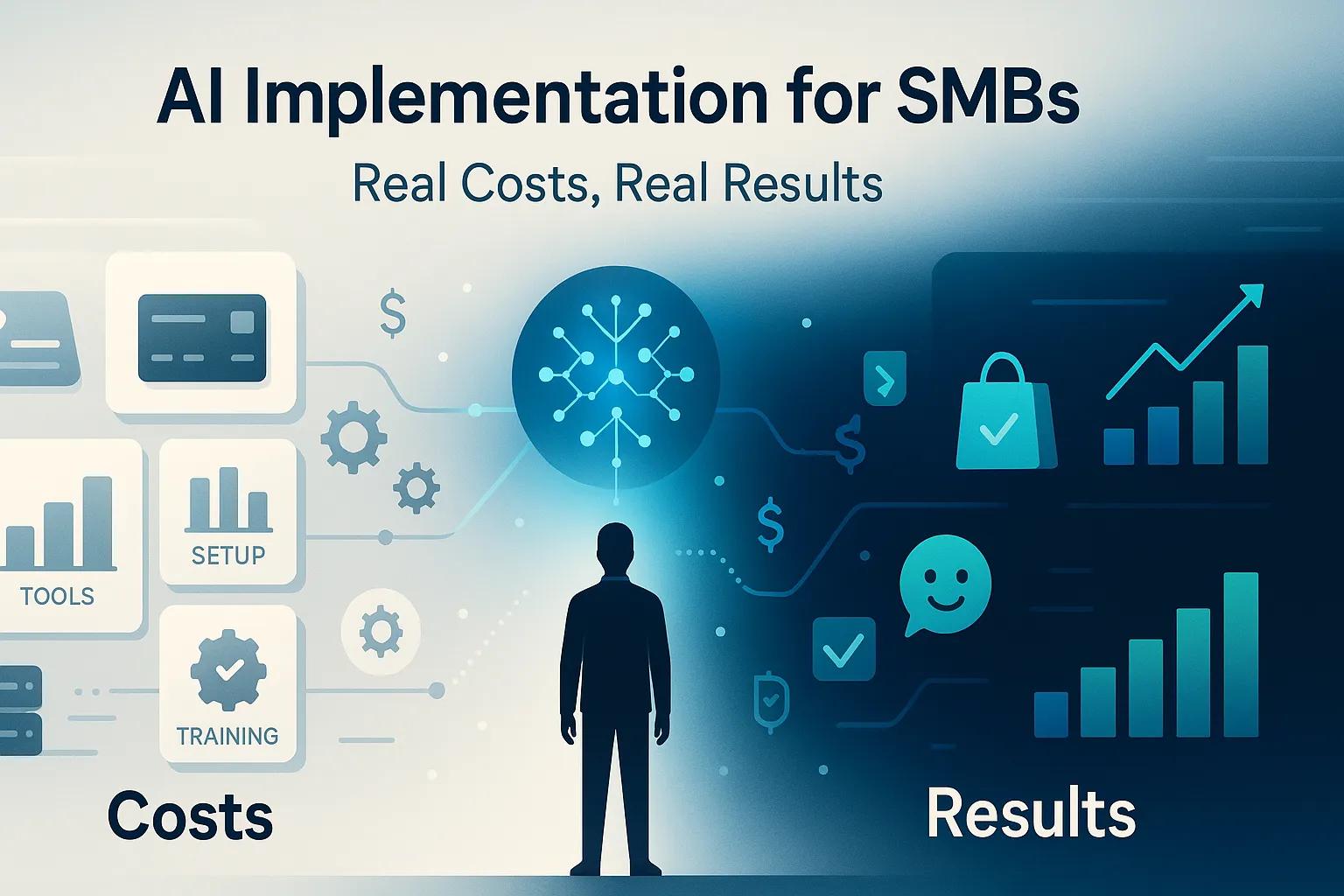
AI Implementation for SMBs: Real Costs, Real Results
Here's something nobody talks about enough: 68% of small businesses with 10-100 employees are now using AI regularly. That number jumped from 48% in just six...
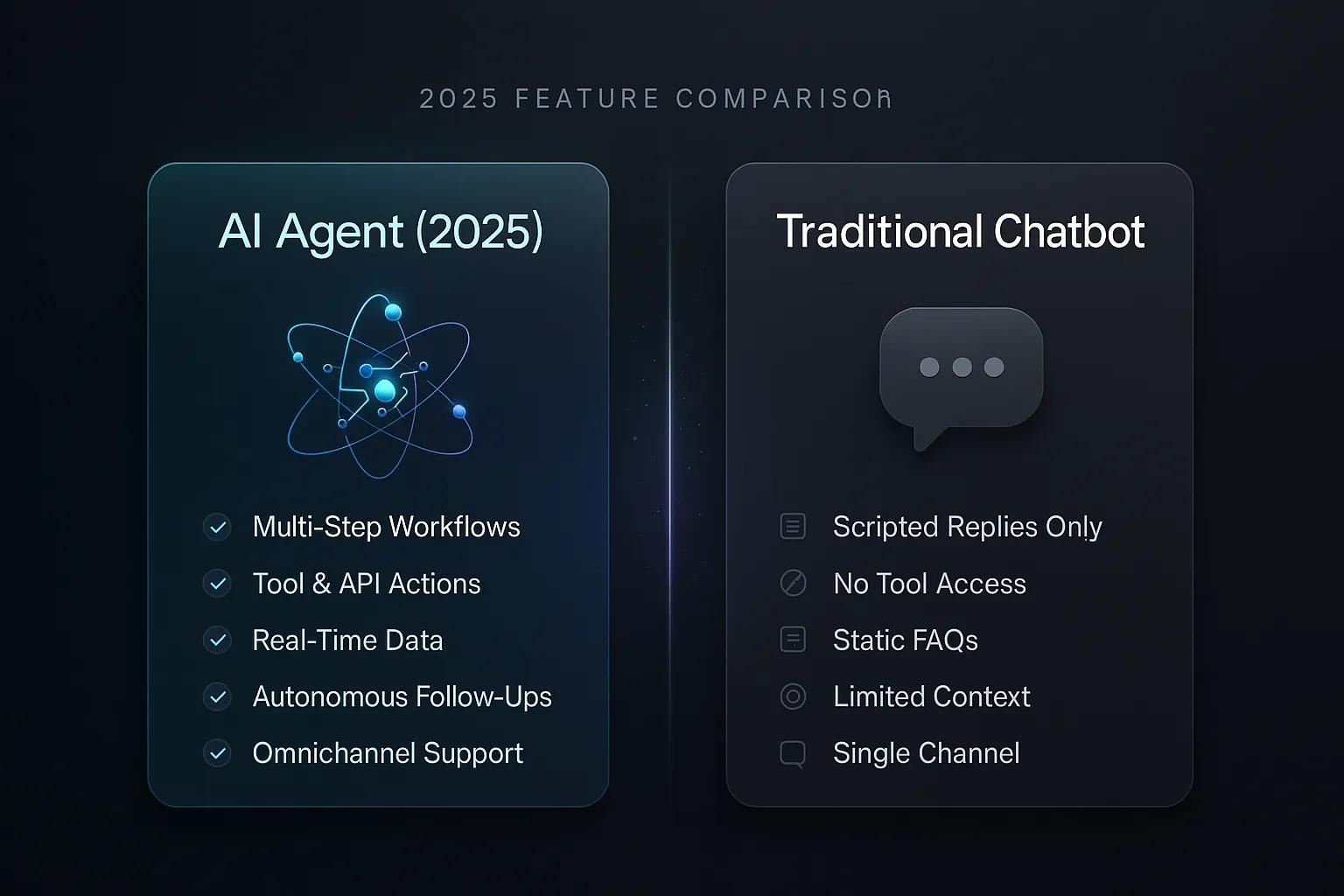
AI Agent vs Traditional Chatbot: 2026 Feature Comparison
It's 11 PM on a Tuesday. A customer reports a damaged package through your support channel. Your traditional chatbot politely apologizes and provides a link to...