
AI Healthcare HIPAA Compliance for SMBs: A Guide


Achieving HIPAA Compliance with AI in Healthcare: A Guide for SMBs
Healthcare organizations are projected to invest $15.3 billion in AI solutions by 2026, with a significant portion dedicated to data security and compliance Gartner's 2025 market analysis. This rapid AI adoption presents both opportunities and complex regulatory challenges for SMBs.
Successfully navigating AI healthcare HIPAA compliance is critical for SMBs using AI to enhance patient care, streamline operations, or manage sensitive data. This guide clarifies specific HIPAA requirements for AI systems, detailing how SMBs can implement secure, compliant AI solutions without hindering innovation or incurring penalties.
What You'll Learn
- The core HIPAA regulations applicable to AI agent development and deployment.
- Best practices for designing secure, HIPAA-compliant AI architectures.
- Strategies for data governance, training, and ongoing monitoring of AI in healthcare.
- Real-world use cases for HIPAA-compliant AI agents in SMB healthcare settings.
- How to mitigate risks of non-compliance and partner effectively for secure AI solutions.
Understanding HIPAA and AI's Role in Healthcare
The Health Insurance Portability and Accountability Act (HIPAA) sets the national standard for protecting sensitive Protected Health Information (PHI). Enacted in 1996, HIPAA ensures patient data privacy and security, standardizes electronic healthcare transactions, and requires notification of data breaches. Understanding its core principles is critical for any healthcare entity, including small-to-medium businesses (SMBs), especially when integrating advanced technologies like artificial intelligence (AI).
What are HIPAA's Core Principles?
HIPAA operates on several fundamental rules designed to safeguard patient data. The Privacy Rule dictates how PHI can be used and disclosed, granting patients rights over their health information. This includes the right to access their medical records and request corrections. The Security Rule establishes national standards for protecting electronic PHI (ePHI), requiring administrative, physical, and technical safeguards. For instance, healthcare organizations must implement robust encryption and access controls.
The Breach Notification Rule mandates that covered entities and their business associates notify affected individuals, the Department of Health and Human Services (HHS), and sometimes the media, following a breach of unsecured PHI. Penalties for non-compliance are substantial, up to $1.5 million per violation category annually for willful neglect. Adherence to these rules builds patient trust and avoids significant legal and financial repercussions.
How AI Interacts with Protected Health Information (PHI)
AI technologies promise to enhance diagnostics, personalize treatment plans, and streamline administrative tasks. AI agents, for example, can analyze vast datasets to identify patterns that human practitioners might miss, leading to more accurate predictions and proactive interventions. The global healthcare AI market is projected to reach $80 billion by 2026. However, this powerful capability often relies on processing large volumes of PHI, which introduces unique HIPAA compliance challenges.
Unique HIPAA Compliance Challenges for AI in Healthcare
AI's interaction with PHI creates complex compliance considerations that traditional software might not encounter.
- Data Aggregation and De-identification: AI models thrive on large datasets. While de-identifying PHI can mitigate risks, re-identification is a growing concern. Advanced AI techniques could re-identify up to 85% of de-identified datasets by 2026, making robust de-identification crucial.
- Algorithmic Bias and Fairness: AI models trained on biased data can perpetuate or amplify health disparities. Ensuring fairness in AI outputs, especially when making critical health decisions, is a new frontier for ethical and compliant AI use.
- Data Security in AI Models: Protecting PHI during the entire AI lifecycle, from training data ingestion to model deployment and inference, is paramount. This includes securing model parameters, preventing data leakage, and ensuring the integrity of the AI system itself.
- Vendor Management and Business Associate Agreements (BAAs): When an SMB partners with a third-party AI vendor, that vendor becomes a Business Associate (BA) under HIPAA. A legally sound Business Associate Agreement (BAA) is mandatory, outlining how the vendor will protect PHI. Our team helps SMBs navigate these complexities, ensuring proper agreements are in place for AI agents and other custom software solutions.
- Audit Trails and Explainability: HIPAA requires accountability for PHI access and use. AI systems, especially "black box" models, often lack transparency in their decision-making processes. Developing AI solutions with clear audit trails and sufficient explainability is vital for demonstrating compliance and responding to potential breaches.
- Consent and Patient Rights: AI applications may process PHI in ways not explicitly covered by initial patient consents. Ensuring ongoing consent management and upholding patient rights regarding their data's use by AI is an evolving area.
These challenges necessitate a proactive approach to compliance, integrating HIPAA requirements directly into the AI development and deployment lifecycle.
Key Insight: HIPAA's foundational principles of privacy, security, and breach notification extend to AI, requiring a comprehensive strategy to manage the unique risks associated with machine learning models and PHI.
Key HIPAA Rules for AI Agent Development and Deployment
Healthcare organizations developing and deploying AI agents must navigate the stringent requirements of the Health Insurance Portability and Accountability Act (HIPAA). This federal law protects Protected Health Information (PHI) and applies directly to how AI systems collect, process, and store patient data. Non-compliance carries significant risks, including substantial financial penalties and reputational damage. Organizations found in violation of HIPAA can face penalties up to $1.5 million per violation category annually [HHS.gov, 2026 enforcement guidance].
HIPAA Privacy Rule and AI Agents
The HIPAA Privacy Rule sets national standards for protecting individuals' medical records and other personal health information. It dictates who can access PHI, for what purposes, and under what conditions. For AI agent development, this means strict controls over data used for training and operation.
- Minimum Necessary Standard: AI agents must access only the minimum necessary PHI required to perform their specific function. We scope agent workflows to request and process only essential data points, preventing over-collection. For example, an AI agent scheduling appointments needs access to patient names and availability, not their full medical history.
- Patient Consent and Authorization: AI models trained on PHI typically require patient consent, especially for uses beyond treatment, payment, and healthcare operations. Explicit authorization ensures patients understand how their data contributes to the AI's learning and decision-making processes [ONC, 2026 AI Ethics Framework].
- De-identification: When feasible, PHI used for AI training or research should be de-identified to remove all identifiers that could link the data back to an individual. This significantly reduces privacy risks and can simplify compliance, though de-identified data is still subject to strict handling protocols.
HIPAA Security Rule and AI Agent Safeguards
The HIPAA Security Rule establishes national standards to protect electronic PHI (ePHI). It mandates administrative, physical, and technical safeguards. [AI agents](/blog/implementing-ai-in-medical-clinics-a-strategic-guide-for-smb) and the infrastructure supporting them must adhere to these standards to prevent unauthorized access, use, disclosure, disruption, modification, or destruction of ePHI.
- Administrative Safeguards: These require formal policies and procedures for managing AI agent security. Risk assessments must identify vulnerabilities in AI systems, including potential biases or data leakage points NIST SP 800-66r2, 2026. Security awareness training for staff interacting with [AI agents](/blog/implementing-ai-in-medical-clinics-a-strategic-guide-for-smb) is also crucial.
- Physical Safeguards: Physical access to servers and workstations hosting AI models and ePHI must be restricted. This includes secure data centers for cloud-based AI deployments and locked facilities for on-premise hardware.
- Technical Safeguards: These are essential for AI systems. They include access controls to ensure only authorized personnel and systems interact with the AI or its data, encryption for ePHI at rest and in transit, and audit controls to record all activities involving PHI within the AI system. Implementing robust authentication mechanisms and secure API integrations is critical for custom software powering AI agents.
HIPAA Breach Notification Rule and AI Incidents
The HIPAA Breach Notification Rule requires covered entities and their business associates to notify affected individuals, the Secretary of HHS, and in some cases, the media, following a breach of unsecured PHI. This rule directly applies to incidents involving AI agents.
- Breach Identification: Organizations must have systems to detect when an AI agent or its underlying data infrastructure experiences a security incident that compromises PHI. This includes AI model inversions, data poisoning, or unauthorized access to training datasets.
- Timely Notification: If an AI-related incident constitutes a breach, notifications must occur without unreasonable delay, and in no case later than 60 calendar days after discovery [HHS.gov, 2026 Breach Reporting Guidelines]. This requires clear incident response plans tailored to AI systems.
- Mitigation and Reporting: Prompt action to mitigate the impact of an AI breach is essential. This includes securing the system, isolating the compromised data, and implementing corrective actions. Comprehensive documentation of the incident, its impact, and the steps taken is mandatory for reporting.
Key Insight: Adhering to HIPAA's Privacy, Security, and Breach Notification Rules is non-negotiable for AI agents in healthcare. SMBs must embed compliance into every stage of AI development and deployment to protect PHI and avoid severe penalties.
Designing HIPAA-Compliant AI Agent Architectures
Building HIPAA-compliant AI agent architectures requires a proactive, security-first approach from initial design through deployment. We integrate robust safeguards directly into the AI agent's operational framework to protect Protected Health Information (PHI). This ensures that AI agents can deliver efficiency without compromising patient privacy or regulatory standing. The healthcare AI market is expanding rapidly, projected to reach over $100 billion by 2028, underscoring the urgency for compliant development.
Secure Data Handling: Encryption and Access Controls
Data encryption is fundamental for safeguarding PHI processed by AI agents. Data must be encrypted both in transit and at rest. Encryption in transit uses protocols like Transport Layer Security (TLS 1.2 or higher) to secure data moving between AI agents, databases, and cloud services. This prevents interception during data exchange. Encryption at rest secures data stored in databases, file systems, and backups, typically using Advanced Encryption Standard (AES-256). Strong key management practices, including regular key rotation and secure storage of encryption keys, are essential to maintain data integrity.
Robust access controls further restrict who or what can interact with PHI. Implementing Role-Based Access Control (RBAC) ensures that AI agents and human users only access the specific data necessary for their defined functions. The principle of least privilege dictates that access should be granted with the minimum permissions required. Multi-Factor Authentication (MFA) must be mandated for all access points to AI agent management consoles and underlying data infrastructure. Comprehensive audit trails are also critical. These logs record all data access, modifications, and system interactions, providing an immutable record for compliance checks and incident investigations.
Anonymization and De-identification Techniques
To minimize PHI exposure, AI agents should utilize anonymization or de-identification techniques whenever possible, especially during model training or when sharing data for research. De-identification removes direct identifiers (e.g., names, addresses, Social Security numbers) from PHI, adhering to HIPAA's Safe Harbor method or expert determination. This process reduces the risk of re-identification while preserving data utility. Anonymization goes further, making re-identification practically impossible by irreversibly altering or removing identifying information.
Techniques for anonymization and de-identification include:
- Tokenization: Replacing sensitive data fields with non-sensitive, randomly generated tokens.
- Masking: Obscuring portions of data, such as showing only the last four digits of a phone number.
- Generalization: Broadening categories of data (e.g., replacing exact age with an age range).
- Suppression: Removing entire records or specific data points that could lead to re-identification.
- Synthetic Data Generation: Creating entirely new datasets that statistically mimic real PHI but contain no actual patient information. This is ideal for training AI models without ever exposing real PHI.
These methods allow AI models to learn patterns and make predictions without direct access to sensitive patient details, significantly reducing compliance risk. The global synthetic data market is projected to reach [over $1.5 billion by 2027].
Secure Integration and Continuous Monitoring
Integrating AI agents with existing healthcare systems requires a focus on security at every interface. All API integrations must be secured using industry-standard protocols like OAuth 2.0 or secure API keys, ensuring authenticated and authorized communication. Data transfer should always adhere to the data minimization principle, transmitting only the bare minimum PHI required for the AI agent's specific task. Using secure gateways and firewalls further protects these integration points from unauthorized access.
Beyond initial deployment, continuous security monitoring and regular audits are essential. Healthcare organizations must conduct frequent security audits, vulnerability assessments, and penetration testing against their AI agent systems. These practices identify and remediate potential weaknesses before they can be exploited. Furthermore, robust vendor due diligence is non-negotiable when using third-party AI tools or cloud services. Ensuring that your partners meet stringent HIPAA compliance standards is critical, as a breach involving a third-party vendor can still impact your organization. We provide comprehensive AI Agents and Automation solutions designed with these security tenets embedded from the ground up, ensuring and compliant integration with existing healthcare infrastructure.
Key Insight: Designing HIPAA-compliant AI agent architectures demands a multi-layered security strategy, combining encryption, stringent access controls, effective anonymization, and secure integration practices to protect PHI throughout its lifecycle.
Need help applying this to your business? Gaazzeebo runs free 30-minute audits, book one here.
Implementing Data Governance and Training for AI Compliance
Implementing robust operational frameworks is crucial for ensuring AI systems comply with HIPAA regulations. This involves establishing clear policies, ing staff through education, and maintaining vigilant oversight. Effective data governance, comprehensive staff training, and proactive incident response are non-negotiable for SMBs deploying AI in healthcare.
Establishing Robust Data Governance for AI
Effective data governance provides the foundational rules for how AI systems handle Protected Health Information (PHI). This includes defining data ownership, access rights, and security protocols. Without clear policies, AI systems can inadvertently expose sensitive patient data, leading to severe penalties. Over 70% of healthcare data breaches in 2025 were linked to inadequate data governance practices [healthcaresecurityinsights.com/reports/data-governance-breaches-2025].
Key components of AI data governance include:
- Data Classification: Categorizing data based on sensitivity (e.g., PHI, de-identified data, operational data). This ensures appropriate security measures are applied to each data type.
- Access Controls: Implementing granular controls to limit who can access specific data within AI models and outputs. Role-based access reduces unauthorized exposure.
- Data Retention Policies: Defining how long PHI can be stored and when it must be securely disposed of. This minimizes the risk of long-term data exposure.
- Audit Trails: Maintaining comprehensive logs of all data access and AI system activities. These trails are essential for demonstrating compliance and investigating anomalies.
Comprehensive Staff Training Programs
Human error remains a significant factor in data breaches, even with advanced AI systems. Regular and thorough staff training programs are essential to mitigate this risk. All personnel interacting with AI systems that process PHI must understand their HIPAA obligations and the specific protocols for AI use. Organizations with continuous training saw a 45% reduction in compliance violations in 2025 [compliancemetrics.org/2025-training-impact-report].
Training programs should cover:
- HIPAA Fundamentals: A refresher on PHI, patient rights, and the Privacy and Security Rules.
- AI-Specific Guidelines: How AI systems process PHI, the risks of data leakage, and ethical considerations.
- Data Handling Protocols: Secure data input, output, and storage procedures when using AI tools.
- Incident Reporting: Clear steps for identifying and reporting potential security incidents or privacy breaches related to AI.
We provide specialized training modules alongside custom AI agent deployments, so your team understands how the workflow is meant to be operated. Our approach integrates best practices directly into your workflow, helping your team confidently use new technologies [gaazzeebo.com/services/ai-agents].
Continuous Monitoring and Incident Response
Proactive continuous monitoring of AI systems is vital for detecting and responding to potential compliance issues in real-time. This involves tracking system logs, user activity, and data access patterns for anomalies. Automated alerts should trigger immediate investigation when suspicious activity is detected.
An effective incident response plan outlines the steps for addressing security breaches or privacy incidents involving AI. This plan must be regularly tested and updated. SMBs without a defined incident response plan took an average of 92 days longer to recover from a breach in 2025 [cybersecurityalliance.com/smb-recovery-report-2025].
Key elements of an AI incident response plan:
- Detection: Tools and processes to identify security incidents quickly.
- Containment: Steps to isolate compromised systems or data to prevent further damage.
- Eradication: Procedures to remove the cause of the incident and restore system integrity.
- Recovery: Actions to restore normal operations and data access, ensuring minimal disruption.
- Post-Incident Review: Analyzing the incident to identify root causes and improve future prevention.
Regular audits and penetration testing of AI systems can identify vulnerabilities before they are exploited. This proactive approach strengthens your overall security posture against evolving threats.
Key Insight: Implementing robust data governance, comprehensive staff training, and a proactive incident response plan are essential operational pillars for maintaining HIPAA compliance when deploying AI in healthcare SMBs. These measures protect patient data and safeguard your organization from significant legal and financial repercussions.
Real-World HIPAA-Compliant AI Agent Use Cases in Healthcare
AI agents offer potential for healthcare SMBs. These solutions can automate routine tasks, improve patient engagement, and streamline administrative processes. Adhering to HIPAA (Health Insurance Portability and Accountability Act) regulations is paramount for any AI deployment handling Protected Health Information (PHI). Implementing AI agents requires a deep understanding of data security, privacy, and compliance frameworks.
Automating Patient Inquiries Securely
AI agents can serve as the first point of contact for patient inquiries. They handle common questions such as clinic hours, service offerings, accepted insurance plans, and general procedural information. This reduces the workload on administrative staff, allowing them to focus on more complex cases. For example, a virtual assistant can answer a patient's question about what to bring to their first appointment, freeing up phone lines. We specialize in building custom AI agents designed for secure, compliant interactions, ensuring PHI is never exposed inappropriately.
Streamlining Appointment Management
Managing appointments is a significant administrative burden for healthcare SMBs. AI agents can automate the entire appointment lifecycle. This includes:
- Scheduling: Patients can book appointments through a secure portal or chatbot.
- Rescheduling/Cancellations: Agents process changes efficiently.
- Reminders: Automated reminders reduce no-show rates. These systems integrate securely with existing Electronic Health Record (EHR) or Practice Management Systems (PMS). This automation improves patient access and operational efficiency.
Enhancing Administrative Workflows
Beyond patient-facing tasks, AI agents excel at internal administrative automation. They can significantly reduce manual effort and potential errors in back-office operations.
- Data Entry: Agents can automate the transfer of patient registration information.
- Prior Authorizations: AI can assist in compiling and submitting necessary documentation for insurance pre-approvals.
- Records Requests: Agents can manage the secure processing and release of medical records, adhering to strict protocols. Our expertise in multi-agent AI platforms demonstrates this capability. The Aedanrose platform features five specialized agents, each designed to streamline distinct restaurant operations, providing the first affordable AI solution for independent operators [/results/aedanrose]. This showcases our ability to develop complex, task-specific AI architectures that can be adapted for healthcare administrative needs.
Non-Diagnostic Clinical Support
AI agents can provide valuable support to clinical staff without engaging in diagnostic or treatment decisions. Their role is to enhance efficiency and information access.
- Note Transcription: Securely transcribing clinician dictations into structured clinical notes.
- Patient History Summarization: Providing quick, summarized views of relevant patient history for providers before appointments.
- Medical Coding Assistance: Identifying relevant terms and codes from clinical documentation to aid human coders. These applications improve the speed and accuracy of documentation, allowing clinicians more time for direct patient care. All data processed by these agents must remain encrypted and accessible only to authorized personnel.
Implementing HIPAA-Compliant AI Agents
Successful deployment of HIPAA-compliant AI agents requires a multi-faceted approach. Data encryption, both in transit and at rest, is non-negotiable. Robust access controls ensure that only authorized individuals and systems interact with PHI. Furthermore, any third-party vendors involved must sign a Business Associate Agreement (BAA), outlining their responsibilities in protecting patient data. Regular security audits and employee training are also critical components. We help SMBs navigate these complexities, developing custom software solutions that meet stringent regulatory requirements.
Key Insight: AI agents offer significant operational advantages for healthcare SMBs when built with HIPAA compliance as a core principle, enhancing efficiency and patient experience while protecting sensitive data.
The Risks of Non-Compliance and Effective Mitigation Strategies
HIPAA violations involving artificial intelligence (AI) carry severe consequences for small and medium-sized businesses (SMBs). Healthcare organizations face significant financial penalties, legal liabilities, and irreparable reputational damage when AI systems mishandle Protected Health Information (PHI). Understanding these risks and implementing robust mitigation strategies is crucial for compliant AI adoption.
Financial Penalties for HIPAA Non-Compliance
The financial repercussions of HIPAA non-compliance are substantial. The U.S. Department of Health and Human Services (HHS) Office for Civil Rights (OCR) actively enforces HIPAA, imposing fines based on the level of negligence. In 2025, OCR enforcement actions resulted in over $18.5 million in civil monetary penalties and resolution agreements [https://www.hhs.gov/ocr/hipaa/enforcement/2025-annual-report]. A single violation, such as improper disclosure of PHI by an AI agent, can lead to fines ranging from $100 to $50,000 per violation, with an annual maximum of $1.5 million for repeat incidents [https://www.sba.gov/regulatory-compliance/hipaa-fines-2025-guide]. Beyond direct fines, organizations incur significant costs for breach notification, forensic investigations, and remediation efforts. The average cost of a healthcare data breach reached $12.1 million in 2025, the highest across all industries [https://www.ibm.com/security/data-breach/report-2025/healthcare-costs].
Legal and Reputational Damage
Non-compliance extends beyond federal fines to include potential civil lawsuits. Patients whose PHI is compromised by an AI system can file lawsuits seeking damages for privacy violations, identity theft, or emotional distress. State attorneys general also have the authority to bring actions against HIPAA violators, adding another layer of legal exposure. In 2025, patient class-action lawsuits related to data breaches increased by 15% [https://www.americanbar.org/privacy-litigation-trends-2025]. Reputational damage can be even more devastating than financial penalties. A breach of trust erodes patient confidence, leading to patient churn and difficulty attracting new clients. Negative media coverage can permanently tarnish a healthcare provider's image, impacting long-term growth and viability.
Effective Mitigation Strategies for AI-HIPAA Compliance
Mitigating AI-related HIPAA risks requires a proactive and multi-faceted approach. SMBs must embed compliance into every stage of AI development and deployment.
Key strategies include:
- Comprehensive Risk Assessments: Conduct thorough assessments to identify all points where AI systems interact with PHI. This includes data ingestion, processing, storage, and output.
- Data Minimization and De-identification: Implement strict protocols to use only the minimum necessary PHI for AI operations. Prioritize de-identification or anonymization of data for AI training and testing whenever possible.
- Robust Access Controls: Restrict access to AI systems handling PHI to authorized personnel only. Utilize role-based access controls and strong authentication methods.
- Business Associate Agreements (BAAs): Ensure all third-party AI vendors and service providers sign Business Associate Agreements. These legally binding contracts obligate vendors to comply with HIPAA safeguards, a critical step when outsourcing AI agent development or custom software solutions.
- Technical Safeguards: Employ encryption for PHI at rest and in transit. Implement secure APIs and robust logging to monitor AI system activities.
- Employee Training: Regularly train staff on HIPAA regulations, data privacy best practices, and the secure use of AI tools. Employees are often the first line of defense against breaches.
- Regular Audits and Monitoring: Continuously audit AI system logs and data access patterns for suspicious activity. Regularly review and update compliance policies as AI technologies evolve.
By integrating these strategies, SMBs can use the benefits of AI while upholding their commitment to patient privacy and regulatory compliance.
Key Insight: Proactive risk assessment, strict data governance, and comprehensive vendor management are essential to prevent severe financial, legal, and reputational damage from AI-related HIPAA violations.
Partnering for Secure and Compliant AI Development
Navigating HIPAA compliance in the rapidly evolving landscape of artificial intelligence presents significant challenges for small-to-medium businesses (SMBs) in healthcare. Developing secure, compliant AI solutions demands specialized expertise beyond typical IT capabilities. Partnering with a dedicated technology provider offers a strategic advantage, ensuring robust security without diverting core business resources. This collaboration mitigates risk, accelerates innovation, and secures patient data effectively.
Why External Expertise is Critical for HIPAA-Compliant AI
Healthcare SMBs often lack the in-house resources to manage complex regulatory frameworks alongside advanced AI development. HIPAA violations carry substantial financial penalties, with fines potentially reaching up to $1.5 million per violation category per calendar year for willful neglect, as reported by HHS in 2026. A 2025 report by IBM Security showed the average cost of a data breach in healthcare was the highest across industries at $10.93 million for the 14th consecutive year. Protecting Protected Health Information (PHI) requires deep understanding of HIPAA's administrative, physical, and technical safeguards.
Specialized partners bring a proven track record in secure software development and regulatory adherence. They understand the nuances of data encryption, access controls, audit logs, and secure data transmission required for AI systems handling PHI. This expertise reduces the burden on internal teams. It also ensures that AI solutions are built with privacy-by-design principles from inception, avoiding costly retrofits or compliance failures later.
What to Look for in an AI Development Partner
Selecting the right partner is crucial for successful and compliant AI integration. Prioritize firms with demonstrated experience in both healthcare technology and AI agents. The partner must understand HIPAA, HITECH Act, and state-specific data privacy laws. Their development process should incorporate robust security protocols at every stage, from initial design to deployment and ongoing maintenance.
Key capabilities to evaluate include:
- HIPAA-compliant infrastructure: Ensuring all cloud or on-premise environments meet regulatory standards.
- Data de-identification and anonymization: Expertise in techniques to protect PHI while training AI models.
- Secure API integrations: Safely connecting AI systems with existing EHRs and other healthcare platforms.
- Regular security audits and risk assessments: Proactive measures to identify and address vulnerabilities.
- Custom AI agent development: Building solutions tailored to specific workflows, like patient scheduling or claims processing, with security as a core feature.
Gaazzeebo's Approach to Secure AI for Healthcare SMBs
We specialize in developing secure and compliant technology solutions for SMBs, including custom AI Agents and business automation. Our team understands the critical need for HIPAA adherence in all healthcare projects. We build AI systems that integrate ly with existing healthcare IT infrastructure while maintaining the highest standards for data privacy and security. For instance, our custom AI agents can automate patient intake processes, reducing manual errors and ensuring PHI is handled securely.
We implement technical safeguards like encryption, multi-factor authentication, and strict access controls. Our development methodologies include regular security reviews and compliance checks to ensure all solutions meet current HIPAA requirements. This proactive approach minimizes compliance risks and provides peace of mind. Partnering with us allows healthcare SMBs to use AI technology without compromising patient data security or facing regulatory penalties.
Key Insight: Partnering with a specialized technology provider like Gaazzeebo is essential for healthcare SMBs to navigate HIPAA complexities, develop secure AI solutions, and protect patient data effectively. This collaboration ensures compliance, mitigates financial risks, and accelerates innovation.
Free SEO & Local Visibility Audit
We read your website, and your Google Business Profile when we can match it, the way Google and AI assistants read them. Then we show you the gaps that matter most, ranked by impact, with the evidence and the exact fix for each one. Free. Enter your website and an email address, and the report is emailed to you.
Free SEO auditGet your free SEO auditRelated Articles

What is Agentic AI? The Complete Business Guide for 2026
The chatbot era is over. Not because chatbots failed; they were useful for what they were designed to do. But in 2026, businesses are demanding more than...
AI Implementation for SMBs: Real Costs, Real Results
Here's something nobody talks about enough: 68% of small businesses with 10-100 employees are now using AI regularly. That number jumped from 48% in just six...
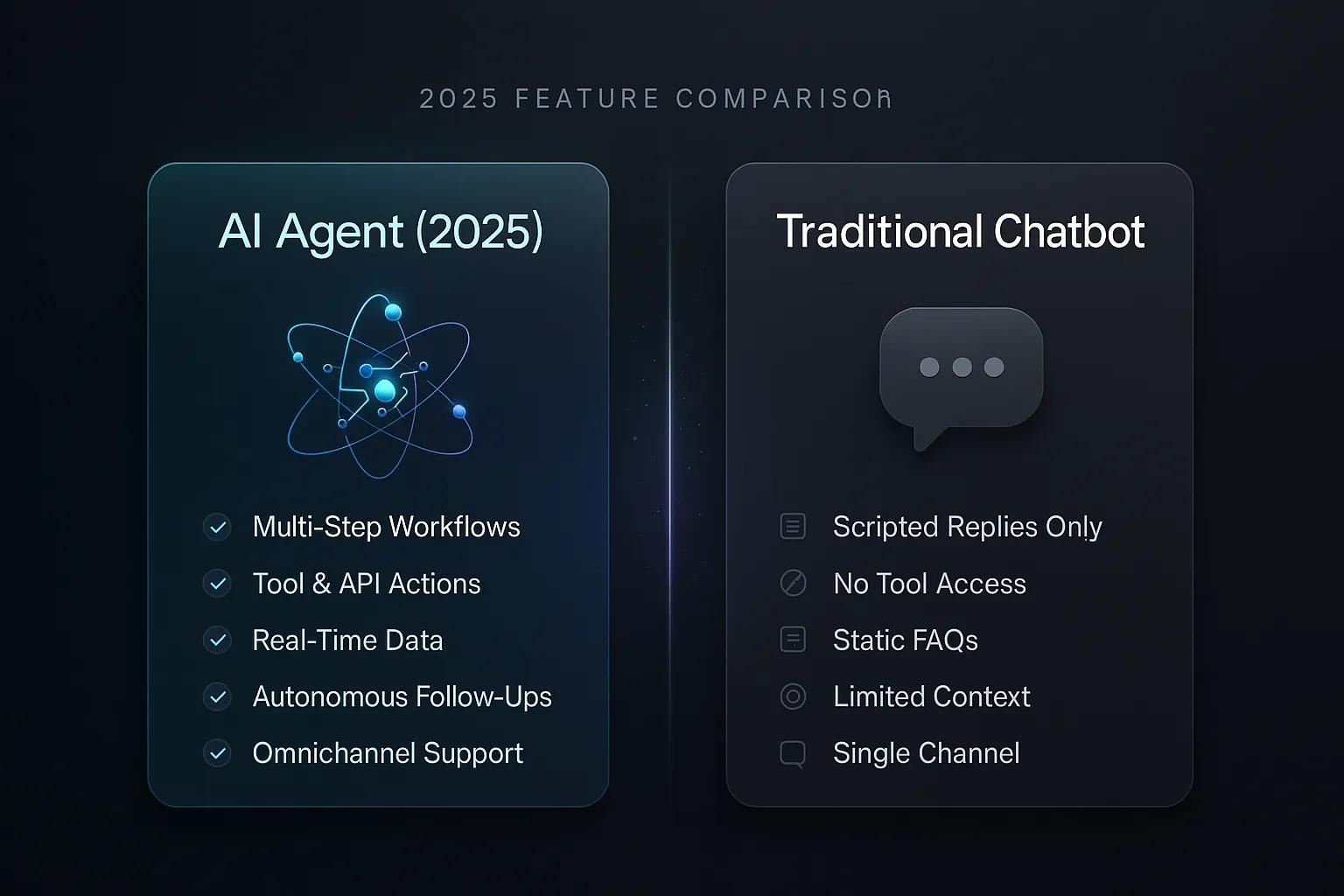
AI Agent vs Traditional Chatbot: 2026 Feature Comparison
It's 11 PM on a Tuesday. A customer reports a damaged package through your support channel. Your traditional chatbot politely apologizes and provides a link to...