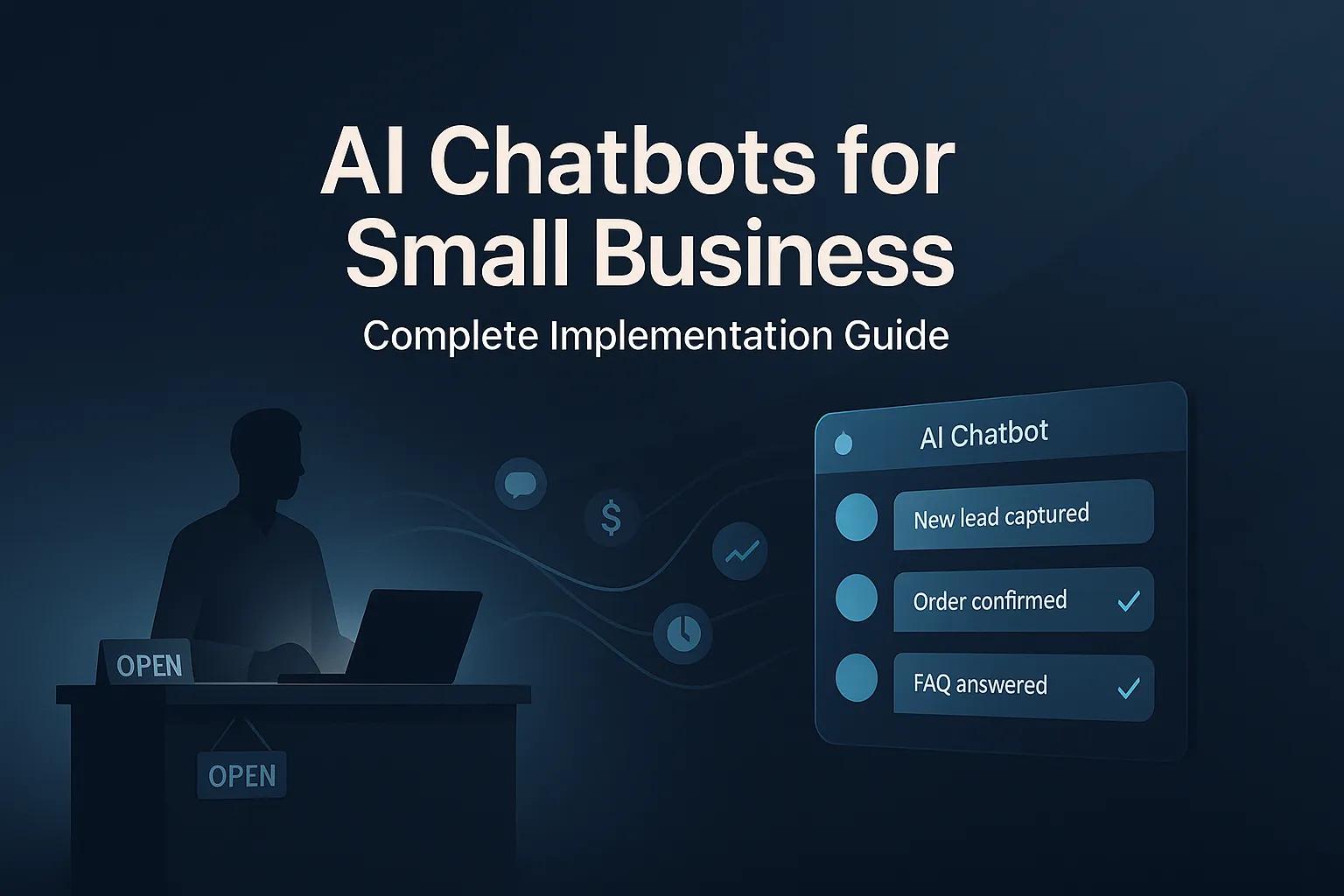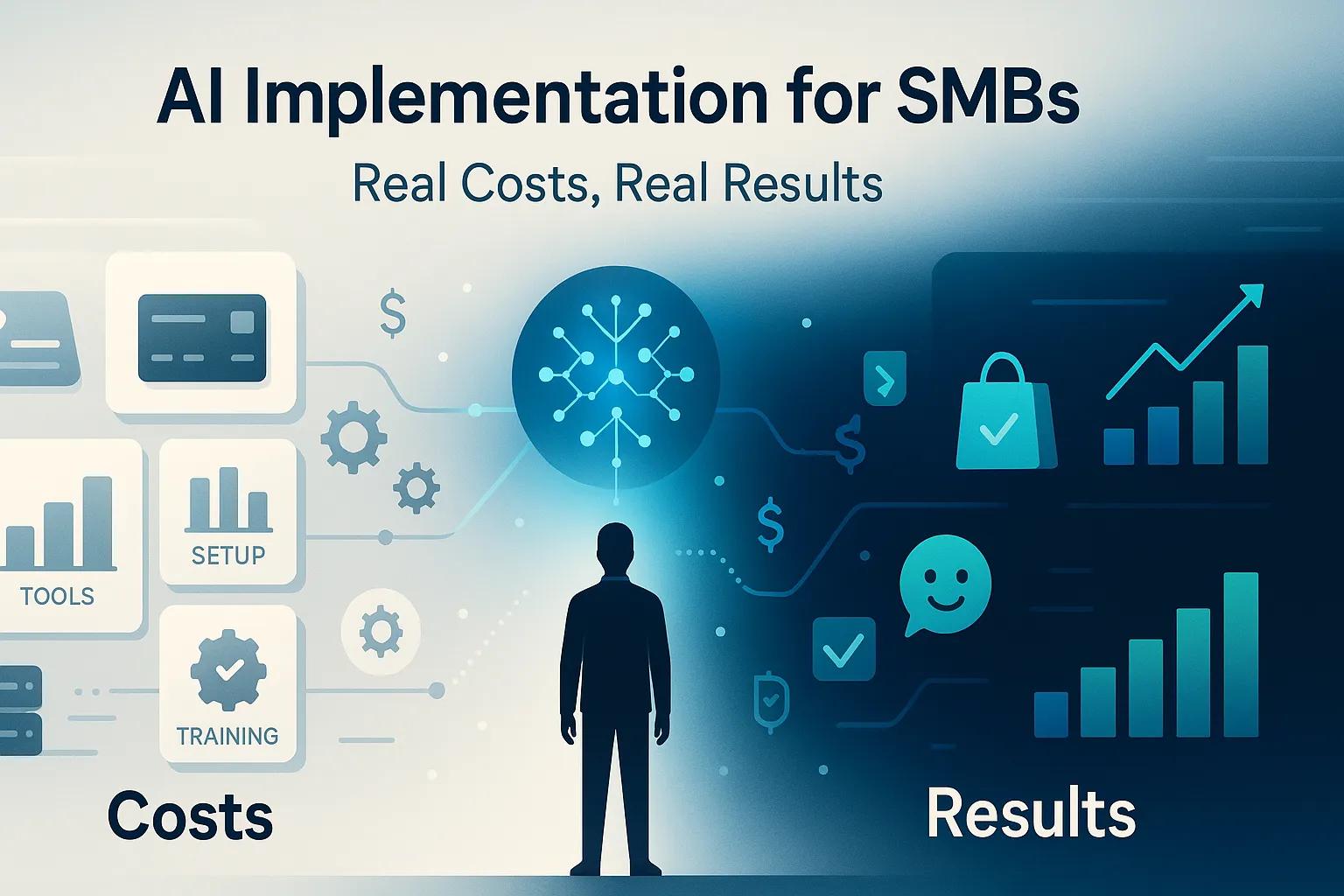

In today's fast-paced business environment, providing instant and personalized customer experiences is crucial. An AI chatbot is a computer program powered by artificial intelligence that simulates human conversation. These intelligent assistants are rapidly transforming how businesses interact with customers, streamline operations, and drive growth. According to a recent report by Grand View Research, the global chatbot market is projected to reach $102.29 billion by 2028, highlighting the increasing adoption and impact of this technology. This article will guide you through everything you need to know about AI chatbots, from understanding their capabilities to implementing them effectively in your SMB.
What You'll Learn
- Understand what an AI chatbot is and how it differs from traditional chatbots.
- Compare different types of AI chatbots and their features.
- Discover real-world use cases of AI chatbots in various industries.
- Learn how to implement an AI chatbot in your business.
- Evaluate the costs, ROI, and business impact of AI chatbots.
- Identify common mistakes and risks associated with chatbot implementation.
Core Concept / Definition Section
An AI chatbot is a sophisticated software application designed to simulate conversation with human users, leveraging artificial intelligence to understand and respond to a wide range of queries and requests. Unlike traditional chatbots that rely on pre-programmed scripts and decision trees, AI chatbots use natural language processing (NLP) and machine learning (ML) to comprehend the intent behind user input and provide more relevant and personalized responses. Think of it as a virtual assistant that's available 24/7 to answer questions, resolve issues, and guide customers through various processes. Gaazzeebo specializes in developing custom AI agents that can be tailored to meet the unique needs of your business.
Understanding the Key Components of AI Chatbots
AI chatbots rely on several key technologies to function effectively:
- Natural Language Processing (NLP): Enables the chatbot to understand and interpret human language, including nuances, context, and intent.
- Machine Learning (ML): Allows the chatbot to learn from data and improve its performance over time, becoming more accurate and efficient in its responses.
- Natural Language Generation (NLG): Enables the chatbot to generate human-like text responses that are clear, concise, and engaging.
- Dialog Management: Manages the flow of conversation, ensuring that the chatbot provides relevant and helpful information at each stage of the interaction.
Key Insight: AI chatbots leverage NLP and ML to provide more intelligent and personalized customer interactions compared to traditional rule-based chatbots.
How It Compares / Comparison Section
Choosing the right type of chatbot is crucial for maximizing its effectiveness. Here's a comparison of different chatbot types:
Key Insight: AI chatbots offer a balance of intelligence, scalability, and cost-effectiveness, making them a powerful tool for businesses of all sizes.
Real-World Use Cases / Business Applications
AI chatbots are transforming various industries by automating tasks, improving customer service, and driving sales. Here are some concrete examples:
E-commerce: Personalized Shopping Experiences
An e-commerce company used an AI chatbot to provide personalized product recommendations and assist customers with their purchases. The chatbot analyzed customer data, such as browsing history and past purchases, to suggest relevant products and answer questions about sizing, fit, and availability. As a result, the company saw a 25% increase in sales and a 20% improvement in customer satisfaction.
Healthcare: Appointment Scheduling and Medical Information
A healthcare provider implemented an AI chatbot to automate appointment scheduling, answer frequently asked questions about medical conditions, and provide pre-appointment instructions. The chatbot reduced the workload on administrative staff and improved patient access to information. The provider reported a 40% reduction in appointment no-shows and a 30% decrease in phone calls to the front desk.
Professional Services: Lead Qualification and Customer Support
A consulting firm used an AI chatbot to qualify leads, answer initial inquiries, and provide basic customer support. The chatbot engaged with website visitors, asked qualifying questions, and routed promising leads to sales representatives. The firm saw a 50% increase in qualified leads and a 35% reduction in response times.
Key Insight: AI chatbots can be applied across various industries to automate tasks, improve customer service, and drive business growth.
Implementation Guide / How to Get Started
Implementing an AI chatbot requires careful planning and execution. Here's a step-by-step guide to get you started:
Step 1: Define Your Goals and Objectives
Clearly define what you want to achieve with your AI chatbot. Are you looking to improve customer service, generate leads, or automate internal processes? Setting clear goals will help you choose the right chatbot platform and design effective conversation flows.
Step 2: Choose the Right Chatbot Platform
Select a chatbot platform that meets your specific needs and budget. Consider factors such as ease of use, integration capabilities, scalability, and pricing. Gaazzeebo can help you choose and implement the right platform for your business.
Step 3: Design Conversation Flows
Plan out the conversation flows for your chatbot, anticipating the questions and requests that users are likely to have. Create clear and concise responses that provide helpful information and guide users towards their desired outcomes.
Step 4: Train Your Chatbot
Train your AI chatbot using relevant data and examples to improve its accuracy and effectiveness. Continuously monitor its performance and make adjustments as needed to optimize its responses.
Step 5: Integrate with Existing Systems
Integrate your AI chatbot with your existing CRM, marketing automation, and other business systems to streamline workflows and improve data visibility. Gaazzeebo specializes in seamless integrations to maximize the value of your AI chatbot.
Key Insight: A well-planned and executed implementation strategy is essential for maximizing the benefits of an AI chatbot.
Costs, ROI, and Business Impact
The cost of implementing an AI chatbot can vary depending on the platform, features, and level of customization. However, the potential ROI can be significant.
- Cost: Basic chatbot platforms can range from $50-$500/month, while more advanced solutions can cost $1,000+/month.
- ROI: Businesses can expect to see an ROI of 20-100% within 6-12 months of implementing an AI chatbot, through increased sales, reduced costs, and improved customer satisfaction.
- Business Impact: AI chatbots can save businesses 30-50% on customer service costs by automating routine tasks and reducing the need for human agents. They can also generate 2-3x more leads than traditional marketing methods.
Gaazzeebo can help you assess the costs and ROI of implementing an AI chatbot for your business and develop a customized solution that meets your specific needs.
Key Insight: AI chatbots offer a compelling ROI by reducing costs, increasing sales, and improving customer satisfaction.
Common Mistakes / Risks / What to Watch For
Implementing an AI chatbot is not without its challenges. Here are some common mistakes to avoid:
- Lack of Clear Goals: Failing to define clear goals and objectives can lead to a poorly designed and ineffective chatbot.
- Poor Conversation Design: A confusing or frustrating conversation flow can drive customers away.
- Inadequate Training: An under-trained chatbot may provide inaccurate or irrelevant responses, damaging your brand reputation.
- Ignoring User Feedback: Failing to monitor and respond to user feedback can prevent you from identifying and addressing potential issues.
- Over-Reliance on Automation: While AI chatbots can automate many tasks, it's important to provide a seamless handoff to human agents when necessary.
Key Insight: Avoiding common mistakes and proactively addressing potential risks is crucial for ensuring the success of your AI chatbot implementation.
The Bottom Line
- AI chatbots are transforming how businesses interact with customers, streamline operations, and drive growth.
- Choosing the right chatbot platform and designing effective conversation flows are essential for maximizing its effectiveness.
- AI chatbots offer a compelling ROI by reducing costs, increasing sales, and improving customer satisfaction.
Ready to unlock the power of AI chatbots for your business? Gaazzeebo specializes in developing custom AI agents that can be tailored to meet your unique needs. Contact us for a free consultation, or learn more about our AI agents to see how we can help your business thrive. We also provide comprehensive automation services to streamline your business processes and improve efficiency.
Sources and References:
- [Grand View Research (2023)] — Global Chatbot Market Size Report, 2023-2030
- [HubSpot (2022)] — The Ultimate Guide to Chatbot Marketing in 2022
- [Forrester (2021)] — Predictions 2021: Chatbots Will Transform Customer Service
- [Gartner (2020)] — How to Build a Better Chatbot
- [Statista (2023)] — Chatbots: Statistics & Facts
- [McKinsey (2019)] — The rise of the AI-powered contact center
- [Business Insider (2022)] — Chatbots are changing the way businesses interact with customers
- [Deloitte (2021)] — State of AI in the Enterprise, 3rd Edition
- [Accenture (2020)] — Technology Vision 2020: We, the Post-Digital People
- [PwC (2019)] — Global Artificial Intelligence Study: Sizing the Prize
- [Juniper Research (2022)] — Chatbot Market to Reach $112 Billion by 2023
- [MarketsandMarkets (2023)] — Chatbot Market - Global Forecast to 2028
About Gaazzeebo: We are a Tampa-based technology company specializing in AI agents, business automation, custom websites, mobile apps, and IT support. Our team helps small and medium businesses harness technology to grow faster and operate more efficiently. Contact us for a free consultation.